
- General Dentistry
Everything You Need to Know About Dental Crowns: Cost, Materials, and Treatment

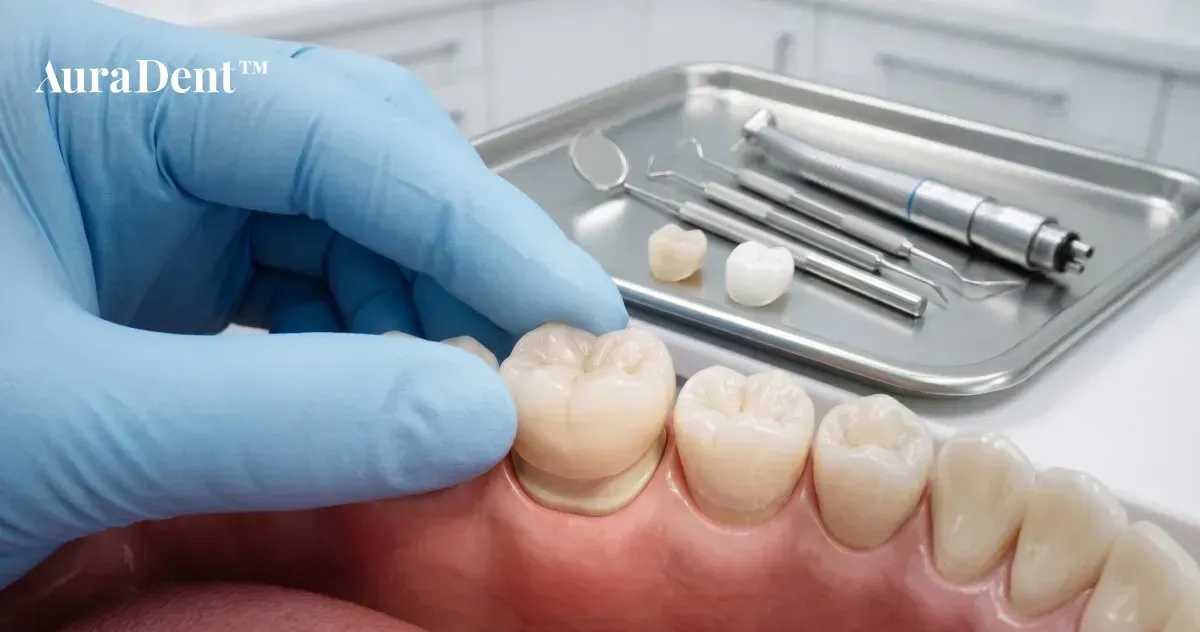
Dental Crowns: A Complete Guide
A dental crown is one of the most well-established treatments in modern dentistry and is used for both functional and aesthetic purposes. It can restore a tooth damaged by caries, trauma, or wear, but also improve the appearance of discolored or misaligned teeth. For many patients, a dental crown becomes a long-term way to preserve their natural teeth instead of having to extract them. In this way, the treatment becomes a central part of both preventive and restorative dentistry.
Understanding what a dental crown is, when it is recommended, and what alternatives exist is crucial for making informed decisions about your oral health. In this guide, we go through all common questions, from price and materials to the different steps of the treatment and how best to care for your crown to ensure it lasts for many years to come.
Key points in brief
- A dental crown is used to protect, restore, or improve a damaged tooth.
- Common causes include caries, cracked teeth, root canal treatment, or cosmetic issues.
- There are several materials: porcelain, zirconia, porcelain-fused-to-metal, and gold.
- The treatment is carried out step by step: consultation, preparation, temporary crown, and final placement.
- The price varies, typically between 3420.00 and 6156.00 DDK in Denmark depending on the material and clinic.
- With good care and regular check-ups, a dental crown can last for many years.
When do you need a dental crown? 7 common situations
A dental crown may be necessary in several different scenarios. Here are the most common ones:
1. Caries (tooth decay)
When the cavity is too large for a filling to suffice, a dental crown can cover and protect the tooth. It restores chewing function and prevents the decay from spreading to adjacent teeth.
2. Cracked tooth
Teeth that have cracked due to trauma or wear are at risk of being lost. A dental crown holds the parts of the tooth together and restores both strength and a natural appearance.
3. After root canal treatment
After a root canal, the tooth often becomes weakened and more susceptible to fractures. A dental crown protects the tooth, extends its lifespan, and reduces the risk of reinfection.
4. Wear and weakened teeth
Teeth that have been worn down by teeth grinding or age can be restored with a dental crown. This prevents further breakdown and strengthens the tooth's structure.
5. Cosmetic issues
Discolored, misshapen, or misaligned teeth can be covered with a dental crown for a uniform and aesthetically pleasing smile makeover.
6. Support for a bridge
A bridge that replaces missing teeth needs support from adjacent teeth. These are often covered with crowns to create stability and function.
7. On dental implants
After an implant has been placed, the crown serves as the visible tooth part, providing both function and aesthetics.

Different types of dental crowns: Which material is best for you?
The choice of material affects durability, aesthetics, and price.
Porcelain crowns (E-max, Feldspar):
These are very popular because they provide a natural and translucent appearance. They are perfect for front teeth and areas where aesthetics are the highest priority. The disadvantage is that they are not as strong as other options and are therefore best suited for low to moderate chewing load.
Zirconia crowns (oxide ceramic):
Zirconia is extremely strong and is therefore suitable for both front teeth and molars. They are metal-free and have good aesthetics, making them an excellent choice for patients who want to combine durability with a natural appearance.
Porcelain-fused-to-metal crowns (PFM):
These combine a strong metal core with an aesthetic ceramic layer. They are very durable and are often used on molars. The disadvantage is that a thin metal edge may become visible at the gum line after a few years, making them somewhat less aesthetic than porcelain or zirconia.
Gold crowns:
Gold is the most durable material and is very gentle on opposing teeth. They are rarely used today for aesthetic reasons, but remain an excellent option for teeth far back in the mouth where durability is more important than appearance.
In summary: porcelain is best for front teeth, zirconia for both front and back teeth, porcelain-fused-to-metal for strong chewing forces, and gold for maximum durability.
How does the treatment work? Step-by-step guide
Getting a dental crown is a process that takes place in several steps. The goal is to ensure both function, comfort, and a natural appearance that fits into your smile. Here is an overview of how the treatment typically works:
1. Consultation and examination
The dentist performs a thorough examination of the tooth and often takes X-rays to assess the tooth's structure and root health. During this visit, you discuss different options, materials, and expected results. This is also the time when you get answers to questions about price and durability.
2. Preparation and reduction of the tooth
To make room for the dental crown, a small portion of the tooth surface is shaved down. How much needs to be removed depends on the material to be used. The dentist also removes any damage or decay to ensure that the underlying tooth is stable. The tooth is then shaped so that the crown can fit properly.
3. Temporary crown
While the permanent crown is being manufactured, a temporary crown is placed to protect the tooth. It allows you to chew, speak, and smile without problems during the waiting period. Even though it is not as strong as a permanent crown, it serves an important function in preventing sensitivity and gum irritation.
4. Final permanent crown
When the permanent crown is ready, it is carefully tried in. The dentist checks the fit, color, and function so that it blends naturally with the rest of the teeth. When everything feels right, the crown is permanently cemented in place, and small adjustments can be made to ensure that your bite is comfortable and stable.

How much does a dental crown cost in Sweden?
The price of a dental crown varies depending on the material, the clinic's geographic location, and the complexity of the treatment. In Sweden, the cost is usually between 3420.00 and 6156.00 DDK per tooth. The dental insurance benefit from the Swedish Social Insurance Agency (Försäkringskassan) may cover part of the cost for larger treatments.
Advantages and disadvantages of dental crowns
Advantages:
- Restores function and strength
- Improves appearance
- Protects against further damage
Disadvantages and complications:
- Temporary sensitivity after treatment
- Risk that a crown may come loose and need to be re-cemented
- Relatively high cost compared to simpler fillings
Care instructions: How to take care of your new dental crown
- Brush your teeth twice a day and use dental floss daily: It is important to keep the area around the crown free from plaque and bacteria. Even though the crown itself cannot get cavities, the tooth underneath and the surrounding gum can be affected. Use fluoride toothpaste and be extra thorough around the edges of the crown.
- Avoid biting on hard objects that could crack the crown: Hard things like ice cubes, pens, or hard candies can create cracks or even completely damage the crown. By being careful, you can extend the crown's lifespan and avoid unnecessary repairs.
- If you grind your teeth at night, use a bite guard (night guard): Teeth grinding can stress both your natural teeth and dental crowns, causing cracks or wear. A custom-made bite guard provides effective protection and is a good investment for preserving both your crown and your bite.
- Attend regular dental check-ups to detect early problems: Your dentist can check that the crown is stable and that the surrounding gum is healthy. Regular visits make it possible to detect small problems early and address them before they develop into more serious damage.

Conclusion: Dental crowns for a strong and beautiful smile
A dental crown is more than just an aesthetic improvement, it is a functional solution that can save a tooth from needing to be extracted. The treatment is used in many situations: from protecting a root-filled or cracked tooth to restoring teeth that have been worn down over a long period. In this way, dental health is combined with aesthetics, and you get both a stronger and more attractive smile.
For patients who worry about durability or a natural appearance, today's modern dental crowns are a safe choice. With the right material and good care, they can last for decades and are nearly impossible to distinguish from natural teeth. Dental crowns therefore contribute to both a healthy bite and an improved quality of life.
At AuraDent™, we offer professional guidance so that you can choose the right material, understand the costs, and feel confident throughout the entire process. Book a free consultation today and take the first step toward long-lasting fresh oral health and a confident smile.
FAQs