
- General Dentistry
- Dental Hygiene
Healthy Gums: Prevent Gum Disease and Keep Your Mouth Healthy


Key Points in Brief
- Healthy gums reduce the risk of gum disease, inflammation, and infection.
- Common problems include bleeding gums, receding gums, and gingivitis.
- Proper oral hygiene, a balanced diet, and regular check-ups are essential.
- Lifestyle factors such as smoking, stress, and lack of sleep directly affect the gums.
- Professional dental care, such as tartar removal, is an important part of preventive treatment.
Why Are Healthy Gums Important?
The gums act as the foundation for your teeth. They hold the teeth in place, protect against bacteria, and prevent infections from spreading down to the roots and jawbone. When the gums are healthy, they are firm, pink, and do not bleed when you brush. When they become inflamed, however, the risk of gum disease and more serious illnesses increases.
Research also shows that gum disease is not just an oral health problem. Bacteria from inflamed gums can spread into the bloodstream and contribute to cardiovascular disease, diabetes, and even complications during pregnancy. Taking care of your gums is therefore not just an aesthetic issue but an investment in your entire body's health.
Common Problems with the Gums
Understanding common gum problems is crucial for being able to act in time and prevent simple issues from developing into serious diseases. By recognizing early symptoms, you can protect both your oral health and your overall health in the long term.
Bleeding Gums: Causes and Solutions
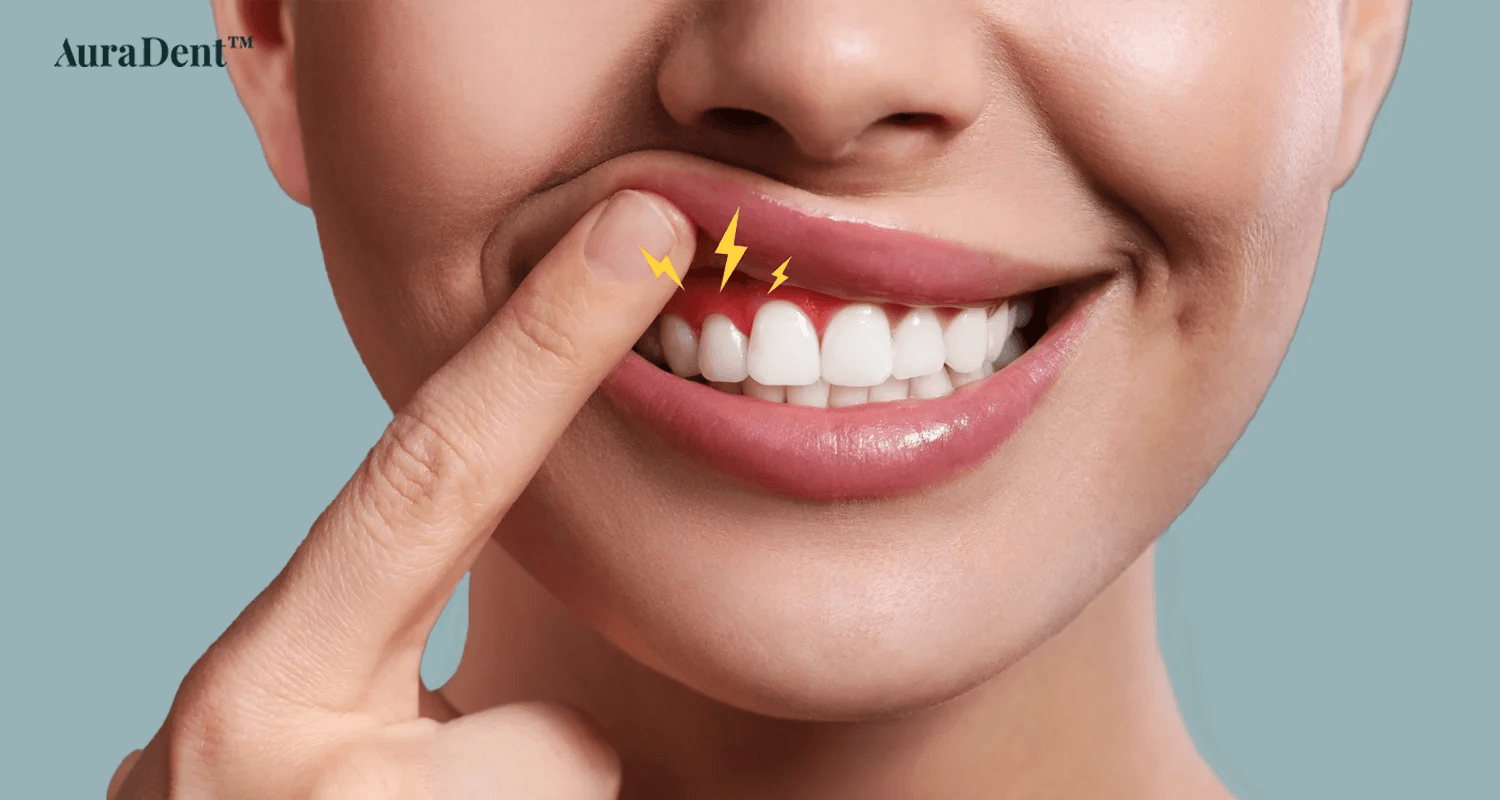
Bleeding gums are one of the first signs of gingivitis. It is usually caused by plaque and bacteria that accumulate along the gum line. However, bleeding can also be due to aggressive brushing, vitamin deficiency (especially vitamins C and K), or certain diseases. Ignoring bleeding gums can lead to the inflammation worsening and developing into periodontitis, a more serious disease that can damage the tooth's attachment and, in the worst case, cause tooth loss.
Solutions:
- At home: Use a soft toothbrush, proper brushing technique, and daily flossing. Change your toothbrush regularly.
- Professionally: Visit a dental hygienist for tartar removal and professional cleaning.
Book an appointment at AuraDent™ if your gums bleed often – early treatment prevents serious problems.
Receding Gums: Why Does It Happen?
Receding gums occur when the gum tissue pulls back and exposes the tooth's root surface. This makes the tooth more sensitive to cold, heat, and decay. The causes are often periodontitis, aggressive brushing, genetic predisposition, or long-term smoking.
The problem cannot be overlooked because it can eventually lead to tooth loss. The dentist may recommend changed oral hygiene habits, treatment of gum inflammation, or in some cases, surgical procedures such as gum grafting.
Can Gums Grow Back?
Once the gums have receded, they do not grow back on their own. The good news is that there are treatments that can stop the process and sometimes restore lost tissue. Examples include surgical methods where gum tissue from another part of the mouth is used to cover exposed roots.
Suspect you have receding gums? Book an examination at AuraDent™ for a professional assessment and individual advice.
Daily Habits to Maintain Healthy Gums
Keeping your gums healthy requires consistent routines:
- Brush correctly: Twice a day for at least two minutes with a soft brush. Hold a 45-degree angle toward the gum line and use small circular motions. An electric toothbrush can be a good option for extra effective cleaning.
- Use floss and interdental brushes: These remove plaque that the toothbrush cannot reach. Use a C-shaped motion to reach the tooth surface and under the gum line.
- Fluoride and mouthwash: Fluoride toothpaste strengthens enamel and protects the gums. Choose an alcohol-free mouthwash with antibacterial properties, but avoid rinsing immediately after brushing so as not to wash away the fluoride.
- Regular dental visits: Twice a year is recommended, even if you are not experiencing any symptoms. The dentist can detect early signs of gum disease and prevent more serious problems.
Lifestyle Factors That Affect the Gums
In addition to daily hygiene routines, your lifestyle also plays a crucial role in the health of your gums. Factors such as diet, smoking, stress, and sleep can either strengthen or weaken the gums and affect the risk of disease.
- Diet: A diet rich in vitamin C, vitamin A, vitamin K, and calcium is important for healing and bone health. Eat plenty of fruits, green leafy vegetables, dairy products, and nuts.
- Smoking and alcohol: Smoking impairs blood circulation in the gums and inhibits the healing process. Alcohol can irritate and dry out the oral mucosa. Together, these factors increase the risk of gum pain and gingivitis.
- Stress: High stress levels increase the secretion of cortisol, which impairs the immune system and makes the gums more susceptible to infection. Long-term stress can therefore contribute to swollen gums and gum disease.
- Sleep: Good sleep helps the body recover. Lack of sleep weakens the immune system and increases the risk of inflammation.
Preventive Treatments & Professional Care
Even with good routines, tartar can form that cannot be removed at home. This is where the dental hygienist plays an important role in preventive care. Professional cleaning removes bacterial deposits and tartar. This reduces the risk of gum inflammation and gum disease.
For more advanced problems, such as periodontitis, a specialist (periodontist) may be needed. Treatment may then include surgical procedures or regenerative methods.
AuraDent™ offers both preventive check-ups and advanced treatment. Book an appointment to ensure healthy gums and long-term dental health.
Summary
Healthy gums are a prerequisite for a strong smile and long-term oral health. By maintaining daily routines with brushing and flossing, you can prevent inflammation, bleeding gums, and more serious problems such as gum disease. When you also supplement with a nutritious diet and avoid smoking or excessive alcohol consumption, you create the best conditions for keeping your gums strong and healthy throughout life.
Taking care of your gums is not just about aesthetics but also about protecting the body against diseases. Stress, lack of sleep, and bad habits can weaken the immune system and make the gums more susceptible to infections. Regular dental visits therefore play a central role in detecting and treating problems early before they develop into something more serious.
Book an appointment at AuraDent™ today and take control of your dental health for a healthier life and a stronger smile.
FAQs