- General Dentistry
Deep Dental Filling: Everything you need to know when decay is close to the nerve

Key points in brief
- Deep fillings mean that decay has reached close to the pulp, but the tooth can often be saved without root canal treatment
- Modern anesthesia makes the procedure completely painless
- A rubber dam is used to create a sterile working environment and increase precision
- A protective liner is placed when decay is very close to the pulp
- Temporary sensitivity after treatment is common and usually subsides
- Deep fillings reduce the risk of future root canal treatment and tooth loss
What does a deep filling actually mean?
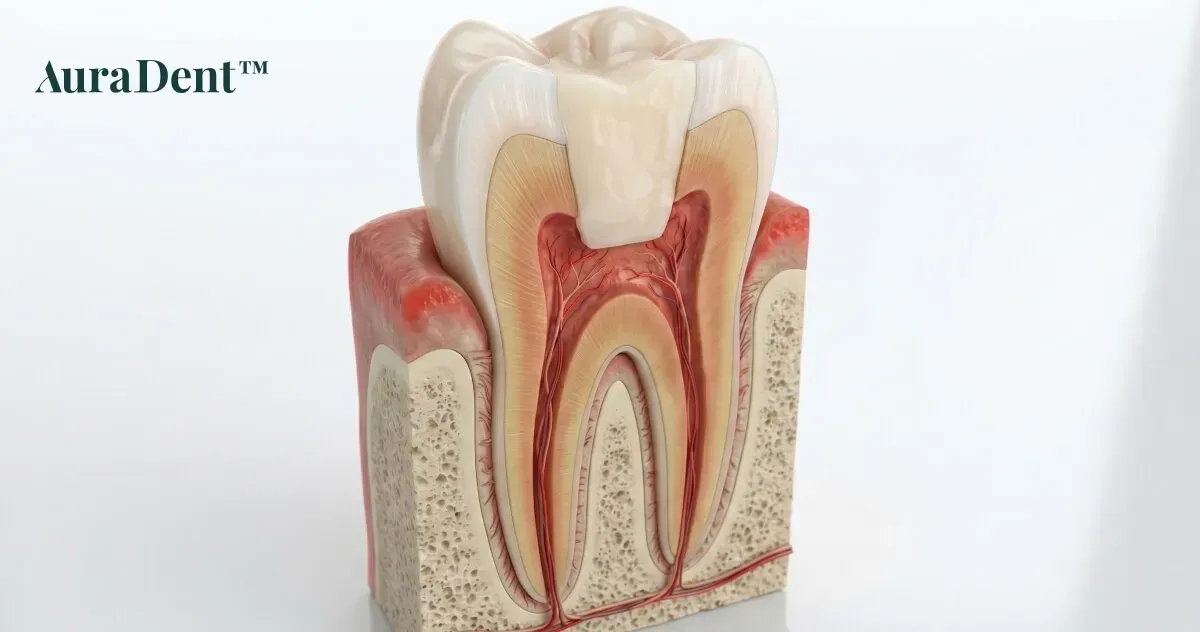
A deep filling means that tooth decay has progressed through the enamel and dentin and reached so close to the pulp that the nerve may become irritated or inflamed. The pulp contains nerves and blood vessels and is the most sensitive part of the tooth. When decay reaches this level, a very careful approach is required to preserve the tooth’s vitality and avoid the need for root canal treatment.
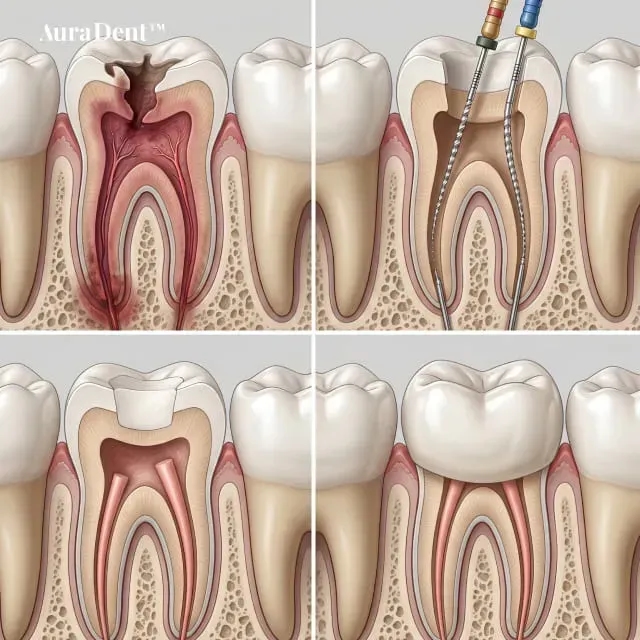
A visual illustration of how decay progresses from superficial to deep can help explain why this treatment is necessary.
Step by step: a gentle and safe treatment process
Many patients feel anxious about the procedure itself. In practice, a deep filling is a methodical and controlled treatment, where each step is designed to ensure comfort and precision.
1. Complete anesthesia
The treatment begins with local anesthesia, making the area completely numb. During the procedure, you should feel comfortable and experience nothing more than slight pressure or vibration.
2. Isolation with a rubber dam
To ensure optimal hygiene and treatment quality, a rubber dam is used. This thin sheet isolates the tooth from saliva and bacteria, creating a clean and stable working environment that improves the durability of the filling.
3. Careful removal of decay
The dentist carefully removes all decayed dentin with high precision, ensuring no infected tissue remains. The goal is to eliminate bacteria completely while preserving as much healthy tooth structure as possible.

4. Protection of the nerve
When decay is very close to the pulp, a thin protective material is sometimes applied to the floor of the cavity. This acts as a shield for the nerve and gives the pulp a chance to recover.
5. The final filling
The tooth is restored with a tooth-colored composite that is layered and shaped anatomically, then hardened with light. This provides natural function and an aesthetically harmonious result.
Is there a risk that I will need a root canal?
The purpose of a deep filling is always to avoid root canal treatment. In some cases, the pulp may already be inflamed before the treatment begins. Therefore, it is important for the patient to understand the difference between normal and abnormal sensitivity.
After a deep filling, the tooth is often sensitive to cold, heat, and pressure for a few days or weeks. This is normal and usually subsides gradually.
If the pain instead increases, occurs spontaneously without stimulation, or feels throbbing, this may be a sign that the pulp is unable to heal. In such cases, a root canal is the most tooth-preserving and long-term stable treatment.
If you experience acute symptoms, we recommend contacting our emergency dentist for a prompt assessment.
Post-treatment care advice after a deep filling
There are a few simple recommendations that make the healing process smoother and more comfortable.
- Avoid chewing on the treated side until the anesthesia has worn off
- Avoid very cold or very hot foods during the first few days
- Use over-the-counter pain relievers if needed
- Brush your teeth thoroughly according to your usual routine
- Contact the clinic if the sensitivity increases or if the pain does not subside

Conclusion
A deep filling is a well-established and effective treatment that stops the progression of tooth decay and prevents serious complications such as infection and tooth loss. Thanks to modern technology, careful isolation, and high-quality materials, the tooth can often be saved without the need for a root canal.
If you suspect you need a deep filling, you are warmly welcome to AuraDent™ for professional and safe care with a focus on comfort and quality.
Book your appointment today, and we’ll help you preserve function, aesthetics, and long-term dental health.
FAQs