
- General Dentistry
Root Filling (Root Canal Treatment): The Complete Guide from A to Z

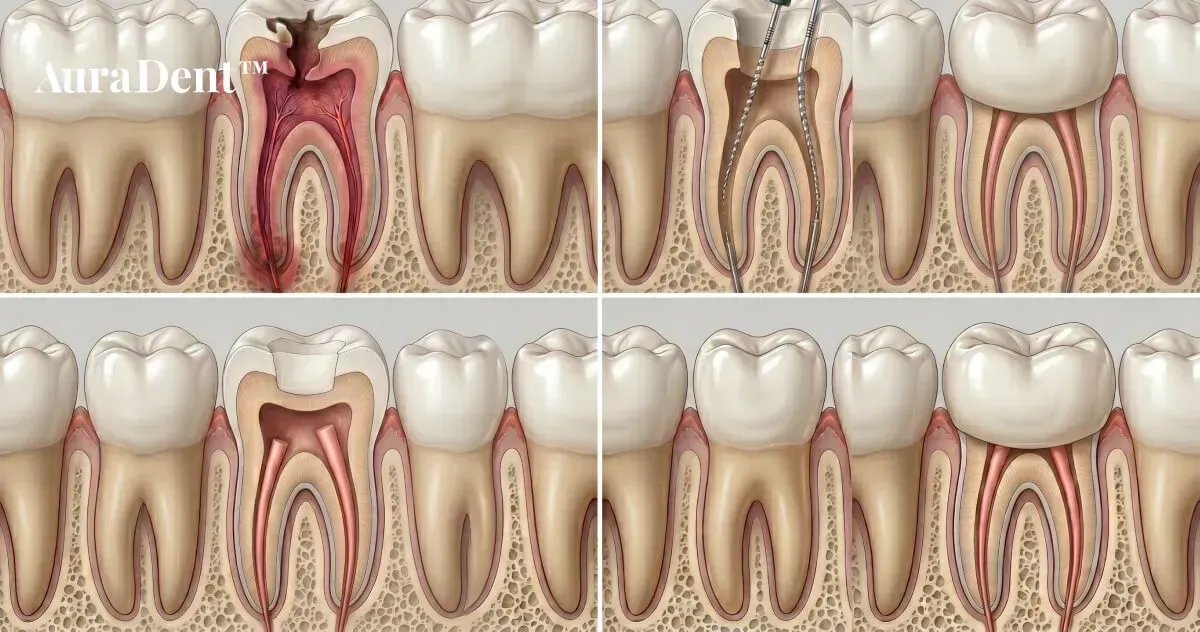
Toothaches can ruin your day. When the pain becomes persistent or throbbing, it may be a sign that the tooth’s nerve has become inflamed. For many people, the term “root canal” is a source of anxiety, but the truth is that this treatment is often what saves your natural tooth and completely eliminates the pain.
In this guide, we explain everything you need to know about root canal treatment: what it involves, when it’s needed, how the procedure works, and what to expect afterward.
Key points at a glance
• A root canal saves the tooth by removing infected tissue and preventing future infections.
• The treatment is pain-free thanks to modern anesthesia techniques.
• A crown is almost always recommended afterward to protect the tooth.
• Thorough oral hygiene and follow-up care help maintain the results.
• Early treatment reduces the risk of tooth loss.
What is a root canal (and why is it necessary)?
A root canal, or endodontic treatment, is a procedure used when the pulp of the tooth—the innermost tissue containing nerves and blood vessels—has become infected. The cause is usually deep decay, a crack, or trauma.
Without treatment, the infection can spread to the jawbone, cause abscesses, and ultimately lead to tooth loss. The purpose of a root canal is to remove bacteria, clean the canals in the tooth’s roots, and seal them thoroughly. This allows the tooth to continue functioning as normal, without pain or infection.
7 Signs You Might Need a Root Canal
Recognizing the symptoms early is crucial to avoiding complications. Here are the most common signs:
- Persistent toothache, especially when chewing or applying pressure.
- Sensitivity to cold or heat that does not go away.
- Swelling or tenderness in the gums around a specific tooth.
- A tooth that has changed color and become darker.
- A bad taste or odor in the mouth that does not go away.
- Fever or swelling in the face.
- A loose tooth with no apparent cause.
If you experience any of these symptoms, you should make an appointment with your dentist as soon as possible. At AuraDent, we’ll help you identify the cause and create a treatment plan you can trust.
Root Canal or Tooth Extraction? Pros and Cons
Many people wonder if it isn’t easier to have the tooth extracted rather than undergo a root canal. In some cases, this may be necessary, but in most situations, it is better to preserve the natural tooth.
Advantages of a root canal
- Preserves your natural tooth structure.
- Restores normal chewing function.
- Prevents bone loss in the jaw.
- Looks natural and feels comfortable.
Disadvantages of a root canal
- The cost may be higher than that of a tooth extraction.
- The treatment sometimes requires multiple visits.
- In rare cases, the infection may return.
Why not just pull the tooth right away?
A tooth extraction may seem simpler, but it often means you’ll need an implant or a bridge later on, which is both more expensive and more time-consuming. A properly performed root canal can last for many years and is therefore an investment in your long-term oral health.
Read also: Dental Implants: The Best Brands and Materials to Understand Your Options After Tooth Loss.
The Root Canal Procedure: Step by Step (Completely Painless)
Many patients worry about pain, but thanks to modern technology and anesthesia, today’s root canal procedures are virtually painless. Here is a clear overview of how the treatment is performed.
Step 1: Examination and Anesthesia
The dentist takes X-rays to determine the extent of the damage and administers a local anesthetic so you won’t feel any pain.
Step 2: Isolating the Tooth
A thin rubber dam is placed around the tooth to keep the area clean and free of bacteria.
Step 3: Opening and Cleaning
The dentist creates a small opening in the tooth to reach the pulp and removes the infected tissue using specialized instruments.
Step 4: Shaping and disinfection
The root canals are carefully shaped so they can be filled evenly and disinfected with antibacterial solutions.
Step 5: Filling the canals
The canals are filled with a biocompatible material (often gutta-percha) to prevent reinfection.
Step 6: Sealing and Temporary Filling
The tooth is sealed with a filling that protects it until the permanent crown is placed.
Modern root canal treatment ensures you feel safe and comfortable throughout the entire process.
Life After a Root Canal: Recovery and Aftercare
After the treatment, you may experience some mild soreness, but this usually goes away within a few days. Follow these tips for a smooth recovery:
- What to eat after a root canal: For the first few days, it’s best to eat soft foods such as yogurt, soup, and mashed potatoes. Avoid hard, chewy, and very hot foods that can irritate the tooth.
- Pain relief and rest: Mild pain can be relieved with over-the-counter pain relievers. If the discomfort persists for more than a week, you should contact your dentist.
- Oral hygiene after treatment: Brush gently around the treated tooth and floss as usual. Avoid alcohol-based mouthwashes, which can irritate the gums.
See also: Everything You Need to Know About Wisdom Teeth: From Early Symptoms to Treatment. Get a clear overview of why wisdom teeth can cause pain and how treatment works, from the first signs to full recovery.
Do I need a crown after a root canal? The answer is almost always yes
After a root canal, the tooth is often weaker than before because it has lost its pulp and blood supply. To protect it from cracking and ensure long-lasting results, a dental crown is recommended.
A crown covers the entire tooth and restores its strength and function. At AuraDent, we offer aesthetic options in both porcelain and ceramic that blend perfectly with your natural teeth.
Conclusion: Save your smile with a safe root canal treatment
A root canal is nothing to fear; rather, it’s an opportunity to save an infected tooth and preserve your natural smile. Thanks to modern techniques and advanced equipment, the procedure is both safe and painless, while also preventing future problems such as infections and tooth loss.
A well-performed root canal can restore the tooth’s function and strength, allowing you to chew, smile, and speak without discomfort. It is an important step in protecting your oral health in the long term and avoiding more extensive treatments down the road.
If you suspect you may need a root canal, don’t wait. Contact AuraDent for a thorough examination and a personalized treatment plan that provides you with long-lasting relief and peace of mind.
Book your consultation today and let our experienced team help you achieve a pain-free, strong, and healthy future for your smile.
FAQs
Dr. Panteha Bigdeli
Related Posts
-1.webp&w=3840&q=100)
-1.webp&w=3840&q=100)
-1.webp&w=3840&q=100)