
- Cosmetic Tips
Do whitening toothpastes really work? The dentist’s complete guide

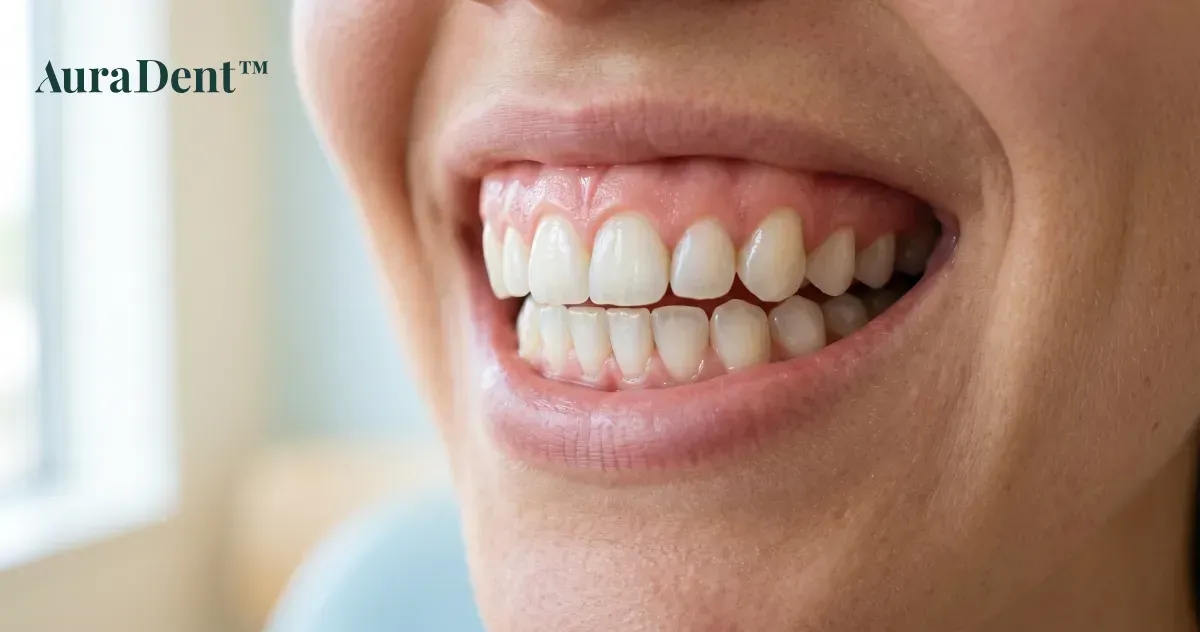
Many people wonder whether toothpaste can really whiten teeth. In a world filled with products promising a whiter smile, it can be difficult to know what works and what is just marketing. As dental experts, we will clarify how whitening toothpaste works, which ingredients are effective, and when caution is needed.
Key points in brief
- Whitening toothpaste removes surface stains but does not change the natural color of the teeth.
- Abrasive ingredients can damage enamel with overuse.
- Toothpaste containing hydrogen peroxide can lighten teeth somewhat but should be used with caution.
- People with sensitive teeth should choose milder alternatives with protective ingredients.
- The best toothpaste depends on your individual needs and habits.
What does whitening toothpaste contain?
A whitening toothpaste is designed to remove surface discoloration caused by coffee, tea, tobacco, or wine. Most contain abrasive particles, such as silica or calcium carbonate, which gently polish the tooth surface.
Some products also contain chemical agents like hydrogen peroxide or carbamide peroxide, which break down organic stains on the surface. There are also modern alternatives that use PAP (phthalimidoperoxycaproic acid), a milder and non-abrasive ingredient that brightens teeth without damaging enamel.
If you are looking for more natural alternatives, you can find toothpastes with ingredients like activated charcoal or sodium bicarbonate, but these can be too harsh for some teeth.
Unsure about when to brush your teeth for the best protection? Read what the dentist recommends and discover why timing can affect your oral health more than you think.
The risk of abrasive toothpaste: Is it dangerous for enamel?
Abrasive toothpastes work by mechanically removing surface stains. The problem arises when they are used too often or with a brush that is too hard. Then the protective enamel can gradually wear away, leading to sensitivity, increased discoloration, and a higher risk of cavities.
Therefore, dentists recommend choosing a toothpaste with a low RDA level (Relative Dentin Abrasivity). The RDA value indicates how abrasive the toothpaste is. For sensitive teeth, the value should be below 100. If you are unsure, you can ask your dentist to recommend a product that balances effectiveness and safety.
Baking soda and activated charcoal can also feel effective, but they should be used sparingly because they can scratch the tooth surface over time.
Whitening and sensitivity: A guide for sensitive teeth
Many people find that whitening toothpastes can cause sensitivity. This is often because the enamel becomes thinner or because the whitening ingredients penetrate the pores of the teeth. If you already have sensitive teeth, choose products that contain potassium nitrate or stannous fluoride, two substances that strengthen enamel and protect the nerve.
A good alternative is to alternate between a whitening toothpaste and one for sensitive teeth. That way, you get both effect and protection.
Remember that if sensitivity persists, you should contact your dentist for an assessment. In some cases, the cause may be worn enamel or another underlying dental issue.
Which toothpaste is best for whiter teeth?
There is no universal product that suits everyone. The best whitening toothpaste depends on your needs, habits, and dental health.
- For surface stains: choose a toothpaste with mild abrasives and fluoride.
- For sensitive teeth: use a combined product with potassium nitrate and a low RDA level.
- For modern results: consider toothpastes with PAP technology that provide an optical lightening effect without damaging enamel.
If you want faster results, you can supplement with professional teeth whitening at a dentist, which is always safer than experimenting with strong products at home.
Alternatives to whitening toothpaste
Whitening toothpaste can have some effect on surface stains, but if you want to achieve a clearly whiter smile, there are other methods. Professional teeth whitening under a dentist's supervision is both safer and more effective. You can also improve the result by:
- Brushing your teeth twice a day with fluoride toothpaste.
- Rinsing your mouth with water after coffee, tea, and wine.
- Avoiding tobacco, which discolors teeth.
- Undergoing regular cleanings with a dental hygienist.
Conclusion
Whitening toothpaste can be a good complement to your daily oral care routine, but it is not a miracle cure. The results are gradual and are affected by factors such as diet, oral hygiene, and the product's composition. For the best results, choose a toothpaste that suits your needs, use it in moderation, and consult a dentist if you experience sensitivity or discoloration.
Remember that whiter teeth start with good oral health. Through regular check-ups, professional cleanings, and the right products, you can maintain both healthy gums and a naturally beautiful smile.
At AuraDent, we help you choose safe and effective products that care for your enamel and provide long-lasting results.
Book an appointment today for personal advice and receive tailored recommendations for a healthy and radiant smile.
FAQs