
- General Dentistry
Everything You Need to Know About a Dental Checkup

-2.webp&w=3840&q=100)
Brushing your teeth and flossing daily are essential for oral hygiene, but they are not enough to protect your mouth in the long term. Regular dental checkups are the most important preventive measure for detecting problems early, maintaining dental health, and avoiding painful and costly treatments in the future. Even without symptoms, small changes can be taking place in your mouth, making routine visits to the dentist crucial for both your teeth and gums.
Key points at a glance
- Regular dental checkups make it possible to detect cavities, tartar, and gum disease early on.
- The examination includes a visual inspection, X-rays, and professional cleaning.
- Early treatment reduces the need for major procedures and saves both time and money.
- Regular checkups contribute to a healthier mouth and better overall health.
Why is a regular dental checkup so important?
A regular dental checkup is more than just a routine exam; it’s an investment in your health and quality of life.
Prevent problems before they arise
Many dental problems, such as cavities and gum disease, develop without pain or visible signs. Through regular checkups, the dentist can detect these early on and treat them with minor, gentle procedures before they worsen.
Checking Your Overall Oral Health
At each visit, we examine not only your teeth but also your gums, oral mucosa, and jaw function. This comprehensive assessment allows the dentist to identify even subtle changes that might otherwise go unnoticed.
Early detection of serious diseases
A dental examination also includes screening for conditions such as oral cancer. The dentist looks for sores, discoloration, and changes in the mucous membranes that may be signs of early disease development. Detecting these early increases the likelihood of successful treatment.
Wisdom teeth can sometimes affect your oral health without you noticing. If you want to know how they develop, when they should be removed, and what symptoms to watch for, read our article Everything You Need to Know About Wisdom Teeth: From First Symptoms to Treatment for a clear and reassuring overview from the dentist’s perspective.
What happens during a dental examination at AuraDent?
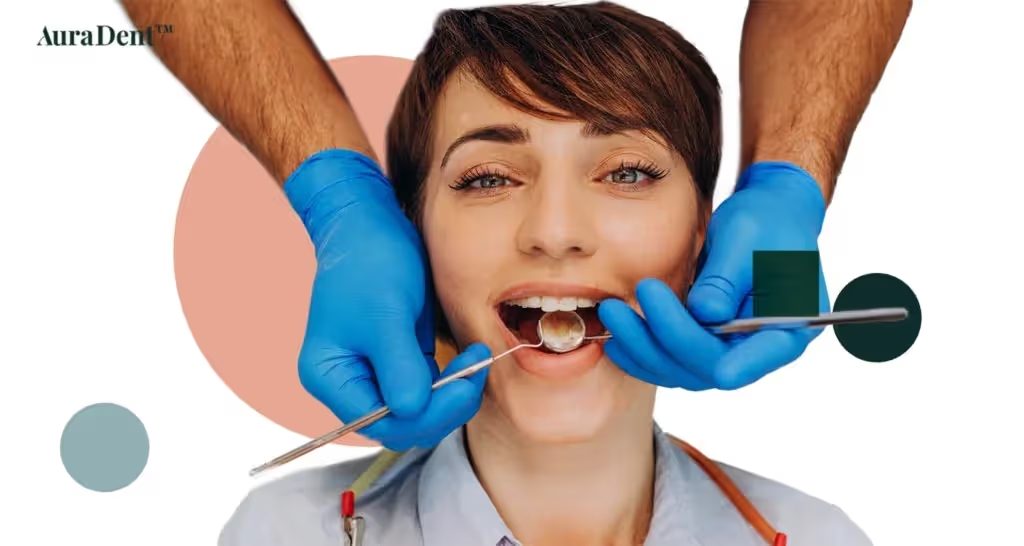
Understanding how a dental examination is conducted can reduce anxiety and create a sense of security before the visit. At AuraDent, the examination is carried out thoroughly and systematically.
Visual inspection and dialogue
The dentist begins by examining the teeth, gums, and mucous membranes, as well as having a conversation about your oral care, any issues you may be experiencing, and previous dental treatments.
X-rays
X-rays complement the visual inspection and make it possible to detect cavities, infections, and bone loss that are not visible to the naked eye.
Professional cleaning
The dental hygienist removes plaque and calculus from hard-to-reach areas, polishes the teeth, and gives them a smooth, clean surface. The treatment not only improves appearance but also reduces the risk of cavities, gum inflammation, and bad breath.
Personalized treatment plan
After the examination, the dentist reviews the results and presents an individual treatment plan with recommendations for continued preventive dental care.
How often should you go for a dental checkup?
How often you need regular dental checkups depends on your age, oral health, and lifestyle. For most people, once a year is sufficient, but some may need more frequent checkups.
- Children: It is recommended to start at age one and continue every six months to prevent early tooth decay.
- Adults: An annual checkup is usually sufficient, but if you have gum problems or a lot of tartar, checkups every six months are recommended.
- Seniors: Older adults need regular checkups to monitor their gums, manage dry mouth, and check existing fillings or implants.
If you are experiencing toothache, bleeding gums, sensitivity, or changes in your bite, you should schedule an additional examination as soon as possible.
If you have recently undergone treatment and are still experiencing discomfort or pain, it may be a sign that your body needs more time to recover. Read our article When the Pain Persists: A Guide to Managing Toothache After Treatment to understand what is normal, when you should contact your dentist, and how you can safely relieve the pain.
Conclusion
Scheduling regular dental checkups is the easiest way to achieve a strong and healthy smile. At AuraDent, you’ll meet experienced dentists and dental hygienists who use modern technology for accurate diagnosis and safe treatment.
Prevent problems early on and don’t let small changes turn into major concerns.
Book a dental checkup at AuraDent™ today and experience the difference with professional, preventive dental care.
FAQs
-1.webp&w=3840&q=100)
-2.webp&w=3840&q=100)