
- General Dentistry
- Dental Hygiene
How Does Smoking Affect Your Teeth? Everything You Need to Know

Key Points in Brief
- Smoking discolors teeth as nicotine and tar penetrate the enamel.
- Bad breath is caused by reduced saliva production and bacterial growth.
- Gum problems such as gingivitis and periodontitis occur more often in smokers and are more difficult to treat.
- Oral cancer is one of the most serious consequences of long-term smoking.
- Professional dental care and smoking cessation together can restore both appearance and oral health.
Why Do Teeth Become Yellow from Smoking?
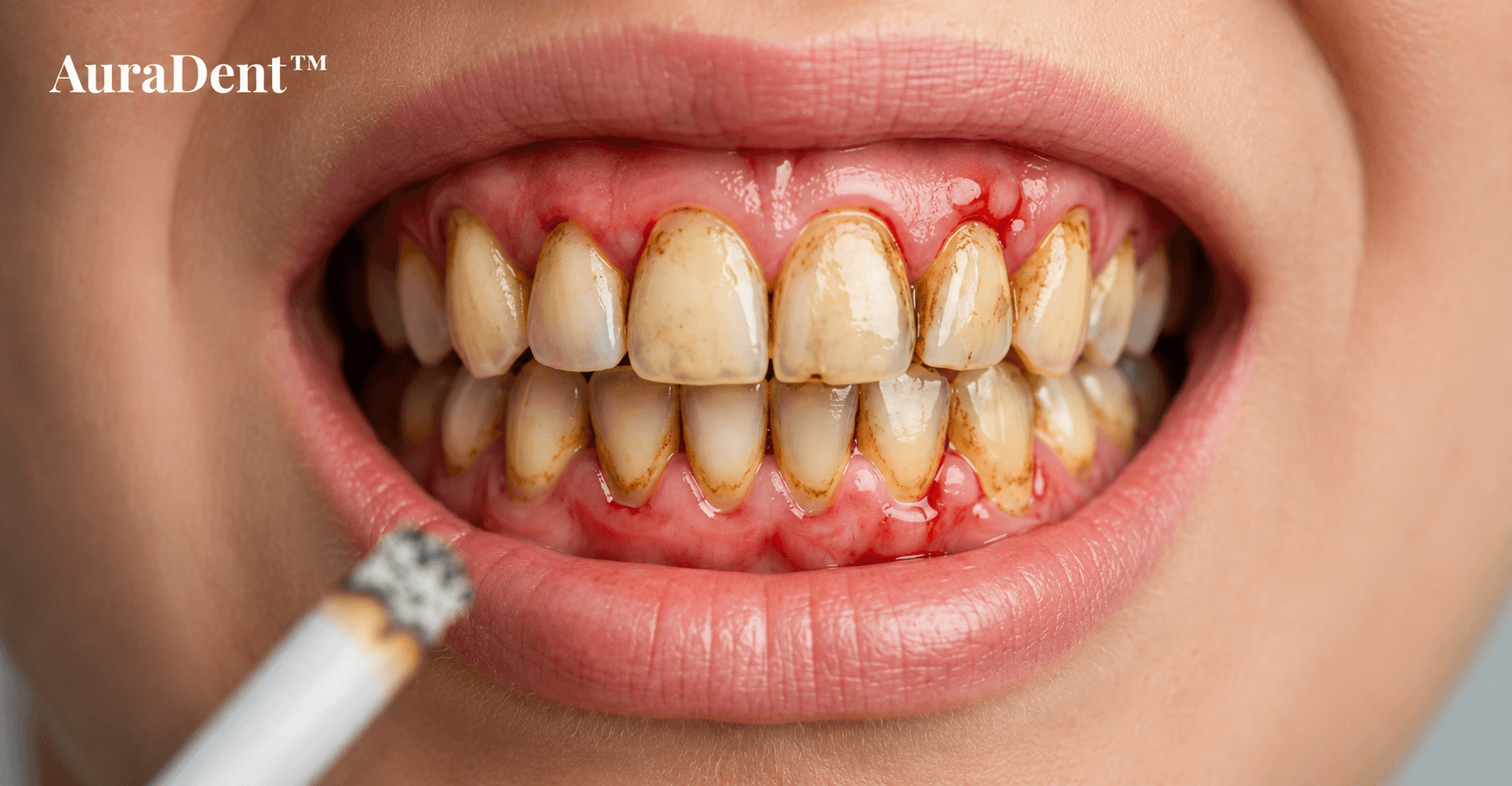
The most visible effect of smoking is discolored teeth. Nicotine and tar adhere to the tooth surface after only a short time, leaving yellow to brown stains that are difficult to remove. For many, this becomes a constant source of insecurity, as the smile is often the first thing others notice.
Over time, these substances penetrate deeper into the pores of the enamel, meaning that regular brushing routines are not enough to restore the tooth's natural color. Even whitening toothpastes and mouthwashes have limited effect when the discoloration is extensive.
For the best results, professional treatments such as teeth whitening or gentle dental cleaning by a dentist are required. At AuraDent™, we use methods that can remove even deep stains and restore a brighter, healthier smile.
Do you want to learn more about how to strengthen your gums and protect your oral health in the long term? Read our guide: "Healthy Gums: Prevent Gum Disease & Keep Your Mouth Healthy."
Bad Breath: A Common Consequence of Smoking
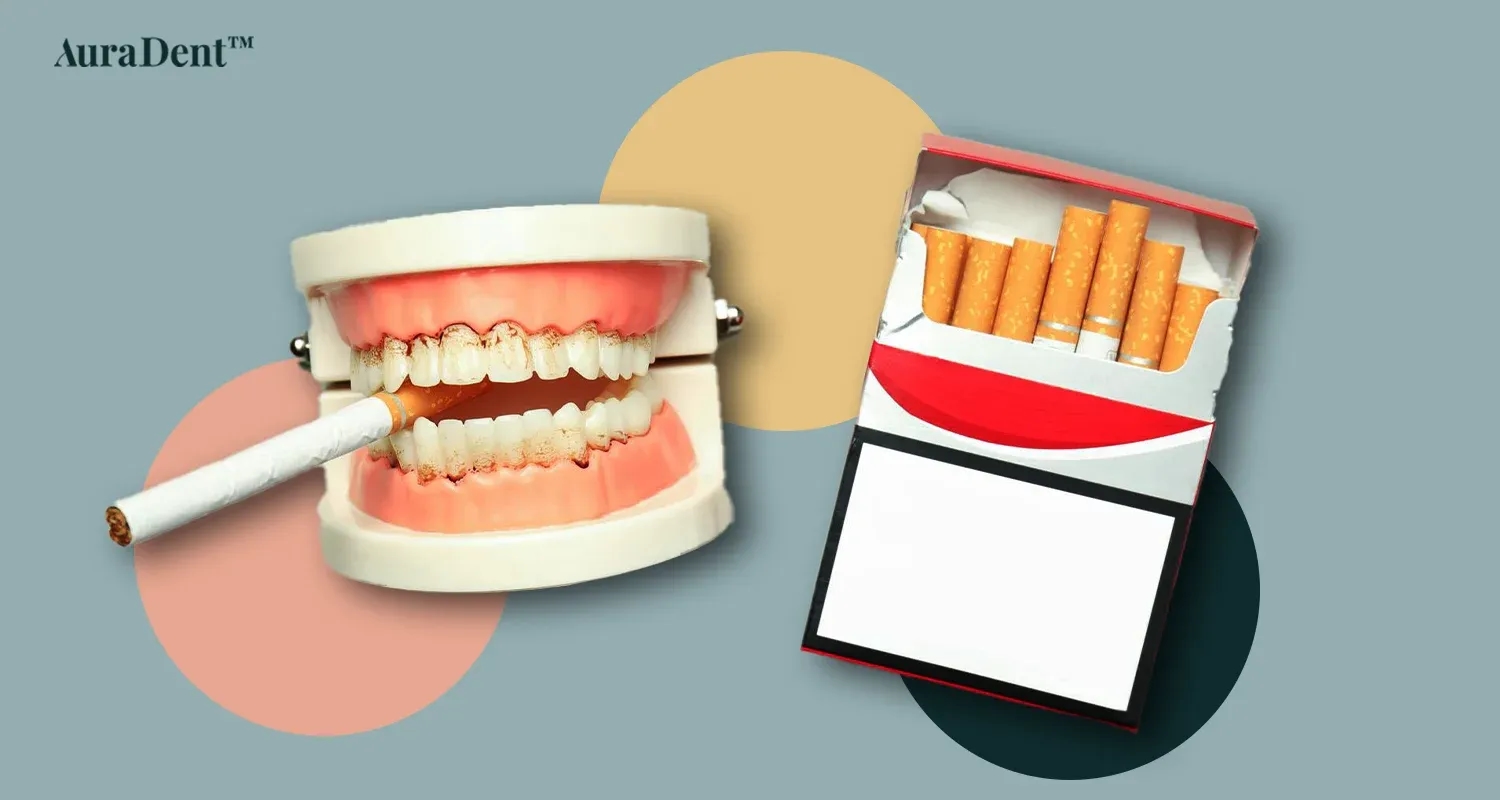
Smokers often suffer from persistent bad breath, also called halitosis. This is because smoking reduces saliva production and dries out the mouth. Saliva is the body's natural defense system against bacteria, as it washes away food debris and neutralizes acids. When saliva decreases, bacteria take hold and produce foul-smelling substances.
This not only leads to a bad taste in the mouth but can also affect social relationships and self-confidence. Many smokers try to hide the problem with gum, mouthwash, or strong lozenges, but these are only temporary solutions that do not address the root cause.
The best way to improve breath is to quit smoking while getting professional help to clean teeth and gums. Regular visits to the dentist make it easier to keep the mouth healthy and odor-free in the long term.
Do you also want to learn more about how smoking can contribute to bad breath and what you can do about it? Read our guide: "Bad Breath: Causes, Home Remedies & Treatment."
Smoking and Gum Problems
Smoking is one of the biggest risk factors for gum disease. The chemicals in cigarettes affect blood circulation in the gums, making it harder for the body to fight bacteria and heal from inflammation. This leads to smokers developing gingivitis and periodontitis more often than non-smokers.
Symptoms may begin as swollen and bleeding gums, but if the problem is not treated, it can develop into receding gums, loose teeth, and in the worst case, tooth loss. Additionally, smokers respond worse to treatments such as scaling, root planing, or surgical procedures because the healing process is impaired.
Detecting these problems early is crucial. Regular dental visits and professional cleaning are therefore even more important for smokers than for others.
How Does Smoking Affect the Risk of Oral Cancer?
The most serious consequence of smoking on the mouth is oral cancer. Studies show that approximately 80% of all people with oral cancer are tobacco users. Cancer can occur on the tongue, gums, lips, or inside the cheeks.
The cause is the carcinogenic substances in tobacco smoke that damage cell DNA and over time lead to uncontrolled cell growth. Smoking also weakens the immune system, making it harder for the body to repair the damage.
Early signs of oral cancer can include sores that do not heal, red or white patches in the mouth, lumps, difficulty chewing or speaking, and numbness. If these symptoms persist for longer than two weeks, it is important to contact a dentist or physician immediately.
Regular examinations by a dentist can increase the chance of detecting changes early and thus improve the prognosis.
Conclusion: It Is Never Too Late to Improve Your Oral Health
The question "How does smoking affect your teeth?" is not just about discolored teeth. Smoking also increases the risk of bad breath, gum disease, and oral cancer. At the same time, there is hope. With professional dental care, the damage can be limited, and quitting smoking provides great benefits for the entire body.
Even if you have smoked for many years, it is never too late to start improving your oral health. A combination of regular dental visits, professional cleaning, and lifestyle changes can give you a healthier smile and reduce the risk of future problems.
Book an appointment at AuraDent™ today for a free consultation. We will help you take the first step toward whiter teeth, healthier gums, and stronger oral health.
FAQs