
- General Dentistry
- Dental Hygiene
Invisalign and Oral Health: Factors to Consider for Patients with Existing Conditions

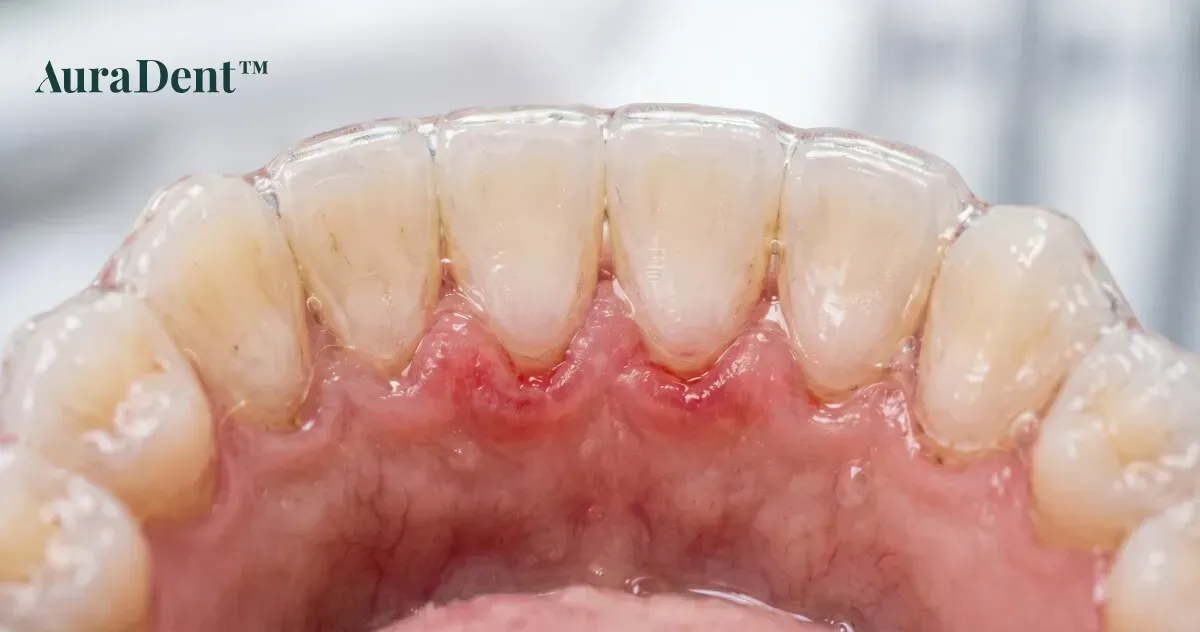
Many are attracted to the possibility of achieving a straighter smile with Invisalign, but it is important to understand how the treatment affects oral health. For individuals with pre-existing problems such as gum disease or jaw joint issues, extra consideration is required. In this article, we go through how Invisalign and oral health are connected, what risks and disadvantages exist, and what you should consider before starting treatment.
Key Points in Brief
- Invisalign and oral health are closely linked, especially for those with periodontitis, jaw joint issues, or exposed tooth roots.
- Thorough oral hygiene is crucial for preventing cavities, inflammation, and irritation during treatment.
- A professional assessment before starting ensures that Invisalign and oral health work in balance for long-term results.
- The treatment can sometimes reduce jaw pain and teeth grinding by stabilizing the bite and evening out pressure.
- Always consult your dentist to determine whether Invisalign and oral health are in the right balance for you before beginning treatment.
How Does Invisalign Work?
Invisalign uses transparent, custom-made aligners that gradually move the teeth into the desired position. The aligners are replaced regularly, usually every week, which moves the teeth in small steps over a controlled period.
Unlike traditional braces without metal brackets, Invisalign is a more discreet option that also provides good comfort. The treatment is used to correct overbite, underbite, crossbite, crowding, and gaps between teeth. For the best results, the aligners must be worn at least 20–22 hours per day.
Most Common Risks and Disadvantages of Invisalign
Invisalign is a modern and effective way to straighten teeth, but it is important to be aware of the possible risks and limitations before starting treatment. Some patients may experience temporary discomfort or effects on pre-existing dental problems. Below, we go through the most common risks and disadvantages of Invisalign and how you can prevent them with proper care and guidance.
Risk 1: May worsen gum disease (periodontitis)
Periodontitis is a chronic infection that affects the gums and bone around the teeth. If you already have weakened bone support, the pressure created during Invisalign treatment can lead to further bone loss.
Therefore, periodontitis should always be treated before starting Invisalign. A specialist dentist, a periodontist, can restore a stable foundation for the teeth and reduce the risk of complications. Ignoring gum disease can lead to tooth movement, inflammation, and in the worst case, tooth loss. At AuraDent, we offer thorough periodontal evaluations for patients considering Invisalign.
Risk 2: Problems with exposed tooth roots
Receding gums expose the tooth roots, which can cause pain and sensitivity. Invisalign does not itself cause gum recession, but the pressure from the aligners can worsen existing sensitivity.
If you have exposed tooth roots, the dentist should first stabilize the gums before treatment. In some cases, special mouthguards or extra gentle adjustments may be needed to avoid irritation during tooth movement.
Risk 3: Requires extremely thorough oral hygiene (risk of cavities)
Because Invisalign aligners tightly enclose the teeth, they can trap bacteria and moisture, increasing the risk of tooth decay and inflammation if oral hygiene is not optimal.
Teeth should be brushed and cleaned thoroughly after every meal, and the aligners should be cleaned daily to prevent bacterial buildup. If you already have fillings or small cavities, it is important that the dentist assesses their condition before treatment begins. Neglecting cleaning can lead to new cavities forming around fillings or along the gum line.

Opportunity or Risk? Invisalign for Jaw Joint Issues (TMD)
Temporomandibular dysfunction (TMD) can lead to pain, stiffness, and headaches. Studies show that Invisalign can, in some cases, relieve TMD symptoms because the aligners act as a protective barrier, similar to a bite splint.
By evening out the bite load, Invisalign can reduce tension in the jaw and alleviate symptoms such as teeth grinding. However, if the jaw joint is already inflamed, the treatment should be carefully planned to avoid worsening the discomfort. AuraDent always performs an individualized assessment for patients with TMD before starting Invisalign treatment.
Before you begin your Invisalign journey, make sure your oral health is in top condition. In the article "Invisalign and Oral Health: Factors to Consider for Patients with Existing Problems," you will learn which conditions can affect treatment and how to avoid complications.
Despite the Risks: What Are the Benefits of Invisalign?
For patients with good oral health, Invisalign offers many benefits. The invisible aligners are comfortable, removable, and provide a discreet way to straighten teeth. The treatment facilitates cleaning compared to fixed braces, since the aligners are removed during meals and brushing.
Additionally, Invisalign can contribute to better long-term dental health. When teeth are straighter, it becomes easier to keep them clean and reduce the risk of cavities, gum problems, and wear.
Do you want to learn more about how to combine aesthetic orthodontics with good oral health? Read our article "Healthy Gums: Prevent Gum Disease and Keep Your Mouth Healthy" and learn how healthy gums strengthen your entire smile.
Consult a Dentist Before Starting Invisalign Treatment
Before starting treatment, a thorough examination is crucial. The dentist assesses the health of the gums and teeth, identifies risks, and determines whether Invisalign is the best option.
During the consultation, treatment duration, cost, cleaning routines, and follow-up are discussed. At AuraDent, you receive a personalized treatment plan that takes into account your existing problems and goals.
Book a free consultation at AuraDent™ to find out whether Invisalign is the right solution for you and to receive professional guidance from our experienced dentists.
Are you concerned about potential discomfort during Invisalign treatment? In "Is Invisalign Painful? What Should You Expect?" we explain everything about the first few days, adaptation, and how to safely manage sensitivity.
Summary: A Safe Invisalign Journey Begins with the Right Knowledge
Invisalign and oral health are closely interconnected. The treatment can deliver amazing aesthetic results, but it requires careful planning and a healthy starting point. If you have problems such as gum disease, tooth sensitivity, or jaw joint issues, these should always be treated first.
With the right preparations, thorough oral hygiene, and professional follow-up, Invisalign can be a safe and effective way to create a beautiful and healthy smile.
Take the first step toward a straighter and healthier smile – book your consultation at AuraDent™ today. Our specialists will help you find the right solution based on your unique circumstances.
FAQs