
- Dental Hygiene
Protect your teeth with water: myths, facts, and the dentist's advice

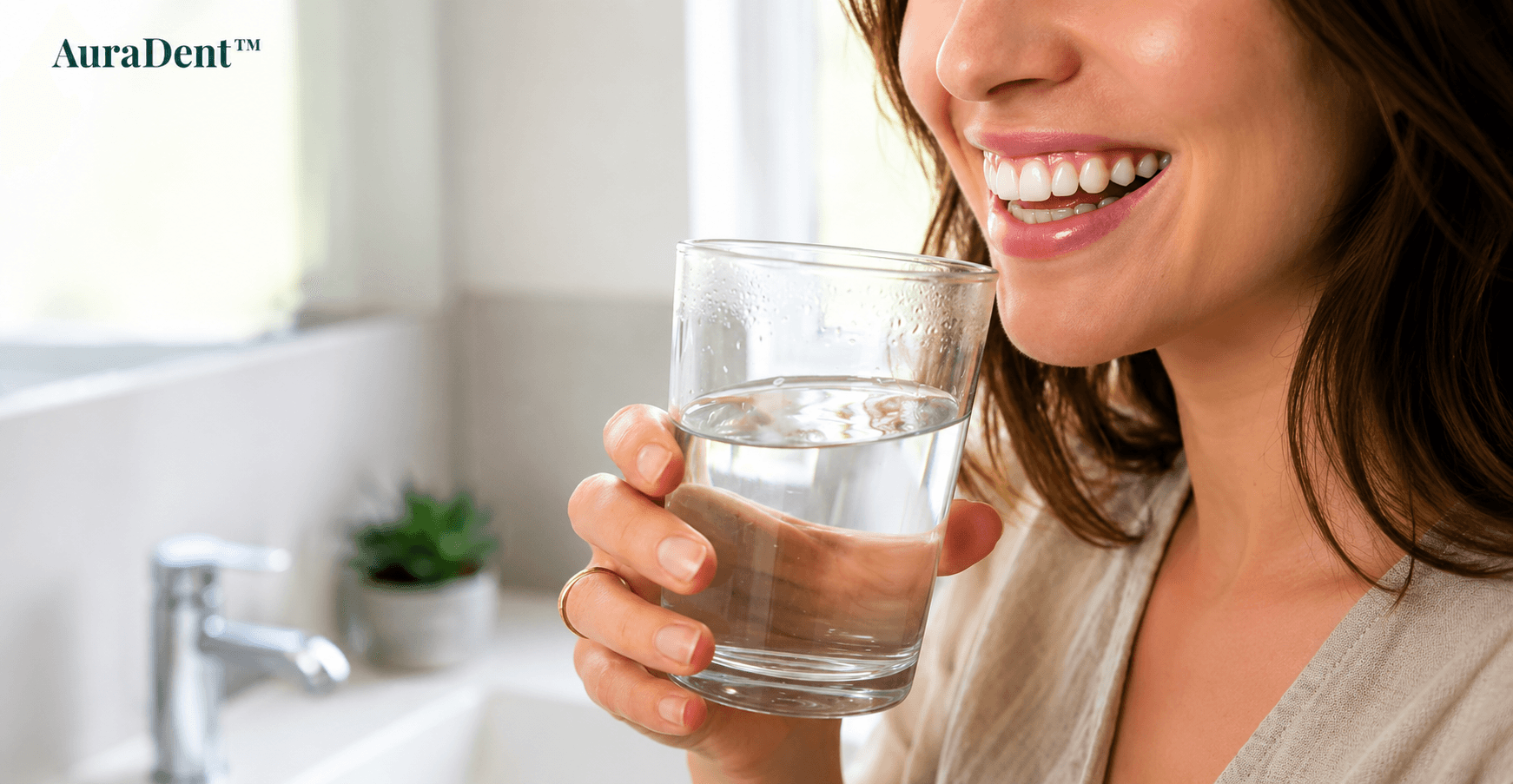
Everyone knows that water is essential for life, but few people think about just how important it actually is for oral health. Many wonder, for example, whether you can truly protect your teeth with water, and whether carbonated water or lemon water is harmful to enamel. In this article, we clarify what the research says, explain how water affects the pH level in the mouth, and reveal what really helps neutralize acid in the mouth. You will also receive practical tips from the dentists at AuraDent on how to drink smarter to maintain strong and healthy teeth.
Why water is crucial for your oral health
Oral health is not just about brushing your teeth and flossing. A well-balanced and hydrated oral environment is essential for preventing cavities, inflammation, and bad breath.
Water helps rinse away food particles, reduce bacterial buildup, and stimulate saliva production. Saliva acts as the body's own defense system against acids and bacteria, while also helping to remineralize enamel. When you drink water regularly, you help maintain a stable pH level in the mouth, which in turn protects against erosion and acid attacks.
Drinking water after meals and snacks is a simple way to protect your teeth with water and promote both dental health and fresh breath.
For those who want to learn more about how to naturally hydrate the mouth and relieve dryness, we recommend the article Dry Mouth (Xerostomia)? Causes, 10 Home Remedies, and Effective Treatment, where you will find the dentist's best advice for maintaining a healthy and moist oral environment.
Is carbonated water bad for your teeth?
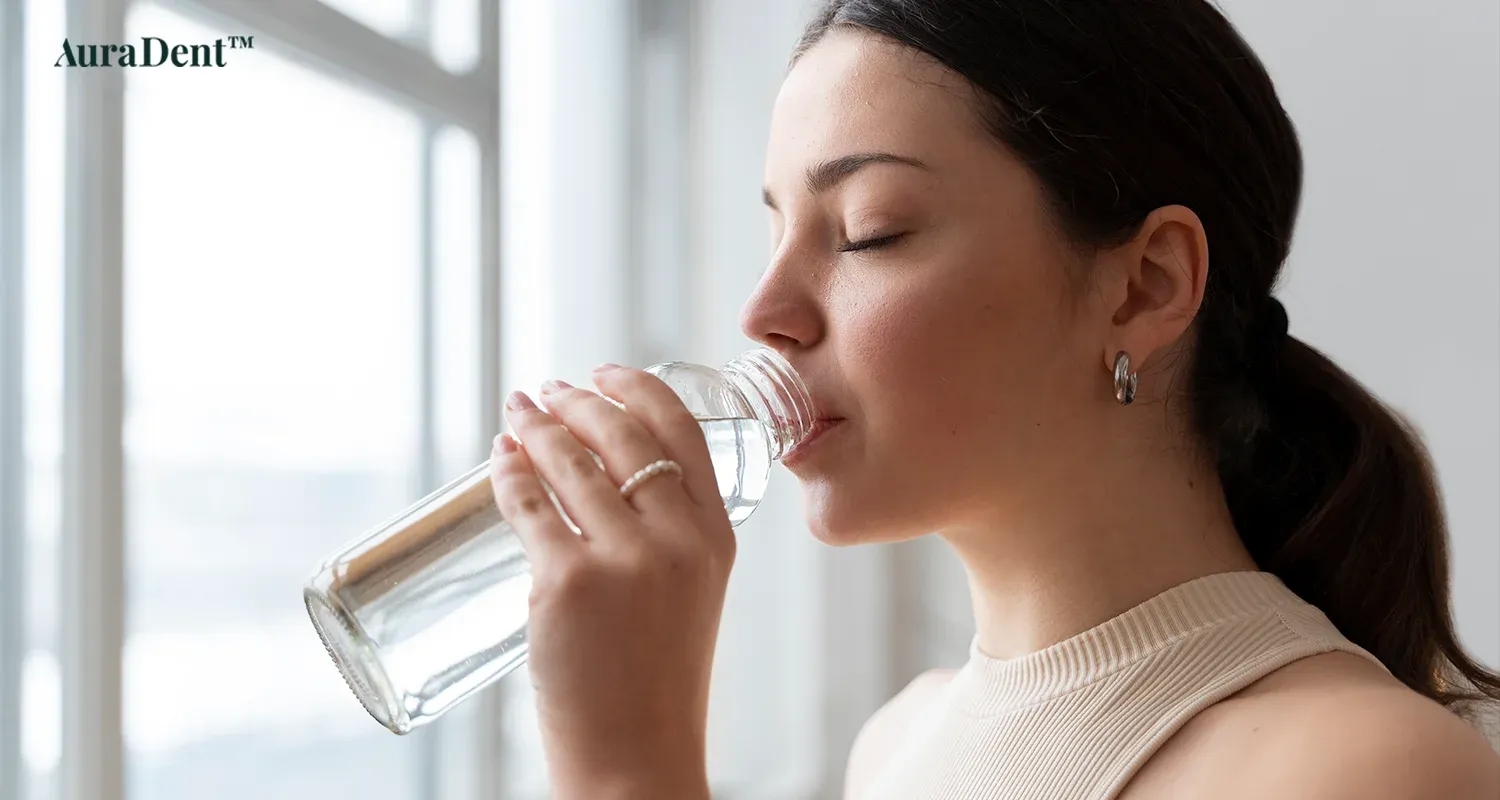
One of the most common questions among patients is whether carbonated water is harmful to teeth. The short answer is: no, not necessarily.
Carbonated water contains carbon dioxide, which forms carbonic acid, slightly lowering the pH level. However, the acid level is still significantly lower than in soda, juice, or wine. Therefore, plain carbonated water without added sugar or flavorings is generally safe for enamel.
Problems can arise with flavored varieties, however. Lemon water, lime water, or other acid-based flavors have a much lower pH level and can lead to dental erosion with repeated consumption.
To reduce the risk, dentists recommend drinking carbonated water with meals rather than taking small sips throughout the day. This gives your mouth time to restore its natural pH balance.
Lemon water and its impact on teeth
Many people drink lemon water daily for its refreshing taste and purported health benefits. However, from a dental perspective, caution is advised.
Lemon contains citric acid, a strong acid that can dissolve the surface layer of enamel and cause dental erosion. The acid gradually affects the tooth surface, making it more sensitive to temperature changes, discoloration, and cavities.
To reduce the risk, you can:
- Drink lemon water quickly rather than sipping it over a long period.
- Use a straw to minimize contact between the acid and your teeth.
- Rinse your mouth with plain water immediately afterward to neutralize acid in the mouth.
- Wait at least 30 minutes before brushing your teeth, as the acid temporarily weakens the enamel.
Lemon water is not forbidden, but it requires mindful consumption and careful oral care to avoid damaging your teeth.
Is it okay to drink water immediately after brushing your teeth?
This is a common question—whether you can drink water after brushing, especially when brushing with fluoride toothpaste. The answer is that you should wait about 20–30 minutes before drinking.
Fluoride needs time to penetrate the enamel and strengthen its protection against acid attacks. If you rinse your mouth immediately with water, you dilute the fluoride's effect and reduce its protective action.
A tip is to only spit out the toothpaste residue and let a small amount of fluoride remain in your mouth after brushing. This gives your teeth stronger protection and helps you protect your teeth with water in the right way.
Want to learn more about the best time to brush your teeth and how to maximize fluoride protection? Read the article Brush your teeth before or after breakfast? Here's the answer from the dentist to get the dentist's recommendations for an effective morning routine.
How water helps balance the pH level in your mouth
After every meal, the pH level in your mouth changes. When it drops below 5.5, acids begin to dissolve minerals from the enamel, leading to cavities and dental erosion.
By drinking water, you help neutralize acid in the mouth and restore the pH level to a neutral balance. Water thus acts as a natural buffer that protects enamel from the acidic effects of food and drink.
For the best effect, you can rinse your mouth with water immediately after eating or drinking something acidic, such as juice, wine, or flavored carbonated water.
Practical tips for drinking more water throughout the day
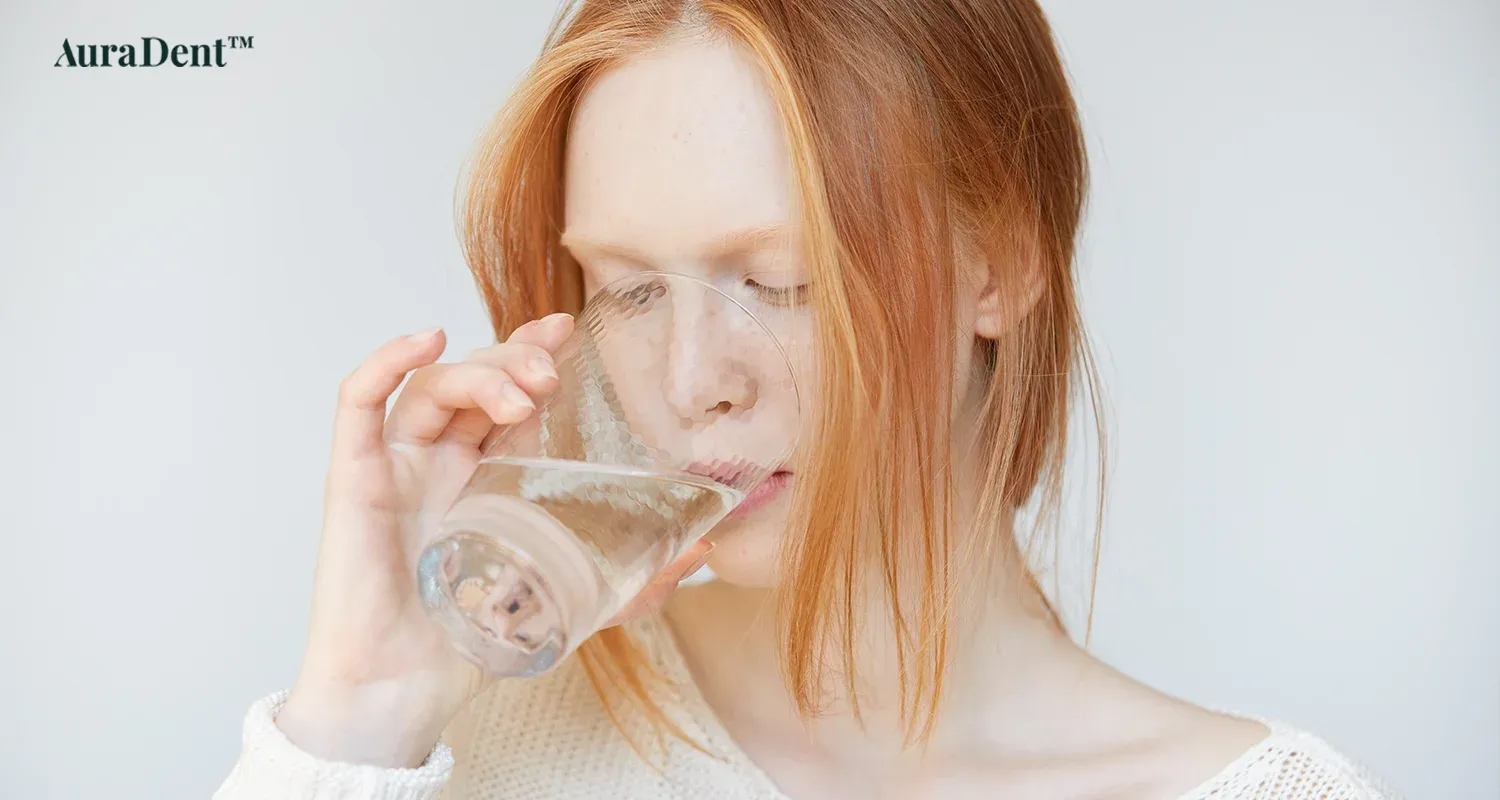
Drinking enough water every day is a simple but often overlooked habit that benefits the entire body. Here are some practical ways to increase your daily water intake:
- Always keep a reusable water bottle nearby and refill it regularly.
- Set reminders on your phone if you often forget to drink.
- Add natural flavor to your water with cucumber, mint, or berries instead of acid-rich lemon.
- Drink a glass of water before and after each meal.
- Replace sugary drinks like juice, soda, or energy drinks with water.
- Drink water even when you don't feel thirsty, as thirst is a sign that your body is already mildly dehydrated.
With small adjustments in your daily routine, you can improve your overall health while effectively protecting your teeth with water.
Conclusion
Drinking water regularly is one of the most effective and natural methods for protecting both your teeth and gums. Water helps rinse away bacteria, neutralize acid in the mouth, stimulate saliva production, and maintain a balanced pH level in the mouth.
Plain carbonated water is harmless in most cases, while acidic drinks like lemon water should be consumed with caution. By drinking water correctly and at the right times, you can easily and safely protect your teeth with water and promote long-term oral health.
If you suspect dental erosion or have questions about how your diet affects your dental health, you are warmly welcome to book a free consultation at AuraDent. Our dentists will provide you with personalized advice and practical tips for stronger, healthier teeth every day.
FAQs