
- General Dentistry
Can You Eat Candy with Braces? What You Really Need to Know
.webp&w=3840&q=100)

For many children, teenagers, and even adults, candy is a natural part of daily life, weekends, and holidays. It is therefore completely understandable that many wonder whether it is possible to continue eating candy during orthodontic treatment, especially when brackets, wires, and cleaning make everything a bit more complicated.
When using fixed braces, there are several types of candy that should be avoided entirely, as they can cause damage to the braces or increase the risk of cavities. However, there are alternatives that, in limited amounts and with good oral hygiene, may be acceptable.
In this article, we go through:
- Which types of candy should be avoided entirely
- Which alternatives can be consumed in small amounts without risking brackets or wires
- How you can reduce the risk of damage and cavities even if you eat sweets
- How Invisalign can be an option for those who want to avoid food restrictions
The aim is to provide you with clear guidelines so that you can make informed decisions and avoid common complications. The success of your treatment is based not only on the braces themselves but also on how well you care for them in your daily life.
How do braces work, and how long do you need to wear them?
Before we answer the question of whether you can eat candy while wearing braces, let’s first look at how braces work and what actually happens in your mouth during treatment. Braces gradually move your teeth into the correct position and are used to correct everything from crowded teeth to an overbite. Treatment time varies, but most people wear braces for 1–3 years. You can read more about how long braces are worn and specifically how long braces are worn for an overbite if you want to know more about that particular type of treatment. Want to understand the process better? Here we explain how braces work.
Can you eat candy when you have braces?
Yes, but it requires caution and good knowledge of which types of candy are safe. Some sweets can be consumed in limited amounts even during orthodontic treatment with braces, especially if you are careful and maintain thorough oral hygiene. However, there are many types of candy that should be avoided entirely because they can cause damage to the braces while also increasing the risk of cavities.
It is therefore important to know the difference between what may be acceptable occasionally and what should be avoided altogether.
For those being treated with Invisalign, there is a clear advantage. Since the aligners are removed before you eat, you can enjoy candy without affecting the appliance, as long as you brush your teeth thoroughly before putting the aligners back in. This reduces both the risk of mechanical damage and the risk of acid and sugar damage to the teeth.
In addition to candy, it is also good to think about other snacks in daily life. For example, consider that some snacks, like chips, can be particularly difficult to manage with fixed braces. Many people wonder, can you eat chips with braces? It depends on how hard they are, sharp pieces can easily damage brackets or get stuck between wires. Therefore, always choose carefully and avoid harder varieties if you want to avoid unnecessary problems.
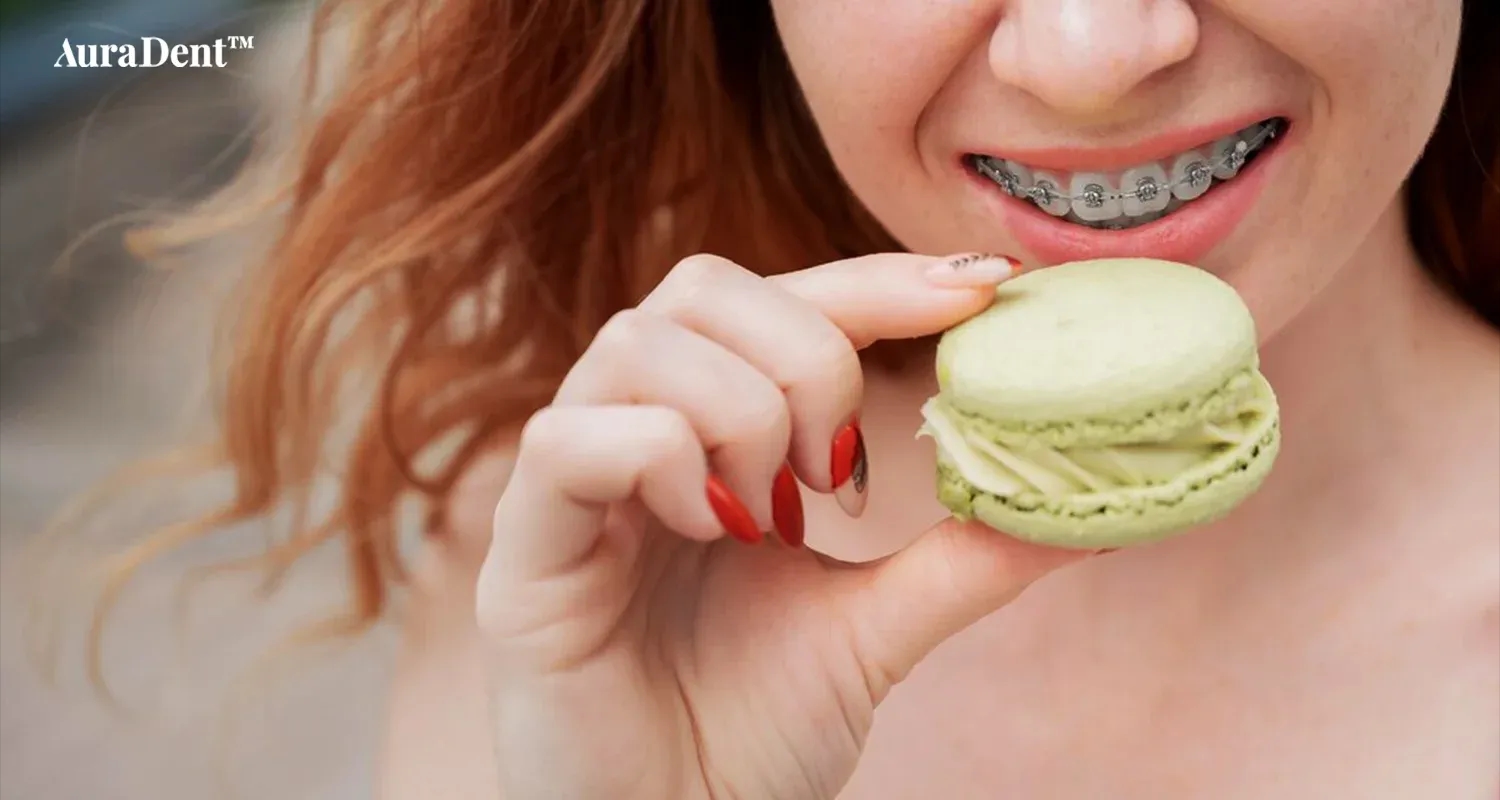
Which types of candy should be avoided entirely during orthodontic treatment with braces?
Certain types of candy pose a clear risk to both the braces and dental health. They can cause brackets to loosen, wires to bend, or oral hygiene to become more difficult, which increases the risk of cavities. Three main categories should be avoided entirely:
Sticky and chewy candies
These foods easily get stuck in brackets and wires, which can cause parts of the braces to come loose or make cleaning more difficult:
- Caramel
- Toffee
- Chewing gum
- Chocolate with chewy fillings, such as fudge or nougat
Hard candies
Hard foods require a lot of chewing force and can cause mechanical damage to braces:
- Hard caramels and lollipops
- Chocolate with hard nut fillings
- Particularly hard jelly candies or hard candies
Sour and acidic candy
These contain high levels of acid that erode tooth enamel. In combination with fixed braces, where cleaning is more complicated, the risk of erosive damage and cavities increases:
- Sour gummy belts/straps
- Sour hard candies
- Foam/gummy candy with sour powder
Which candy can be consumed in limited amounts with braces?
Even though many types of candy should be avoided entirely during orthodontic treatment, there are some alternatives that may be acceptable in small amounts, provided that oral hygiene is maintained carefully and consumption does not occur too frequently.
Examples of candy and sweet foods that may be possible in limited amounts:
- Soft chocolate pieces without nuts or chewy fillings
- Marshmallows
- Soft baked goods such as sponge cake or muffins
- Fruit smoothies without added sugar as an alternative when craving something sweet
Even these alternatives should be eaten sparingly and preferably in connection with a meal. Snacking on sweets between meals increases the risk of cavity development, especially when the components of braces make cleaning more complicated.

Important Tips for Eating Candy While Wearing Braces
Eating candy while undergoing orthodontic treatment requires caution and careful choices. Some sweets can be consumed in limited quantities if you maintain good oral hygiene, but the risk of cavities and damage to your braces is significantly higher than usual. Here are some important tips for those who still choose to eat candy:
- Eat candy with a main meal. Snacking on sweets between meals increases the number of acid attacks on your teeth and is a clear risk factor for tooth decay.
- Drink water right after eating to help rinse away sugar and acids, but remember that this does not replace brushing your teeth.
- Brush your teeth as soon as possible after eating candy. We recommend using an orthodontic toothbrush in combination with fluoride toothpaste.
- If you’ve eaten acidic candy, you should wait at least 30 minutes before brushing your teeth, as the enamel is temporarily weakened after acid exposure.
- Supplement your cleaning with dental floss, interdental brushes, or an oral irrigator to clean around brackets and under wires where bacterial plaque otherwise easily accumulates.
For those using Invisalign, the conditions are more favorable. Since the aligners are removed during meals, you can eat candy without affecting the treatment appliance itself. However, it is very important to brush your teeth thoroughly before putting the aligners back in to prevent cavities and plaque buildup under the aligner.
Being selective about what and when you eat, as well as being meticulous with cleaning afterward, is crucial for protecting both dental health and the braces throughout the treatment period.
What can happen if you eat too much candy while wearing braces?
Excessive consumption of candy, especially when combined with poor oral hygiene, can lead to several negative consequences during orthodontic treatment. These risks affect both dental health and the function of the braces themselves. Below are the most common complications:
- Increased risk of tooth decay
Sugar from candy easily gets stuck in and around braces and orthodontic wires. This provides bacteria with a rich source of nutrients, leading to acid attacks on tooth enamel.
- Increased risk of tooth decay
Sugar from candy easily gets stuck in and around braces and orthodontic wires. This provides bacteria with a rich source of nutrients, leading to acid attacks on tooth enamel.
- Mechanical damage to braces
Hard or sticky candies can cause brackets to come loose or wires to bend. This can delay treatment and require additional visits for repairs.
- Demineralization and White Spots
When acid produced by bacteria dissolves minerals in the enamel, a process known as demineralization occurs. This can lead to white spots that become visible only after the braces are removed. These spots are often permanent and can affect the appearance of the teeth even after successful treatment.
All in all, this means that candy consumption should be kept to a minimum and that thorough cleaning afterward is crucial for protecting both dental health and treatment results.
Summary and Next Steps
Wearing braces doesn’t mean you have to give up candy entirely, but it does require making conscious choices and practicing good oral hygiene. Hard, sticky, and acidic candies can damage brackets and orthodontic wires and increase the risk of cavities and demineralization. These should be avoided.
Instead, choose softer options that are less harmful, limit consumption to special occasions, and brush your teeth thoroughly afterward. Feel free to use orthodontic cleaning aids, such as specially designed floss or interdental brushes.
For those using Invisalign, daily life is often easier. Since the aligners are removed before eating, the risk of mechanical damage and sugar buildup around the appliance is reduced. This allows for greater freedom in food choices, but it is still crucial to brush and clean your teeth before putting the aligners back in, to prevent plaque buildup and the development of cavities.
Are you curious about how you can begin treatment yourself? Feel free to read about what to say to get braces, or book a free consultation with us for a personal assessment.
FAQs