- General Dentistry
How do braces work? This is how the treatment works
.webp&w=3840&q=100)
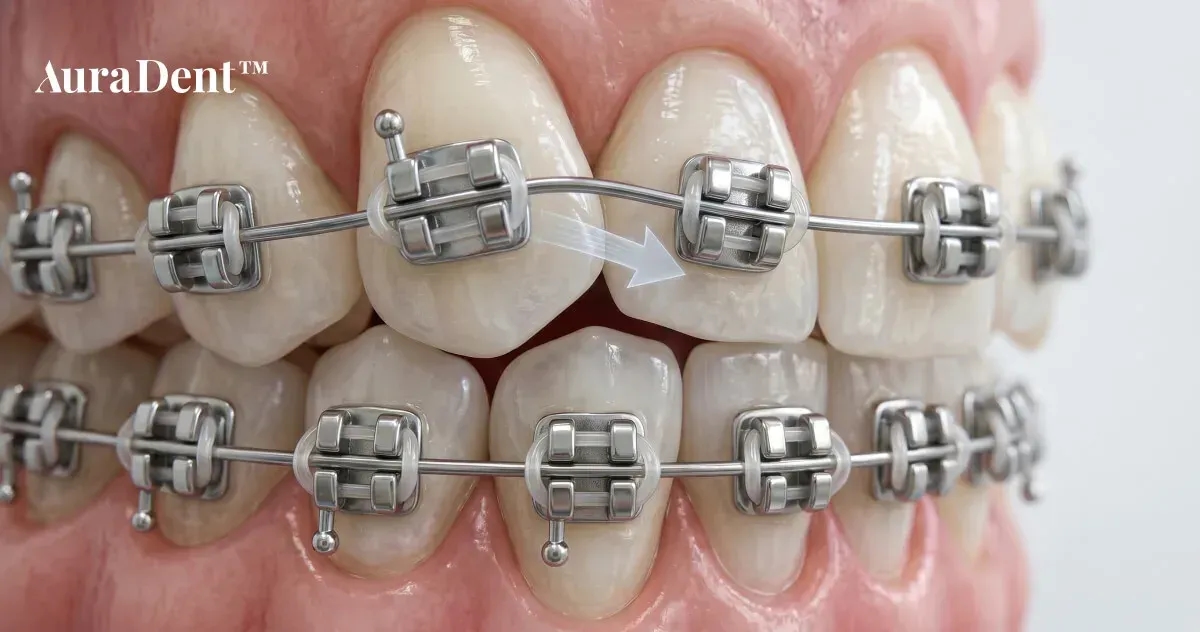
Braces, or orthodontic appliances, are a common and effective way to correct crooked teeth and bite problems. They are used to improve both the function and appearance of the teeth. But before treatment begins, it is good to understand how braces actually work and why they are needed. The more you know, the easier it becomes to follow the treatment and achieve the best possible result.
How do braces straighten teeth?
Braces work by slowly and controllably moving teeth using constant, gentle pressure. This pressure affects both the teeth and the bone they are anchored in.
When pressure is applied:
- The bone on one side of the tooth begins to break down.
- Simultaneously, new bone is built up on the other side.
- In this way, the tooth can gradually move into its correct position.
The biological process that enables orthodontic treatment is called bone remodeling. It is through this continuous rebuilding of the jawbone that the teeth can gradually be moved into the desired position with the help of braces. Common questions include, for example, "what should you say to get braces?" and "are braces free for children?" In our informative guides, we go through what affects the need for treatment and what rules apply to free orthodontics for children and adolescents.
What parts does a set of braces consist of?
A classic set of braces consists of several parts, each with a specific function:
- Brackets: Small attachments that are glued onto each tooth. They hold the orthodontic wire.
- Archwire: A thin metal wire that connects between the brackets and creates the pressure that moves the teeth.
- Elastics (rubber bands): Sometimes used to adjust the bite, particularly between the upper and lower jaws.
- Retainers: Used after the braces are removed to maintain the teeth's new position.
Different types of braces: how do they work?
There are several different types of braces, and they all work by moving the teeth using pressure, but in slightly different ways. Here is an overview of the most common options and how they work in practice.
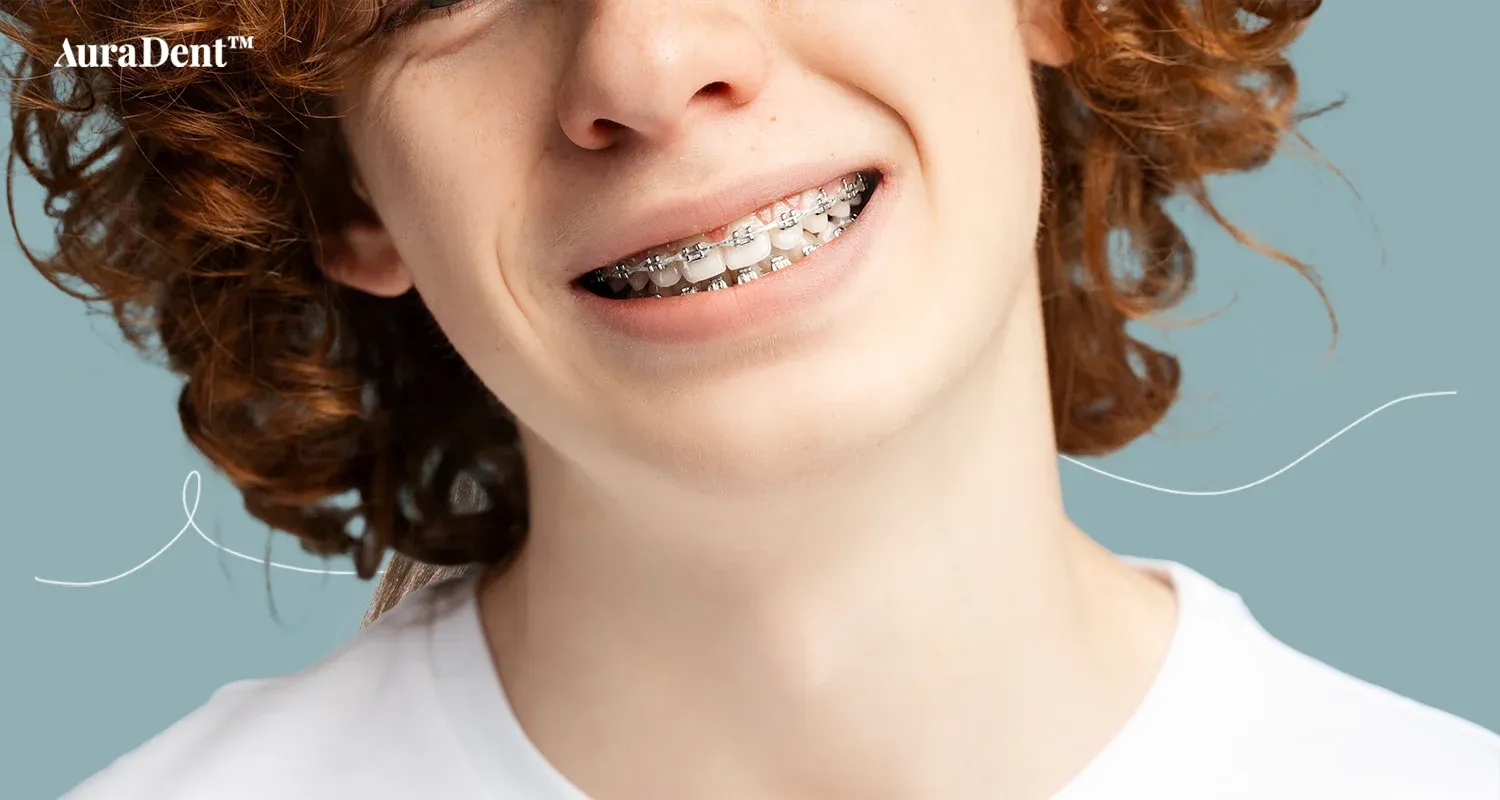
Metal braces (classic model)
This is the most common type of braces and has been used for many years with good results. They consist of metal brackets attached to each tooth and connected by a metal wire.
- The teeth are moved by adjustments to the wire made at regular visits.
- Very effective, especially for larger bite issues or misalignments.
- Visible, but often cheaper than other options.
- Very durable and suitable for most patients.
Ceramic braces
Ceramic braces work the same way as metal ones, but the brackets are tooth-colored or clear, making them less visible.
- Provide the same type of pressure as metal braces.
- Less visible, making them popular among teenagers and adults.
- Slightly more fragile than metal brackets.
- Can become discolored if oral hygiene is not maintained properly.
Lingual braces
Lingual braces are attached to the back of the teeth, facing the tongue, making them completely invisible from the outside.
- Work like regular braces but are placed on the inside of the tooth row.
- Provide aesthetic discretion without compromising the result.
- Can feel unfamiliar at first and may slightly affect speech.
- Require more precision during application and adjustment.
Invisalign (clear aligners)
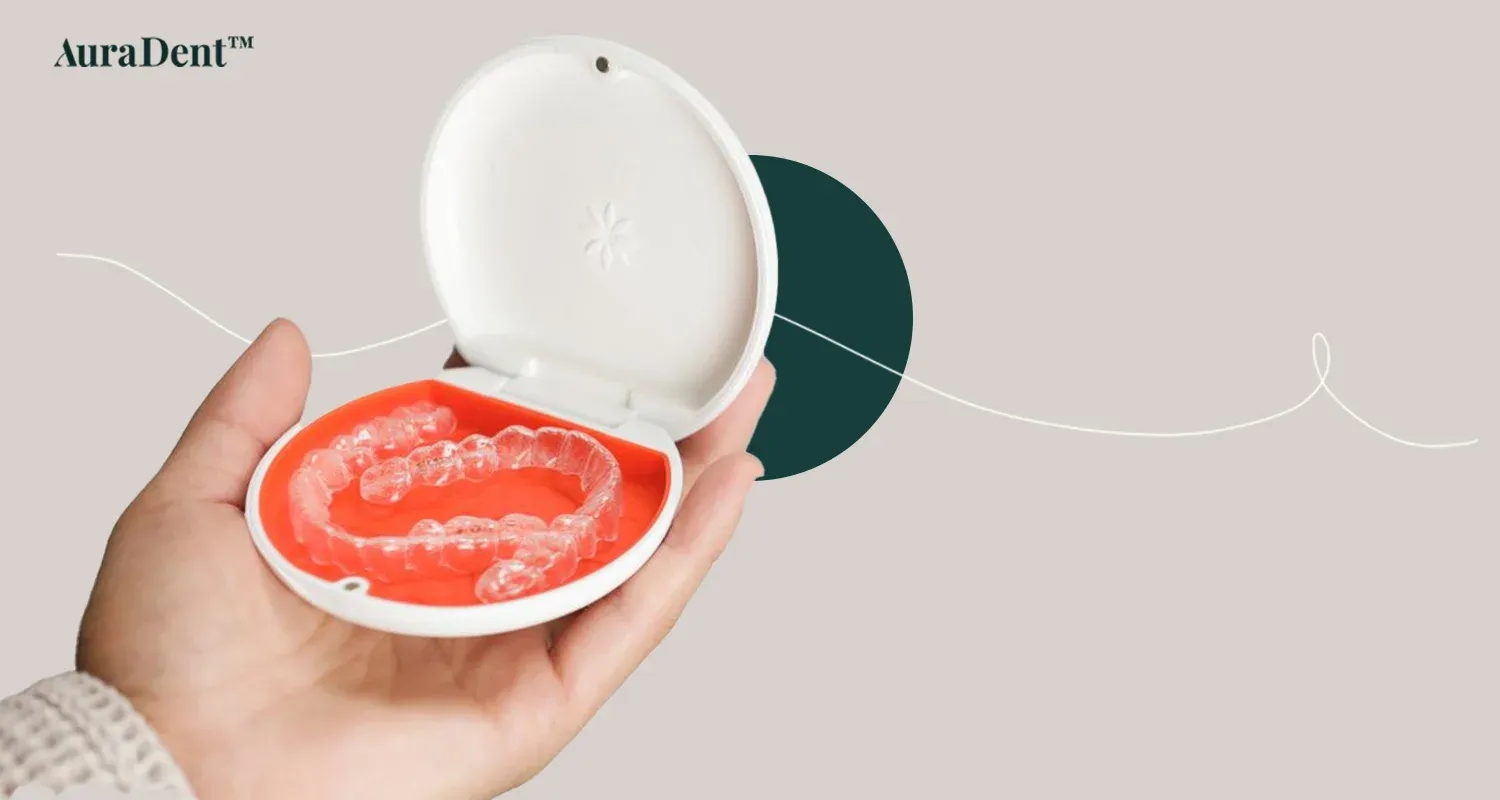
Invisible braces, such as Invisalign, use individually customized clear plastic aligners that gradually move the teeth into the desired position. Treatment takes place without traditional metal archwires or brackets, making it both discreet and comfortable.
- The patient receives a set of aligners that are changed every 1–2 weeks.
- The aligners fit tightly around the teeth and create gentle pressure that guides tooth movement.
- Can be removed for eating and brushing, making daily life easier.
- Requires wearing the aligners for at least 22 hours per day to be effective.
How long does orthodontic treatment take?
Treatment time varies from person to person, depending on:
- How crooked or misaligned the teeth are from the start.
- Which type of braces is used.
- How old the patient is (children's teeth move faster).
- How carefully the instructions are followed.
Treatment time with braces varies depending on several factors, such as the type of braces used, the initial position of the teeth, and the patient's compliance with recommended care and usage routines. In most cases, treatment time ranges between 12 and 24 months, but both shorter and longer treatment durations occur. Common questions include "how long do you have braces?" and more specifically "how long do you have braces for overbite?" In our guides, we go through what affects the length of treatment and which individual factors come into play.
Does having braces hurt?
It is common to feel some tenderness or tightness in the teeth during the first few days after the braces are fitted or adjusted.
- The pain is usually mild and subsides within a few days.
- Common pain relievers such as paracetamol or ibuprofen are usually sufficient.
- Eating soft foods during the first few days can also help.

Important care advice during treatment
Taking care of your braces is crucial for both the result and your oral health:
- Brush carefully with a soft toothbrush and use interdental brushes or floss adapted for braces.
- Avoid eating hard or sticky foods that can damage the braces, such as popcorn, toffee, or hard nuts. Common questions include: "Can you eat candy with braces?" or "Can you eat chips with braces?" In some cases, it is possible, but it requires caution and choosing sweets that do not get stuck or cause unnecessary strain on the braces.
- Be careful with sugar to avoid cavities around the brackets.
- If the braces break, you should always contact the clinic immediately to avoid delaying treatment.
After treatment, what happens then?
When the braces are removed, the treatment is not completely over. Teeth have a natural tendency to want to move back to their original positions. Therefore, retainers are used to keep them in place.
- These retainers can be removable or fixed.
- They should be used according to instructions, otherwise, you risk losing the result.
Care after completed treatment is therefore at least as important as the braces themselves.
Summary and next steps
Braces work by creating gentle, constant pressure that moves the teeth into the correct positions. By understanding how the process works, it becomes easier to feel confident and motivated during treatment.
Do you want to know if braces are right for you? Feel free to book a free consultation at our clinic for an individual assessment and professional advice.
FAQs
-1.webp&w=3840&q=100)