
- General Dentistry
How long do you wear braces for an overbite? This is what you should know
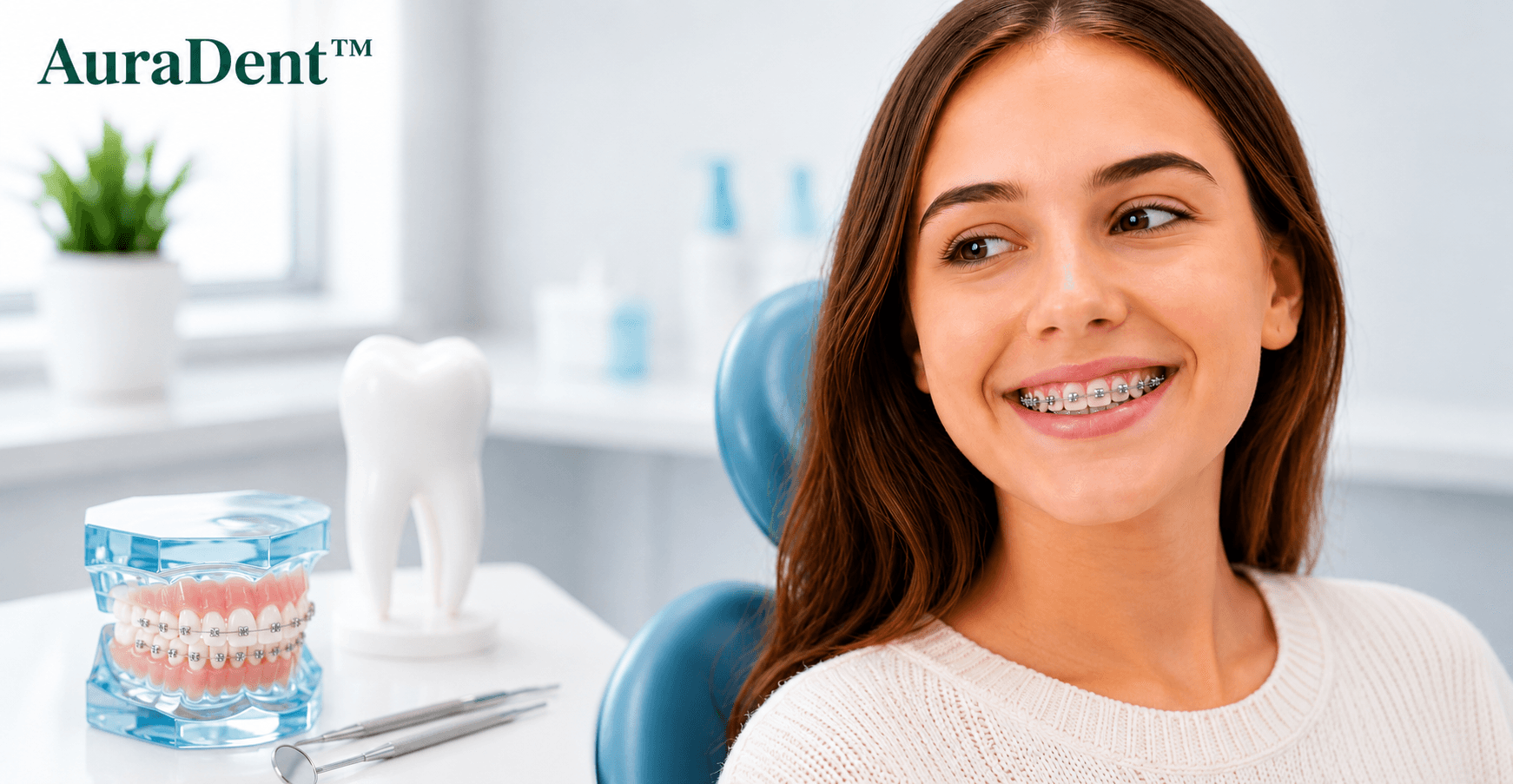
An overbite means that the upper front teeth sit clearly in front of the lower front teeth. It is one of the most common types of bite discrepancies and can affect more than just appearance. In some cases, an overbite can lead to difficulty chewing properly, effects on speech, or tension in the jaw muscles.
Correcting an overbite can therefore be an important part of improving both oral function and long-term dental health. The treatment is always planned individually and tailored to factors such as the extent of the discrepancy, the patient's age, and other conditions.
In today's dentistry, there are several effective methods for treating overbites. For more significant bite discrepancies, traditional braces with brackets and wires are often used. For those seeking a more discreet option, clear aligners such as Invisalign are also available, gradually moving the teeth into the correct position without noticeably affecting appearance during treatment.
What causes an overbite?
The causes of an overbite are often multiple and interact in various ways. It can involve both hereditary factors and habits that affect bite development during childhood.
Common causes include:
- Genetic factors, where tooth alignment and the shape and growth patterns of the jaws are inherited
- Childhood habits, such as prolonged pacifier use or thumb sucking, which can affect how the bite develops
- Imbalance in jaw growth, where the upper or lower jaw grows at different rates, leading to uneven jaw positioning
In some cases, the overbite is primarily due to the positioning of the teeth, while in others, it is the anatomy of the jaws themselves that is the underlying cause. To plan the right treatment, it is important to first conduct a thorough analysis of both tooth and jaw structure. Such an evaluation helps the dentist understand the cause and design an individually tailored treatment plan.

How does braces treatment work for an overbite?
Before we answer the question of how long you wear braces, let's look at how braces work for an overbite. Orthodontic treatment for an overbite aims to gradually move the teeth into a more functional and aesthetically harmonious position. This is achieved by applying gentle, continuous pressure to the teeth over time, which stimulates bone remodeling in the jaw and enables stable tooth repositioning.
The treatment can be carried out using different types of appliances depending on needs and conditions. The most common methods are:
- Fixed braces: with metal or ceramic brackets and wires that provide high precision in guiding tooth movements
- Clear, removable aligners: such as Invisalign, which adjust teeth step by step using a series of custom-made aligners
Invisalign and similar clear aligner systems are particularly well-suited for mild to moderate overbites and are a popular choice among adults because the aligners are discreet and can be removed for meals or brushing.
In children and adolescents, fixed appliances are often used. This is because at these ages, there is sometimes a desire to also influence the growth patterns of the jaws themselves, which requires a different type of stability and control than removable aligners can offer. For those who want to understand more about the treatment process, you can read more about how braces work.
How long does treatment take for an overbite?
The treatment time for correcting an overbite varies depending on several individual factors. This includes the severity of the bite discrepancy, the patient's age, the type of braces used, and the body's biological conditions.
Some general guidelines are:
- Mild overbites can sometimes be treated in approximately 12 months
- Moderate to more extensive overbites often require between 18 and 30 months of treatment
- Children and adolescents often respond more quickly to treatment because their jaws are still growing, making it easier to influence both tooth position and jaw development
- Adult patients have a more stable bone structure, which may mean treatment takes slightly longer. Nevertheless, very good and long-lasting results are usually achieved
To provide a realistic estimate of treatment time, an individual assessment by a dentist or orthodontic specialist is required. Such an evaluation includes both a clinical examination and X-rays, forming the basis for a carefully designed and customized treatment plan.
What affects treatment time for an overbite?
How long it takes to treat an overbite depends on several interacting factors. An individual assessment is always necessary to provide a reliable prognosis. Below are some of the most important parameters that affect treatment time:
- Extent of the bite discrepancy – The more complex or pronounced the discrepancy, the longer it may take to achieve a stable and functional result.
- Patient's age – Younger patients, whose jaws are still growing, often respond more quickly to orthodontic treatment. In adults, the bone structure is more established, which can sometimes extend treatment time.
- Type of braces – Clear aligners, such as Invisalign, are a discreet and comfortable option. However, for the best results, consistent use of approximately 22 hours per day is required. Fixed braces work continuously with even force, which in some cases can result in faster tooth movement.
- Cooperation and compliance – Treatment time is greatly influenced by how well the patient follows instructions. Regular follow-up visits, good oral hygiene, and correct use of any auxiliary tools are crucial for a good final result.
- Complementary measures – In some cases, treatment needs to be combined with other procedures, such as tooth extractions or jaw surgery, which can extend the total treatment time.
Understanding how braces work and why adjustments occur gradually can contribute to increased motivation, better cooperation, and a more engaged dialogue during the treatment period.

Is it possible to speed up treatment for an overbite?
For minor bite discrepancies, there are modern orthodontic methods that in some cases can shorten treatment time, provided the indications are appropriate and the treatment is carried out under professional supervision. Some examples of such options include:
- Invisalign Express: A system designed for simpler tooth movements. In some cases, treatment can be completed within six months.
- Accelerated orthodontics: A treatment strategy where tooth movement is stimulated using complementary techniques, such as micro-perforations in the jawbone or vibration-based devices. This can increase cellular activity and accelerate bone remodeling.
- Fastbraces®: An alternative to traditional braces where both the crown and the root of the tooth are moved simultaneously. This can in some cases produce faster results for simpler bite discrepancies.
However, it is important to emphasize that the quality and longevity of the treatment should never be compromised in favor of shorter treatment time. A stable and lasting result requires an individually designed treatment plan, a thorough biomechanical analysis, and regular follow-up with a dentist or orthodontist.
Treatment time is also affected by the type of bite discrepancy in question. For example, how long you wear braces for a gap, underbite, overbite, or crossbite varies, and each patient therefore needs to be evaluated based on their unique needs and conditions.
What can you do yourself during treatment?
To achieve an optimal treatment outcome and ensure that the orthodontic treatment stays on track, it is important that you as a patient are actively engaged in your own care. Small daily efforts have a significant impact on both the efficiency of the treatment and the final result.
Here are some important measures:
- Thorough oral hygiene: Brush your teeth carefully, especially after meals, with fluoride toothpaste. Use dental floss or interdental brushes to reach areas where the toothbrush cannot.
- Mindful diet: Avoid hard, chewy, or sticky foods that can damage the braces or cause brackets and wires to come loose.
- Compliance with instructions: If you use clear aligners or elastics, it is crucial to follow the treatment instructions exactly. Every time you skip wearing them, it can affect the result and extend treatment time.
- Regular check-ups: Even if you do not notice obvious changes, it is important to attend all scheduled follow-up visits. These checks are necessary to adjust the treatment in time and prevent any complications.
And for the classic question can you eat immediately after getting braces – yes, you can, but start with soft foods during the first few days and be extra careful with cleaning to avoid unnecessary discomfort.
Can you eat immediately after braces are fitted?
Yes, you can eat immediately after braces are fitted. However, it is recommended to start with softer foods during the first few days, as teeth and tissues are often tender at the beginning of treatment. Avoid chewing hard or biting into hard objects during this period.
Extra thorough oral cleaning is particularly important during the first few days to reduce the risk of discomfort and prevent cavity development.
Summary: Take it one step at a time
Undergoing orthodontic treatment to correct an overbite is a process that requires patience, commitment, and an individually tailored plan. Treatment time usually varies between one and three years, depending on the extent of the bite discrepancy, the patient's age, and the type of braces used.
For those seeking a discreet and flexible solution, clear aligners such as Invisalign can be an excellent option. At the same time, other methods may in some cases be more suitable depending on anatomical and functional conditions.
If you are considering starting treatment and want to know how to go about getting braces, it is a good idea to book a free consultation with an orthodontic specialist. There, you will receive a professional assessment, the opportunity to ask questions, and discuss which treatment strategy best suits your needs – both in terms of treatment time and choice of method.
Do you want to know more about what to say to get braces and which method works best for you? Feel free to book a free consultation with an orthodontic specialist. There, you will receive a professional assessment, the opportunity to ask questions, and discuss which treatment strategy best suits your needs – both in terms of treatment time and choice of method. Are braces free for children? Yes, in Sweden, braces are free for children and adolescents up to the age of 23, if a specialist determines that there is a medical need.
FAQs