
- General Dentistry
How long do you wear braces? A dentist explains

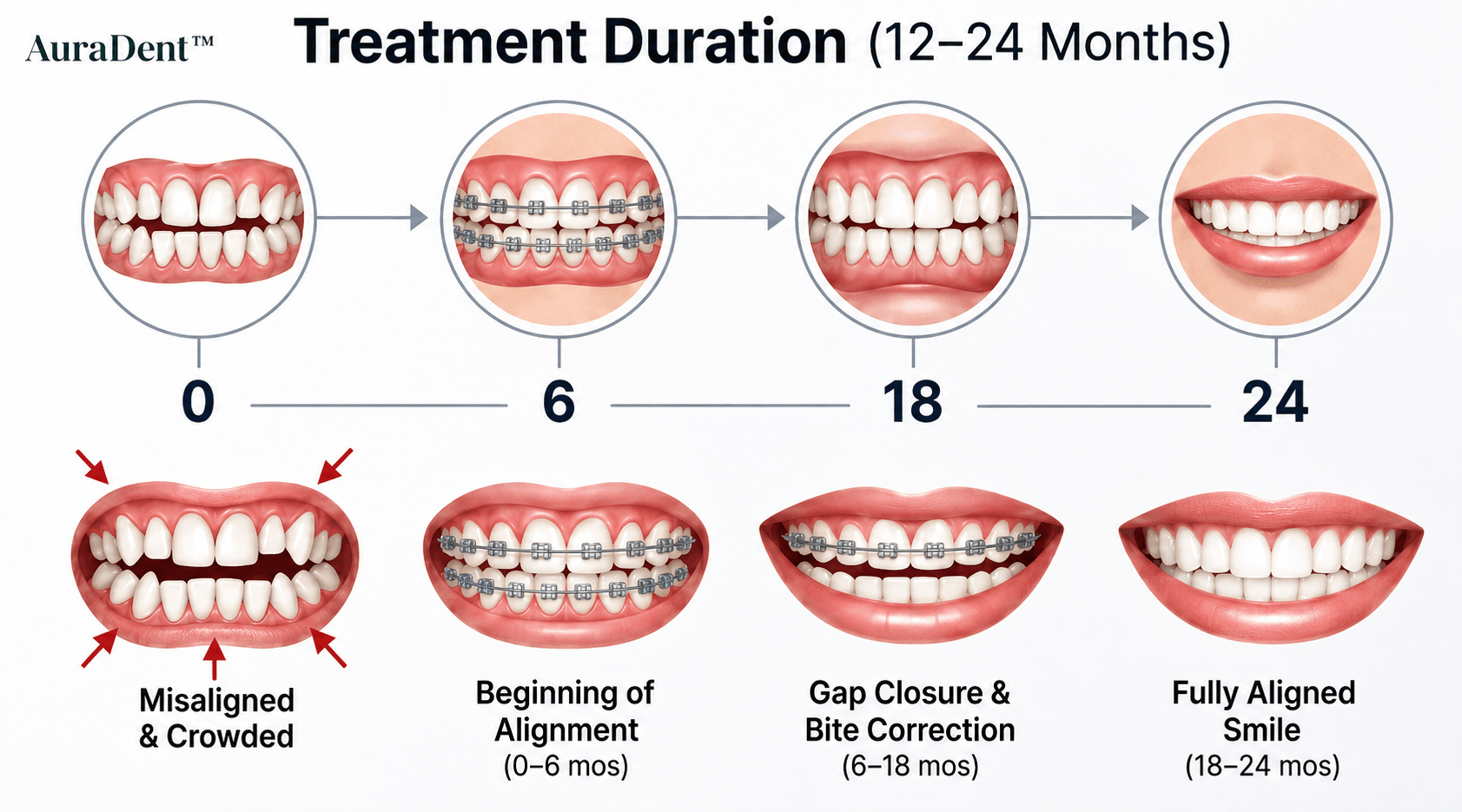
If you're considering orthodontic treatment, one of the most common questions is how long the treatment will take. That's a perfectly reasonable concern, especially if you want to plan ahead or are considering more discreet options like Invisalign.
The answer is individual and depends on several factors, but there are general guidelines that can give you an idea of the time involved. Here, we go through what affects treatment duration, whether you choose traditional braces or a more modern removable option.
How long is the average treatment time?
Most orthodontic treatments with braces last approximately 12 to 24 months. This applies to both fixed braces, such as metal or ceramic brackets, and removable options like clear aligners, for example Invisalign.
For simpler adjustments, treatment time can be as short as six months, while more extensive corrections can take up to three years or more.
To get a reliable assessment, an individual evaluation by a dentist or orthodontist is always required, followed by a treatment plan tailored to your specific needs.
If you're wondering how long you wear braces for an overbite, it depends on how pronounced the overbite is and which method is used; often, it requires a longer time than for simpler bite issues.
When treating diastema, i.e., gaps between teeth, the time varies depending on the size of the gap and the position of the teeth. How long you wear braces for a gap also depends on whether there are other bite abnormalities to consider. In some cases, it can take just a few months, while more complex cases require longer treatment time.
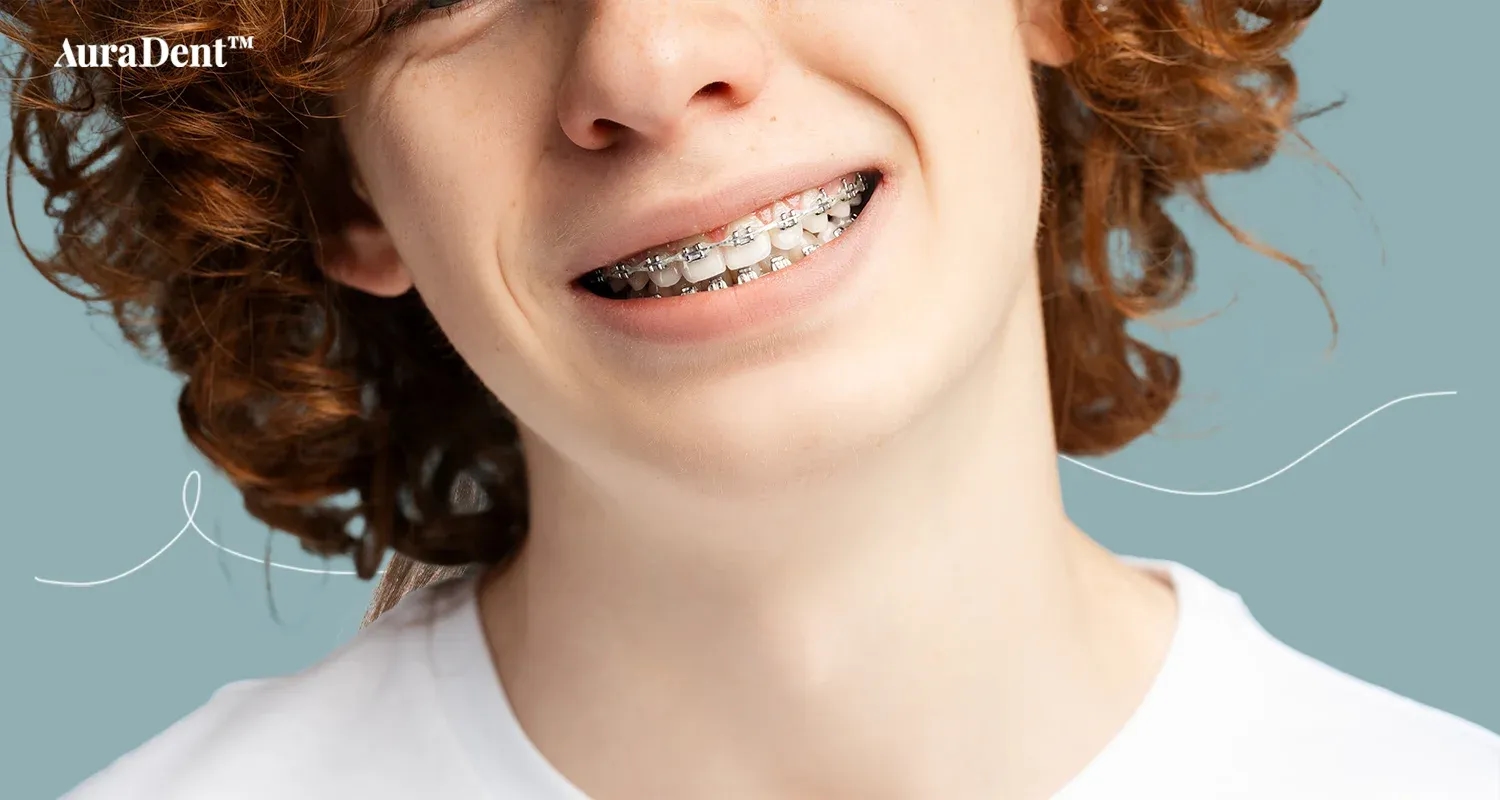
Factors Affecting Treatment Duration
To understand how long orthodontic treatment can take, it's helpful to first understand how braces work. Different types of braces affect tooth movement in various ways, and several factors play a role in how long it actually takes to achieve a stable result.
- Type of bite issue: The treatment time is influenced by how extensive the required adjustments are. Minor crowding and gaps can often be corrected more quickly than more complex bite problems.
- Choice of braces:
- Fixed braces (traditional braces) often provide stable and predictable results.
- Invisalign works well for many types of bite issues but requires you to wear the aligners for about 22 hours per day.
- Lingual braces (attached to the inside of the teeth) may take slightly longer in some cases but offer excellent aesthetics.
- Age: In children and adolescents, teeth can be moved more quickly because the jawbone is still developing. In adults, it sometimes takes longer, but the result is equally stable.
- Adherence to treatment: Your own compliance affects the treatment outcome. Following instructions, wearing aligners as scheduled, and attending planned check-ups are crucial for staying on track.
- Oral health during treatment: Inflammation, cavities, or other complications can cause treatment to be temporarily paused. Good oral hygiene and regular follow-ups are important to avoid delays.
- Diet: What you eat can have a direct effect on your treatment length. It is recommended to follow your orthodontist's tips on what to eat with braces. We have answered common questions about braces and food:
If you want to bring up the possibility of braces at your next dental visit, you don't need to overcomplicate it. It's often enough to mention that you've been thinking about straighter teeth or that you're experiencing issues with your bite. Many people wonder what to say to get braces, but it's mostly about being honest about your needs. The dentist will help you with the proper assessment and next steps.
Can treatment duration be influenced?
Yes, in many cases you can help keep the treatment within the planned timeframe yourself:
- Use removable aligners as prescribed
- Follow the instructions given by your dentist or orthodontist
- Attend all follow-up appointments and adjustments
- Maintain thorough oral hygiene
- Use a retainer as recommended after treatment is completed
Are there treatments that work faster?
For simpler adjustments, there are options with shorter treatment times:
- Invisalign Express: Suitable for minor bite issues and requires fewer aligners
- Fastbraces: A type of fixed brace that uses special technology to accelerate tooth movement
These options are not suitable for more complex bite issues. In such cases, a more comprehensive treatment is often needed to achieve a stable result.
What happens if the treatment takes longer than planned?
If a treatment is prolonged, it can affect both the outcome and your oral health. For example, extended treatment can lead to:
- Increased risk of gum inflammation
- Greater difficulty keeping teeth clean, which increases the risk of cavities
- Teeth starting to shift back
- Need for extended or supplementary treatment
Therefore, it is important that the treatment is continuously monitored and completed according to the treatment plan. Even small things, like skipping instructions or not paying attention to what you eat, can affect the timeline. Many wonder, for example, "can you eat right after getting braces?" and even though you can, poor choices early on can cause discomfort or damage the braces and, in the worst case, prolong the entire process.
Summary: How long will you need to wear braces?
How long do you wear braces? The treatment duration varies depending on your individual circumstances, but on average it ranges between one and two years. With the right type of braces, good oral hygiene, and adherence to the treatment plan, it can sometimes go faster. Are braces free for children? Yes, in Sweden, braces are often free for children and young people up to age 23, depending on need and assessment by a specialist.
If you are looking for a more discreet and flexible option, Invisalign may be a suitable choice. Most importantly, however, you and your dentist find the solution that best fits your needs and circumstances.
Would you like to know more about what applies to you? The next step is to book a consultation. During the visit, you will receive a personal assessment and a clear treatment plan, whether it concerns traditional braces, Invisalign, or another type of orthodontic treatment.
FAQs