
- General Dentistry
Dentures: Types, Materials, Cost, and Care for a Natural Smile

Key points in brief
- Dentures replace missing teeth and restore both function and aesthetics.
- There are several types of dentures, including complete dentures, partial dentures, and hybrid dentures.
- The choice of material affects comfort, durability, and appearance.
- Proper care and regular dental visits extend the lifespan of dentures.
- AuraDent offers modern, individually customized denture solutions with a focus on function and natural aesthetics.
What is a dental prosthesis and who needs it?
A dental prosthesis is an artificial replacement for missing teeth that restores both appearance and chewing function. Dentures are a good option for people who have lost one or more teeth due to tooth decay, gum disease, or injuries.
Dentures not only improve chewing ability but also help preserve facial shape and facilitate speech. They are particularly suitable for people who cannot or do not wish to undergo implant treatment.
If you want to learn more about how the mouth heals after tooth extraction and how to avoid complications, you can read Alveolitis and Infection After Tooth Extraction: Symptoms, Healing Time, and Treatment.
Different types of dentures, which one suits you?
There are several different types of dentures, and the choice depends on how many teeth need to be replaced, the patient's oral health, and personal preferences.
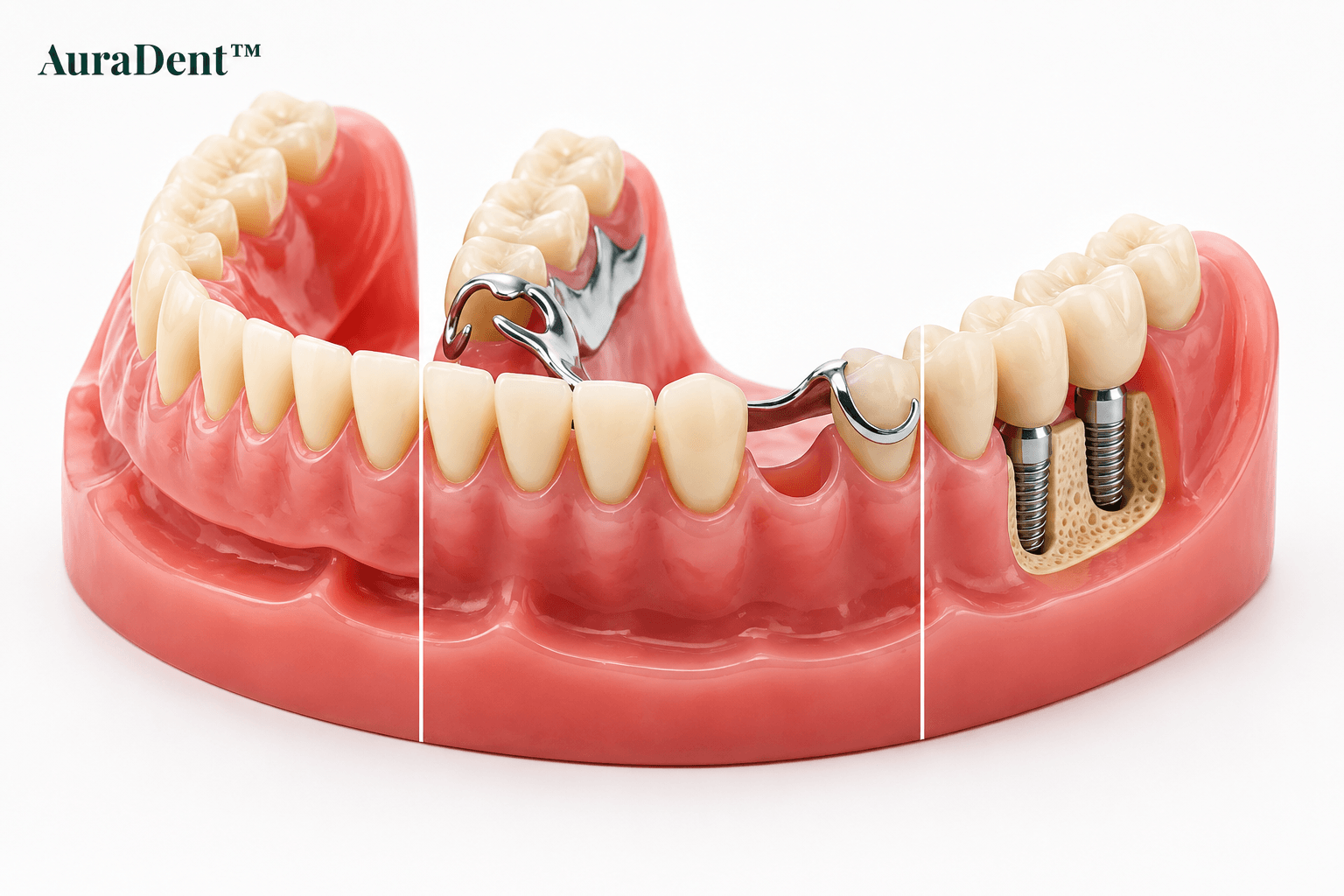
Complete denture (full denture)
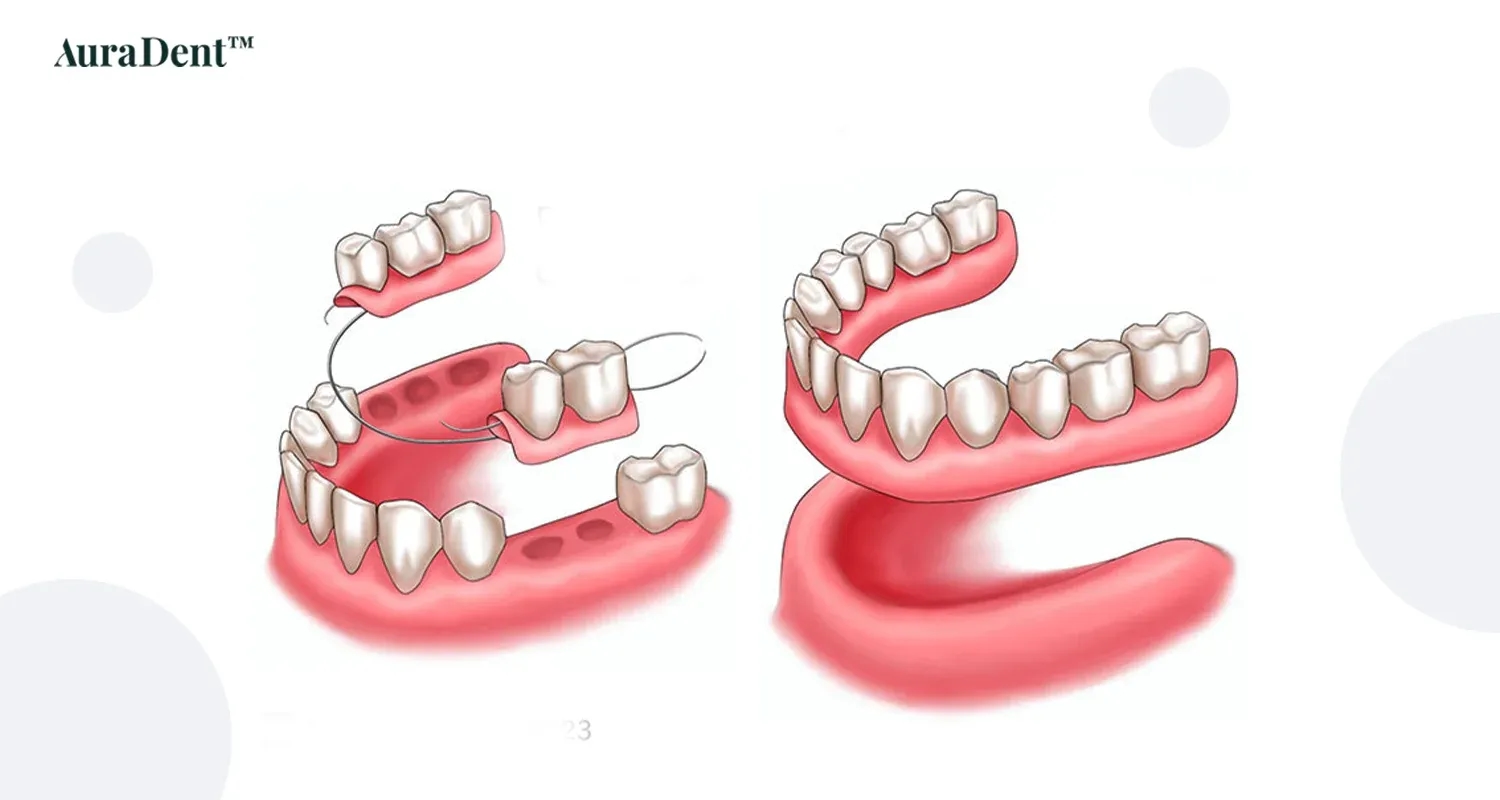
Complete dentures are used when all teeth in the upper or lower jaw are missing. They sit directly against the gums and create a complete row of teeth.
- Advantages: Improves both function and aesthetics, easy to clean.
- Disadvantages: Requires some adjustment to feel stable.
Partial denture
A partial denture replaces individual teeth and is attached with small clasps to the remaining teeth.
- Advantages: Less extensive treatment and preserves remaining teeth.
- Disadvantages: The clasps may sometimes be slightly visible when smiling.
Partial denture without metal framework
Made of flexible materials such as nylon for higher comfort and a more natural feel.
- Advantages: Lightweight, comfortable, and aesthetic.
- Disadvantages: Less durable than metal-supported options.
Fixed dentures
These are permanently attached to teeth or implants and cannot be removed by the patient.
- Advantages: Stable and natural feel, no risk of the denture moving.
- Disadvantages: Requires more extensive treatment and higher cost.
Hybrid dentures
A combination of fixed and removable constructions, often attached to implants for extra stability.
- Advantages: Provides superior comfort and function compared to ordinary removable dentures.
- Disadvantages: Somewhat more advanced and costly treatment.
How are dentures manufactured; step by step?
The manufacturing of a denture requires precision and several visits to ensure a perfect fit.
- Consultation: The dentist examines the mouth, takes X-rays, and discusses goals and expectations.
- Impressions: An exact mold of the jaw is taken to create a model.
- Try-in denture: A test version is made to adjust fit and bite height.
- Manufacturing: The final denture is produced using the chosen material.
- Adjustment and follow-up: When the denture is delivered, fine adjustments are made for optimal comfort and function.
Denture materials, which is best for you?
The choice of material affects appearance, durability, and feel in the mouth. The most common materials are:
- Acrylic: The traditional and most widely used material, affordable and easy to repair.
- Metal: Cobalt-chromium or titanium is often used in the framework of partial dentures for extra strength.
- Flexible materials: Nylon or soft plastic that provides a more comfortable fit and a more natural feel.
If you want to understand more about how the gums affect the fit and durability of your dentures, you can read Tooth Loss (Periodontitis): Causes, Symptoms, and Treatment.
How much does a dental prosthesis cost?
The cost of a dental prosthesis varies depending on the type, material, and complexity. A simple complete denture can cost from a few thousand AED, while fixed or implant-supported dentures can be significantly more expensive.
At AuraDent, you will always receive a clear cost assessment after your initial consultation, and we offer flexible payment solutions to make treatment accessible to more people.
Alternatives to traditional dentures
For those seeking a more permanent solution, there are options such as:
- Dental implants: Anchored into the jawbone and function like a natural tooth root.
- Implant-supported dentures: Combine implants with removable constructions for increased stability.
- Hybrid dentures: Offer both firmness and flexibility in one solution.
These alternatives provide superior comfort and feel but require sufficient bone volume and good oral health.
Denture care and maintenance
Proper care is essential to ensure that the denture lasts a long time and feels comfortable.
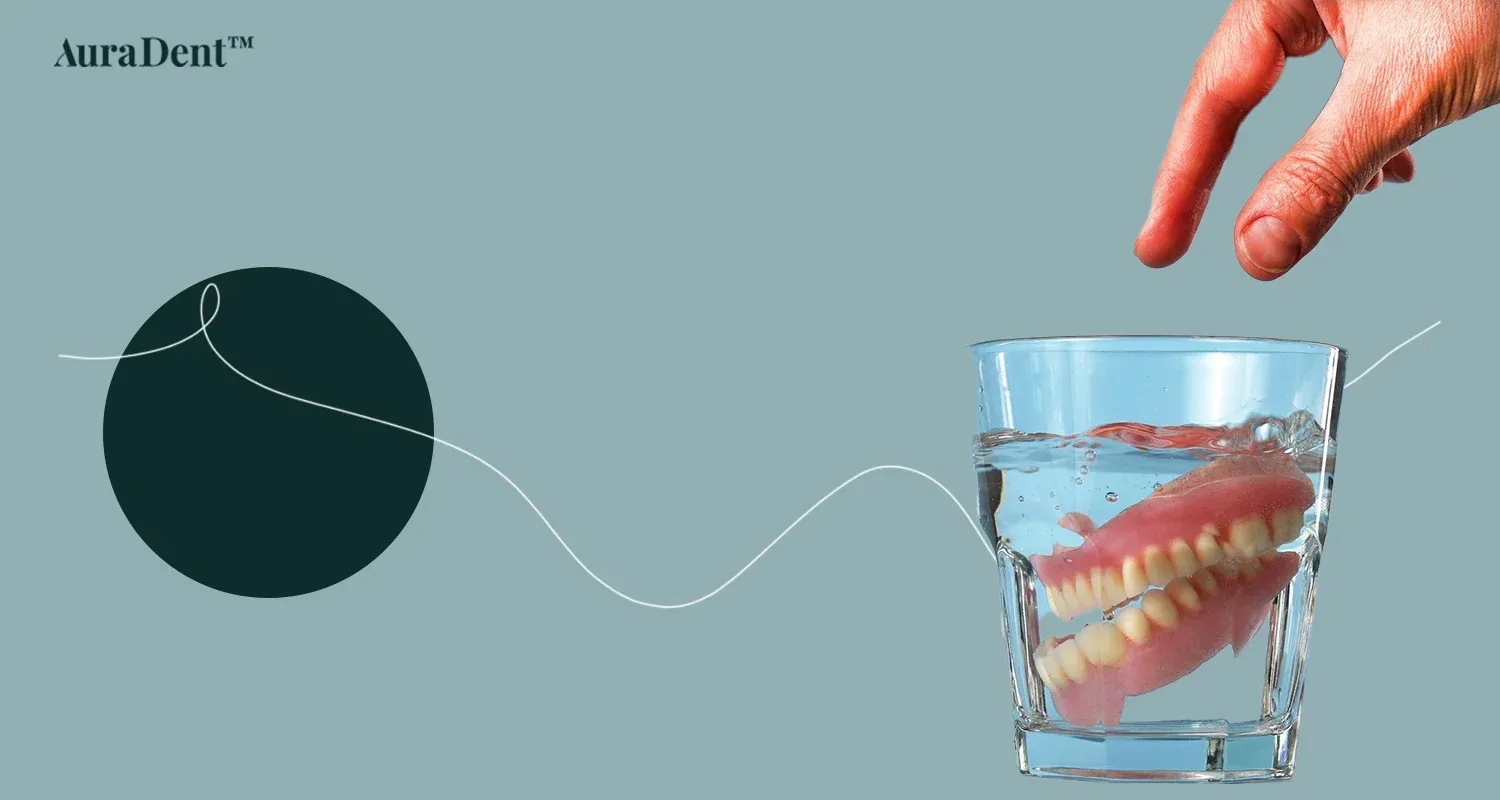
- Cleaning: Brush the denture daily with a soft brush and denture cleaner.
- Soaking: Let the denture rest in a cleaning solution overnight.
- Check-ups: Visit the dentist regularly for adjustments and check-ups.
- Denture adhesive: Use if needed for extra stability, especially during the first few weeks.
- Repairs: Always contact the dentist if the denture cracks or loses its fit.
Dentures at AuraDent
At AuraDent, we offer modern solutions for dental prostheses that combine function, aesthetics, and comfort. Our treatments are individually planned and carried out with precision and care.
Whether you need a new denture, an adjustment to an existing one, or wish to explore alternatives such as implant-supported constructions, our experienced team can help you find the best solution for your specific needs.
Conclusion
Choosing the right option among different types of dentures is about more than just appearance. It is about function, comfort, and quality of life. By understanding the differences between complete dentures, partial dentures, and hybrid solutions, you can make an informed decision together with your dentist.
Would you like to know which solution is best for you? Book a free consultation at AuraDent and let our team help you find the path to a natural and confident smile.
FAQs
Dr. Panteha Bigdeli
Related Posts
-2.webp&w=3840&q=100)