
- General Dentistry
Invisalign Aligners: What Are They and How Do They Work

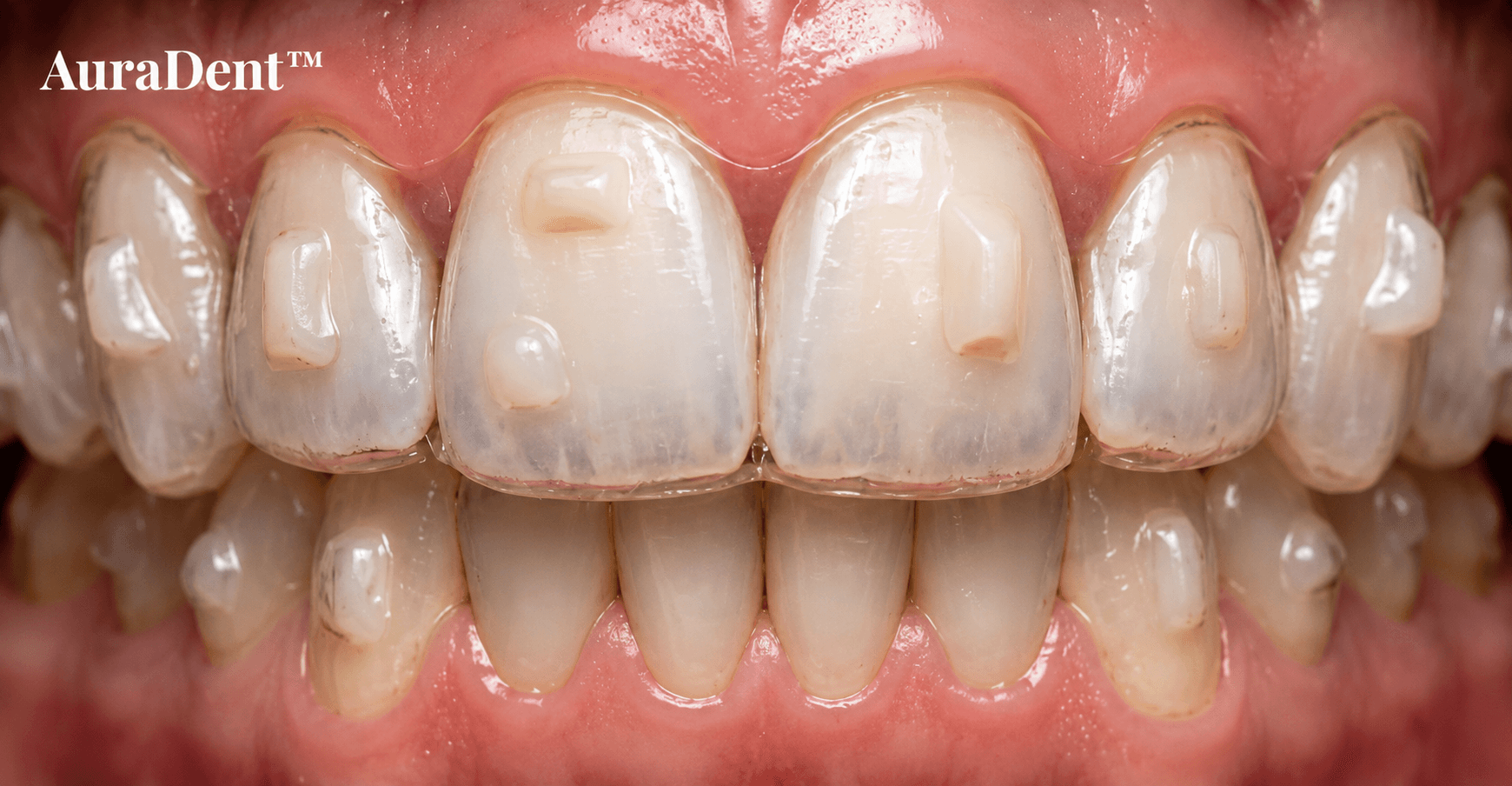
Understanding how Invisalign attachments work is crucial for achieving the best possible results with your treatment. These small, tooth-colored raised bumps are an important part of modern aligner technology and are used to achieve precise control over tooth movements that would otherwise be difficult to accomplish with aligners alone. By acting as small grip surfaces, the attachments help the aligners apply targeted and even force to selected teeth, enabling more predictable and effective results. They are discreet, comfortable, and designed to create a beautiful, harmonious smile without compromising aesthetics or comfort.
Key Points in Brief
- Invisalign attachments are small, discreet raised bumps attached to the teeth to help aligners guide movements precisely.
- They are strategically placed by the dentist to improve control and precision throughout the treatment.
- The number of attachments varies depending on each patient's needs.
- The attachments are tooth-colored and discreet, making them nearly invisible.
- Good oral hygiene and adherence to the dentist's advice ensure the best results.
- Professional removal of the attachments after treatment leaves the tooth surface completely smooth and clean.
What Are Invisalign Attachments?
Invisalign attachments are small, individually customized plastic raised bumps placed on certain teeth at the beginning of treatment. They are used to give the aligners a better grip on the teeth, allowing movements such as rotation, translation, and tipping to be performed with higher precision.
The attachments are made of a biocompatible composite material that is safe and gentle on the enamel. They are light-cured and precisely shaped according to the treatment plan that the dentist has created digitally.
For those who want to know how Invisalign affects gums, enamel, and overall oral health, you can read the article "Invisalign and Oral Health: Factors to Consider for Patients with Existing Problems," where dentists explain how to maintain a healthy mouth throughout the treatment.

Do All Patients Need Invisalign Attachments?
Not all patients need attachments, but most do. The dentist determines the need based on the position of the teeth, the complexity of the movements, and the goal of the treatment.
For simpler adjustments, treatment can be carried out without attachments, but for more extensive tooth movements, attachments are crucial for achieving precise results.
How Are Invisalign Attachments Applied?
Applying Invisalign attachments is a quick and painless process. The dentist first thoroughly cleans the teeth, applies a bonding agent, and then attaches each attachment in place using a template. Once everything is correctly positioned, the material is cured with a special light to create a strong yet gentle bond.
The entire procedure takes less than an hour and requires no anesthesia.
For practical advice on how to protect both teeth and aligners during treatment, please read "What Can You Drink During Your Invisalign Treatment."
Will the Attachments Be Visible?
The attachments are made of a tooth-colored composite material and are designed to be as discreet as possible. Their visibility depends on the natural color of the teeth, lighting conditions, and where they are placed.
The dentist carefully adjusts the placement to minimize visibility and ensure a natural appearance throughout the treatment.
Can Invisalign Attachments Come Loose?
Although Invisalign attachments are securely bonded to the teeth, they can, in rare cases, come loose. This usually happens if you chew very hard foods, such as nuts or hard candies, or if you use your teeth as tools to open packaging. A loose or broken attachment typically does not affect the entire treatment, but it may temporarily reduce the precision of how the aligners guide tooth movement.
If you notice that an attachment has come loose, there is no need to worry. Contact your dentist as soon as possible to schedule an appointment for reattachment. In the meantime, it is important to continue wearing your aligners as instructed and to avoid eating hard foods until the issue is resolved.
To reduce the risk of attachments coming loose, it is important to follow the dentist's advice regarding diet, oral hygiene, and aligner handling. For those who want to delve deeper into how proper oral care routines can contribute to a successful treatment, the article "How Often Should You Use Dental Floss?" is recommended, where the dentist shares practical tips for daily cleaning and gentle care of both teeth and Invisalign aligners.
.avif&w=3840&q=100)
Do Invisalign Attachments Hurt?
Most patients experience only mild discomfort in the first few days after the attachments are placed. This is because the teeth begin to adapt to the new pressure.
The discomfort is usually mild and passes quickly. If needed, over-the-counter pain relievers can be used. Chewing soft foods and drinking cold water can also alleviate the sensation during the first few days.
For a deeper understanding of how to manage discomfort and adapt during the first few days of treatment, you can read the article "Is Invisalign Painful?" where the dentist explains why mild soreness is a sign that the treatment is working as it should.
How Long Do Invisalign Attachments Stay On?
The attachments remain in place throughout the entire active treatment period, which can vary from a few months to over a year depending on the patient's needs. They are carefully removed when the treatment is complete.
After removal, the dentist polishes the teeth to restore the natural surface. After that, you will typically receive Vivera retainers to help maintain the teeth's new position.
How Invisalign Attachments Affect Before and After Results
Invisalign attachments make it possible to achieve the impressive before-and-after results often associated with Invisalign treatments. Thanks to these small raised bumps, the dentist can create individually targeted forces that move each tooth precisely where it should go.
It is this precision that allows Invisalign today to be used to correct even more complex bite irregularities with aesthetically pleasing results.
Conclusion
Invisalign attachments are a central part of many modern orthodontic treatments and play a crucial role in creating sustainable and natural results. By improving control over tooth movements, they enable a treatment that is both effective and aesthetically pleasing.
For patients, this means achieving a more beautiful smile without compromising comfort or appearance during the process. Regular follow-up with the dentist, good oral hygiene, and careful use of the aligners are the keys to success.
If you are considering whether Invisalign is right for you, we recommend booking a free consultation at AuraDent. Our specialists will help you understand your options and plan the path to your dream smile.
FAQs