
- General Dentistry
Underbite in Babies: Is It Normal? A Reassuring Guide for Parents
.webp&w=3840&q=100)
-1.webp&w=3840&q=100)
Key Points at a Glance
- Underbite in babies is very common and usually completely harmless.
- Differences in jaw position are often the result of normal growth patterns between the upper and lower jaws.
- As baby teeth erupt, the bite typically adjusts naturally.
- A persistent underbite generally only needs to be evaluated by a dentist after around three years of age.
- At AuraDent™, we emphasize observation and reassuring follow-up, never unnecessary treatment.
Why Do Many Babies Appear to Have an Underbite?
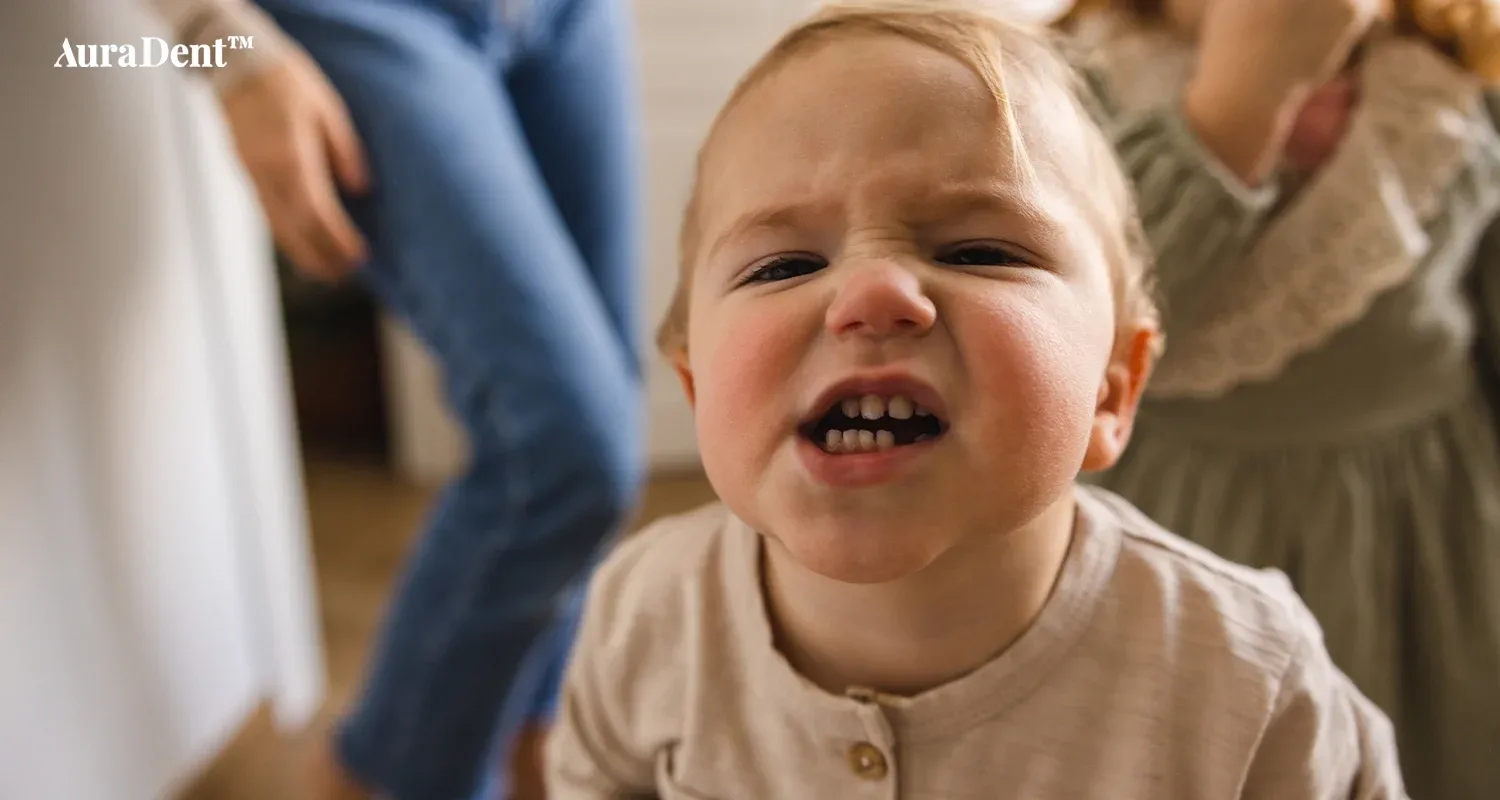
In most cases, a baby who appears to have an underbite is simply going through a temporary and completely normal stage of development. During the first months of life, the jaws grow at different rates, and the lower jaw often develops slightly faster than the upper jaw. This can create the impression that the lower jaw protrudes, even though there is no true bite abnormality.
Because the teeth have not yet erupted, there are no natural contact surfaces to keep the jaws in perfect alignment. During this period, the lower jaw can move quite freely, particularly during breastfeeding, when it is both natural and functional for the baby to bring the lower jaw forward to achieve a stable latch.
This phenomenon is known as a functional underbite and represents a normal movement pattern rather than a skeletal abnormality. A true skeletal underbite typically develops much later and is very uncommon in infants.
If, as your child grows, signs of bite irregularities or misaligned teeth become apparent, early orthodontic evaluation may be beneficial. Timely monitoring can help guide jaw growth and support healthy, harmonious bite development.

From Baby to Toddler: What to Expect
Bite development happens gradually during the first years of life, and variations are completely normal. Here is an overview of how the jaws and teeth typically change during this period.
0–12 months
A temporary underbite appearance is very common during infancy. The jaws grow rapidly and sometimes unevenly, which is a normal part of development.
In most cases, no treatment is needed and there is usually no reason for concern.
1–3 years
As the baby teeth begin to erupt, the position of the jaws becomes more stable. The teeth act as natural guides that help the bite find its balance.
For most children, the visible underbite disappears during this stage.
Around 3 years of age
By around age three, the primary (baby) dentition is usually fully developed. If the underbite is still clearly visible or does not appear to be improving, it should be discussed at the next dental visit.
This does not necessarily mean treatment is required, but a professional evaluation can provide reassurance and guidance. In some cases, orthodontic treatment may be considered later if the bite discrepancy persists as the child grows.
When to Be Concerned
It is important to remember that an underbite in infants is, in the vast majority of cases, neither an emergency nor a cause for concern. The jaws develop gradually, and minor variations are a natural part of growth. However, there are certain situations where closer monitoring may be warranted.
• If the underbite persists after age three, when all baby teeth have erupted.
• If the child has difficulty biting into or chewing food as they get older.
• If there is a clear hereditary tendency toward an underbite in the family.
In these cases, immediate orthodontic treatment is usually not needed, but it is wise to bring up the issue at the next routine visit to the pediatric dentist. Through regular follow-ups, the dentist can assess whether bite development is proceeding as expected or if further measures are needed. Should a persistent underbite be confirmed later, modern methods, such as Invisalign treatment, can be used to achieve a harmonious bite and well-balanced jaw function.
Our philosophy at Auradent: Observation, not intervention
At AuraDent™, we emphasize the importance of patience and care when it comes to the bite development of young children. For infants and toddlers, observation is more important than treatment. Nature has a strong ability to self-correct minor differences in jaw growth, and our role is to provide parents with reassuring guidance and clear information throughout this process.
The first dental visit is therefore not about starting treatment, but about creating a positive and safe experience in the dental setting. We make sure the child feels comfortable and that parents receive clear and reassuring answers about their child’s bite development.
If you, as a parent, are concerned about how your child’s jaws are growing, you can book a no-obligation initial checkup at AuraDent™. A calm conversation and a simple examination are often enough to provide peace of mind and lay the foundation for a healthy and balanced bite. If necessary, future adjustments, such as Invisalign® treatment, can be considered as the child gets older.
Conclusion
An underbite in infants is usually a normal and temporary stage of development. It occurs due to natural differences in growth between the upper and lower jaws and typically corrects itself when the baby teeth come in. Further evaluation is only needed if the underbite persists after about age three or affects the child’s chewing or speech.
Schedule an appointment at AuraDent™ for a thorough check-up of your child’s bite development. Our experienced pediatric dentists will provide a professional assessment and guide you regarding any follow-up care or future orthodontic treatment.
FAQs