- General Dentistry
Crooked Teeth: Causes, Consequences, and Modern Solutions

-1.webp&w=3840&q=100)
Living with crooked teeth can affect both oral health and self-image. With thorough diagnostics and a personalized treatment plan, it is possible to improve the function of your bite, make cleaning easier, and create a harmonious smile that lasts.
Crooked teeth: what causes them?
- Genetics and growth: Hereditary patterns of jaw width and tooth size can lead to crowding or gaps. Imbalances in the development of the upper and lower jaws can result in an overbite or underbite.
- Early habits: Prolonged use of a pacifier or thumb-sucking, tongue thrusting, and mouth breathing can gradually affect the shape of the dental arch.
- Tooth loss and eruption: Premature loss of a baby tooth or permanent tooth causes adjacent teeth to shift. Impacted or supernumerary teeth can block normal eruption.
- Trauma and periodontitis: Injuries to teeth and jaws, as well as bone loss due to tooth loss, can accelerate tooth movement.
Consequences for health and daily life
- More difficult cleaning, leading to increased plaque retention and a higher risk of cavities and gingivitis
- Inefficient chewing and excessive pressure on individual teeth, resulting in enamel wear
- Speech impairment due to abnormal front tooth contact or an open bite
- Jaw fatigue and headaches due to improper bite distribution
- Social avoidance and reduced smiling, which often improves after treatment
Comparison at a Glance
Metal brackets:
• Visibility: Clear
• Comfort: Good
• Hygiene: Requires special care around the brackets
• Suitability: Simple to highly complex cases
Ceramic brackets:
• Visibility: More discreet
• Comfort: Good
• Hygiene: Risk of discoloration
• Suitability: When aesthetics are a priority with fixed braces
Lingual braces:
• Visibility: Invisible
• Comfort: Good after initial adjustment
• Hygiene: Hard-to-reach surfaces that are difficult to clean
• Suitability: Adults with high aesthetic expectations
Removable aligners:
• Visibility: Very discreet
• Comfort: High
• Hygiene: Easier, can be removed for cleaning
• Suitability: Mild to moderate complexity
Treatments That Work in Practice
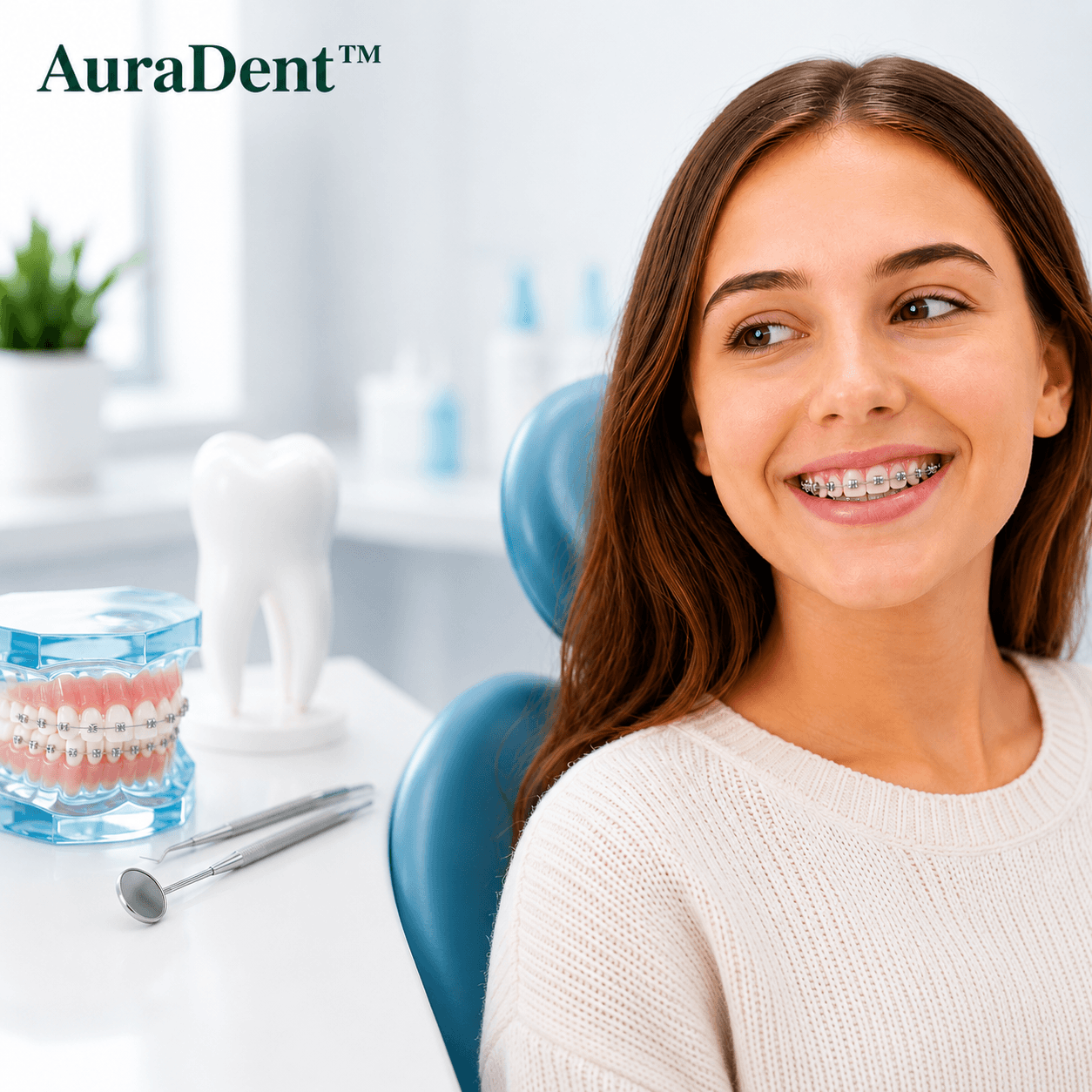
Fixed metal brackets
Rugged and predictable for everything from correcting rotation to major bite adjustments. Require thorough cleaning and some dietary adjustments.
Ceramic brackets
More discreet than metal, but with comparable biomechanics. Slightly more fragile and more susceptible to discoloration.
Lingual braces
Placed on the inside of the teeth and are virtually invisible. Initial impact on speech is common, and oral hygiene requires extra care.
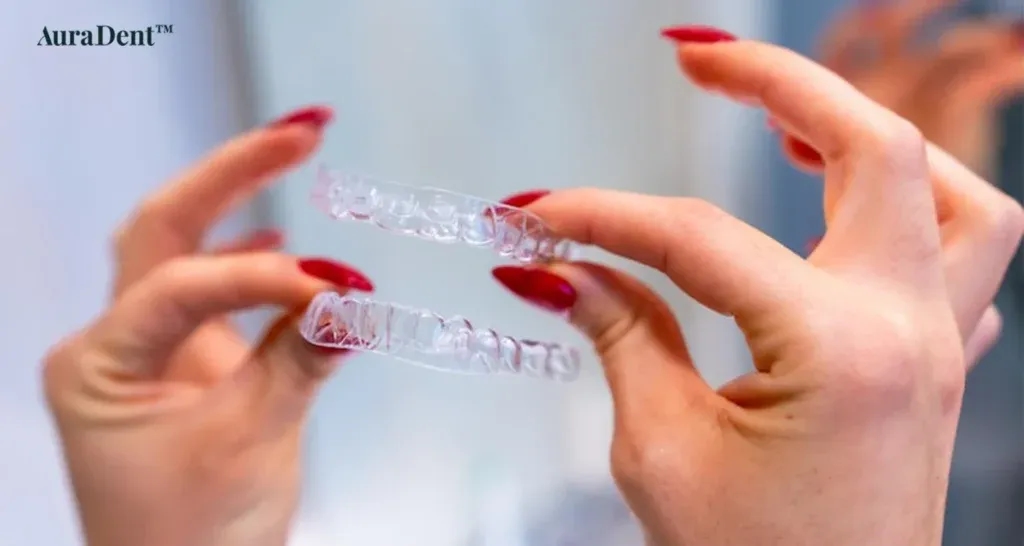
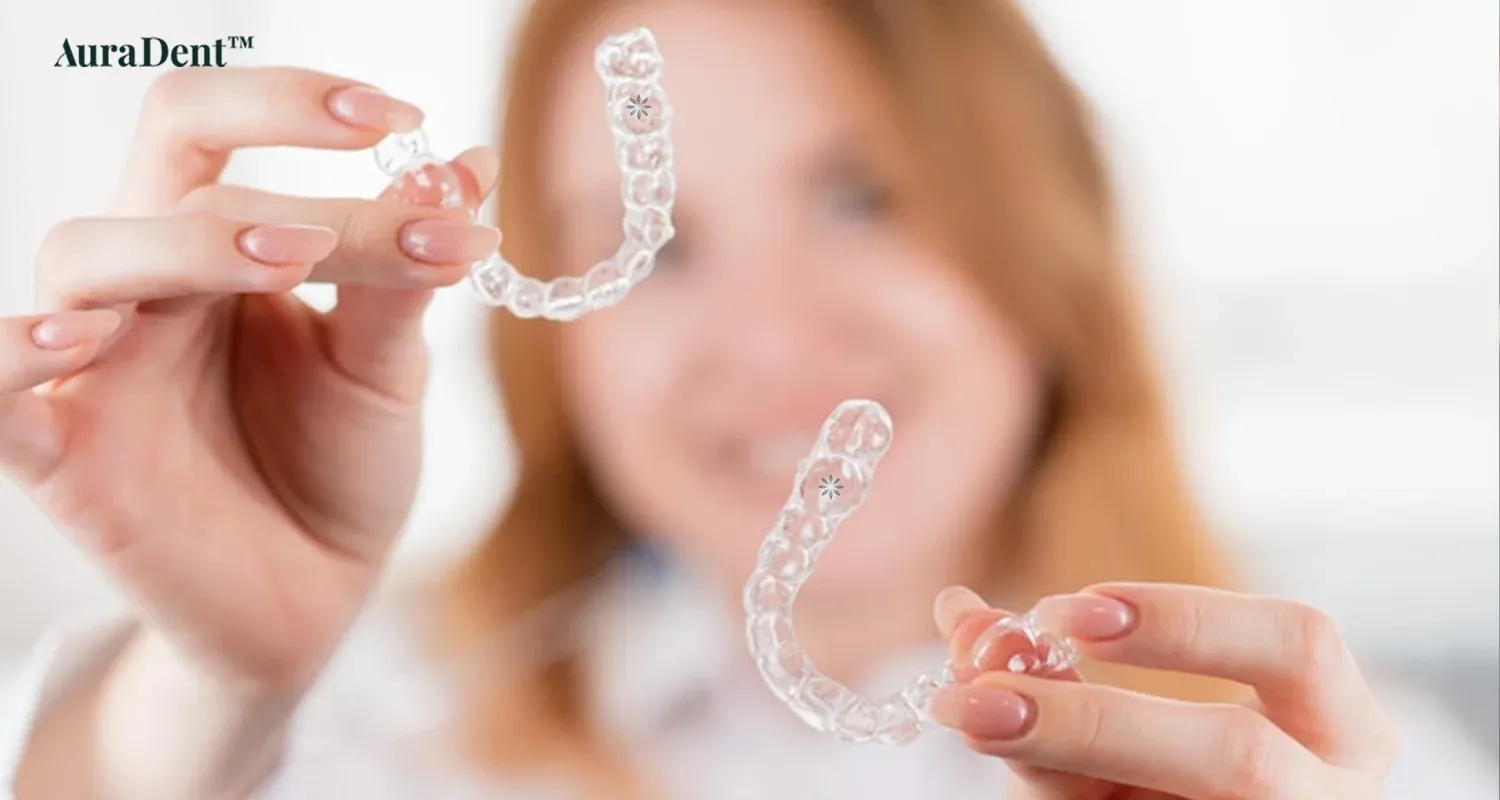
Removable aligners
Clear aligners that are digitally designed and replaced in stages. Invisalign is the best-known system and is valued for its aesthetics, comfort, and ease of hygiene, as the aligners are removed during meals and when brushing teeth.
The time frame varies from person to person. Questions such as how long you’ll wear braces, how long you’ll wear braces for a gap, and how long you’ll wear braces for an overbite are best answered after a clinical evaluation, since diagnosis, biology, and compliance determine the pace and strategy.
Here’s how it works at AuraDent
- Consultation and diagnosis: A clinical examination is combined with photos, X-rays, and digital 3D scans. Treatment goals are formulated based on the findings.
- Planning and choice of method: You’ll receive a clear timeline and a recommendation that balances aesthetics, function, and your daily life. Adjusting gaps or correcting a pronounced overbite can be prioritized depending on your goals.
- Start and follow-up: Placement of attachments or delivery of the first set of aligners. Regular check-ups ensure that tooth movement follows the plan.
- Retention and long-term care: A fixed or removable retainer stabilizes the results. Advice on self-care and check-ups reduces the risk of relapse.
- Hygiene as a foundation: With fixed brackets, interdental brushes and supplemental fluoride are needed. With aligners, teeth and trays are cleaned after every meal to prevent biofilm and discoloration.
Conclusion
The right strategy for correcting misaligned teeth is chosen based on diagnosis, aesthetics, lifestyle, and patient cooperation. With modern options such as fixed braces and Invisalign, it is possible to achieve significant improvements in both function and aesthetics.
A clinical assessment at AuraDent provides an accurate timeline and a plan that feels achievable in everyday life. With consistent follow-up and good self-care, the journey toward a stable, healthy, and harmonious smile becomes safe and predictable.
FAQs
Dr. Panteha Bigdeli
Related Posts
-1.webp&w=3840&q=100)