
- General Dentistry
What foods should you avoid when you have braces?


When undergoing treatment with fixed orthodontic appliances, it is crucial to follow specific dietary guidelines to ensure a safe and effective orthodontic process. The components of the braces, such as brackets and orthodontic wires, are sensitive to mechanical stress. Poor dietary habits can lead to damage to these parts, which in turn can delay treatment and affect the final result.
This guide aims to explain why certain foods should be avoided during treatment, as well as highlight the most common complications that can arise from inappropriate food choices. You will also receive practical tips on alternatives that are gentle on the braces and can help maintain good oral health throughout the treatment period.
We also introduce Invisalign as a treatment option where the aligners can be easily removed during meals. This results in fewer dietary restrictions and makes treatment more flexible for many patients.
By following these recommendations, you increase the likelihood of a stable and long-term treatment outcome.
How Do Braces Work and How Long Do You Need to Wear Them?
Braces are used to correct crooked teeth and various types of malocclusions, ranging from crowded teeth to overbites and underbites. The duration of treatment varies depending on the extent of the correction, but most people wear braces for 1 to 3 years. If you’d like to know more about how long braces are typically worn or exactly how long braces are worn for an overbite, you’ll find answers to those questions here as well. Are you curious about how the whole process works? Feel free to read about how braces work for a clear overview.
Why is it important to follow dietary guidelines when undergoing orthodontic treatment?
Braces consist of small brackets and thin orthodontic wires. Although the structure is sturdy, it is sensitive to the stress caused by certain types of food. If you aren’t careful about what you eat, it can lead to several problems, such as:
- Brackets that come loose or wires that bend, which can delay the entire treatment process
- Food debris that gets stuck around the braces, increasing the risk of cavities and gum inflammation
If you use Invisalign instead, the risk of these complications is reduced, since the aligners can be removed during meals. This means you can eat pretty much anything you want, as long as you remember to take the aligners out before eating and clean your teeth thoroughly before putting them back in.
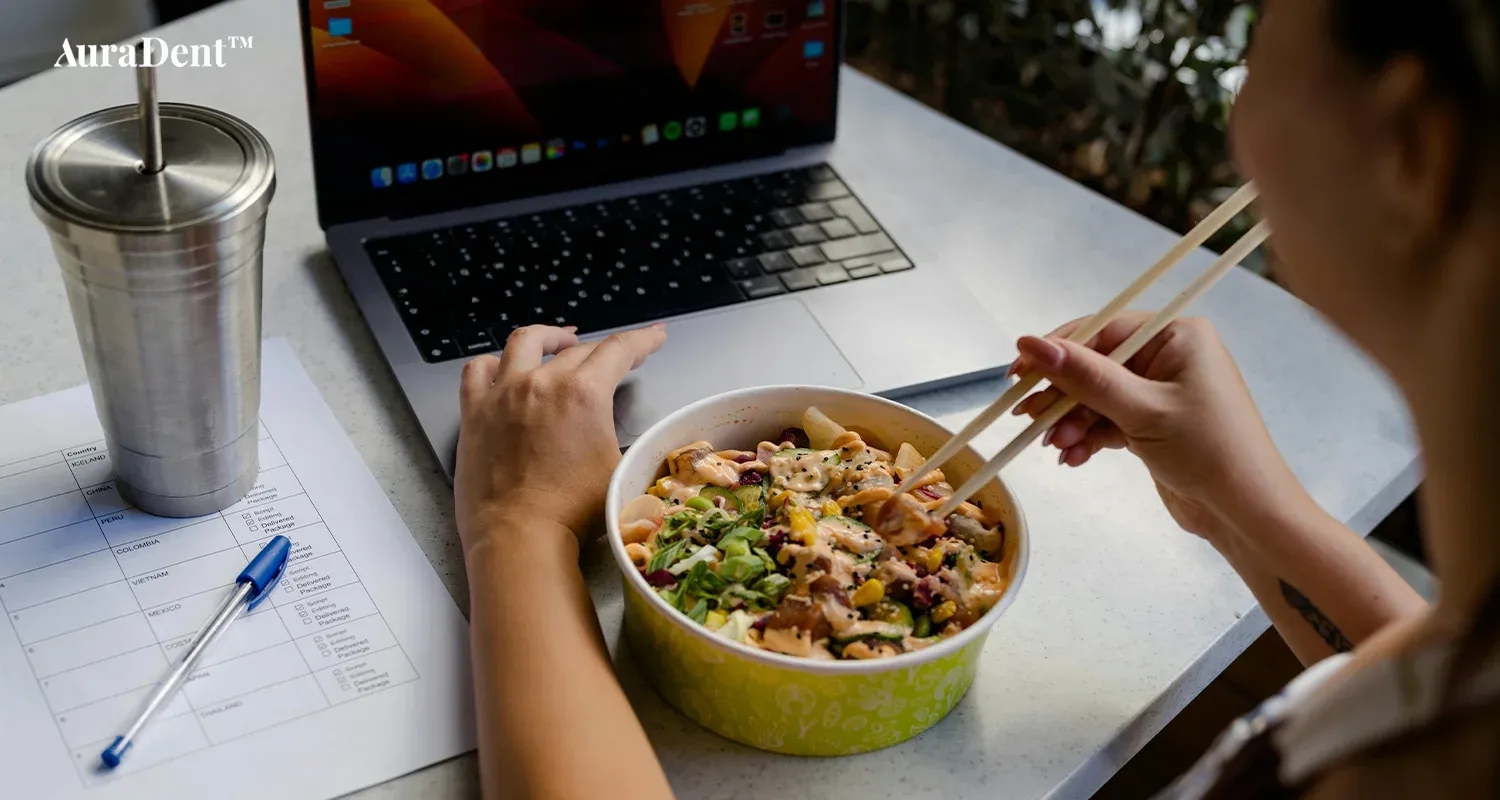
What foods should you avoid completely while wearing braces?
Certain foods should be avoided while wearing braces because they can damage the brackets or wires. For example, many people wonder: Can you eat potato chips with braces? Some foods can cause mechanical damage to the braces or increase the risk of cavities and gum inflammation. Therefore, it is recommended that you avoid the following categories of food throughout the entire treatment period.
Hard-to-chew foods:
Foods that are hard to chew can damage braces or bend orthodontic wires:
- Nuts
- Ice cubes
- Hard candies and lollipops
Sticky foods:
These tend to get stuck in braces and can dislodge brackets or wires:
- Caramel and toffee
- Chewing gum
- Chewy chocolate bars, such as Snickers
Crispy and crunchy snacks:
Small pieces can get stuck between the parts of your braces and cause damage or irritation:
- Popcorn
- Hard potato chips
- Very hard-toasted bread or crispbread
Foods that require a firm bite:
When you bite down with your front teeth, the pressure on the braces increases, as does the risk of them coming loose:
- Whole apples (unless cut into smaller pieces)
- Raw carrots
- Thick, hard sandwiches, such as baguettes
Very high-sugar foods:
These contribute to plaque formation and increase the risk of cavities, especially if cleaning does not take place immediately afterward:
- Soda and energy drinks
- Sugary pastries and candy
- Sweet juices with high amounts of added sugar
Foods you can eat with caution
You don't need to completely avoid certain foods, but you should eat them in a safer way:
- Hard fruits and vegetables can be cooked, baked, or cut into small pieces (e.g., baked apple or steamed carrots).
- Meat or chicken should be cut into small, easy-to-chew pieces.
If you are being treated with Invisalign, you do not need to change your eating habits to the same extent as with traditional braces. Since the aligners are removed during meals, you can generally continue to eat most foods without the risk of damaging anything. However, it is important to clean your teeth thoroughly before putting the aligners back in, to avoid cavities and gum irritation.
What can you safely eat when you have braces?
There are many foods that are gentle on your braces while also being nutritious. These options minimize the risk of damaging brackets or orthodontic wires and make cleaning easier:
- Pasta and noodles
- Well-cooked rice
- Yogurt and soft cheese
- Warm soups and stews
- Cooked eggs, especially soft-boiled or scrambled
- Softer cheeses, such as cream cheese or mozzarella
- Smoothies, milkshakes, and juices with no added sugar
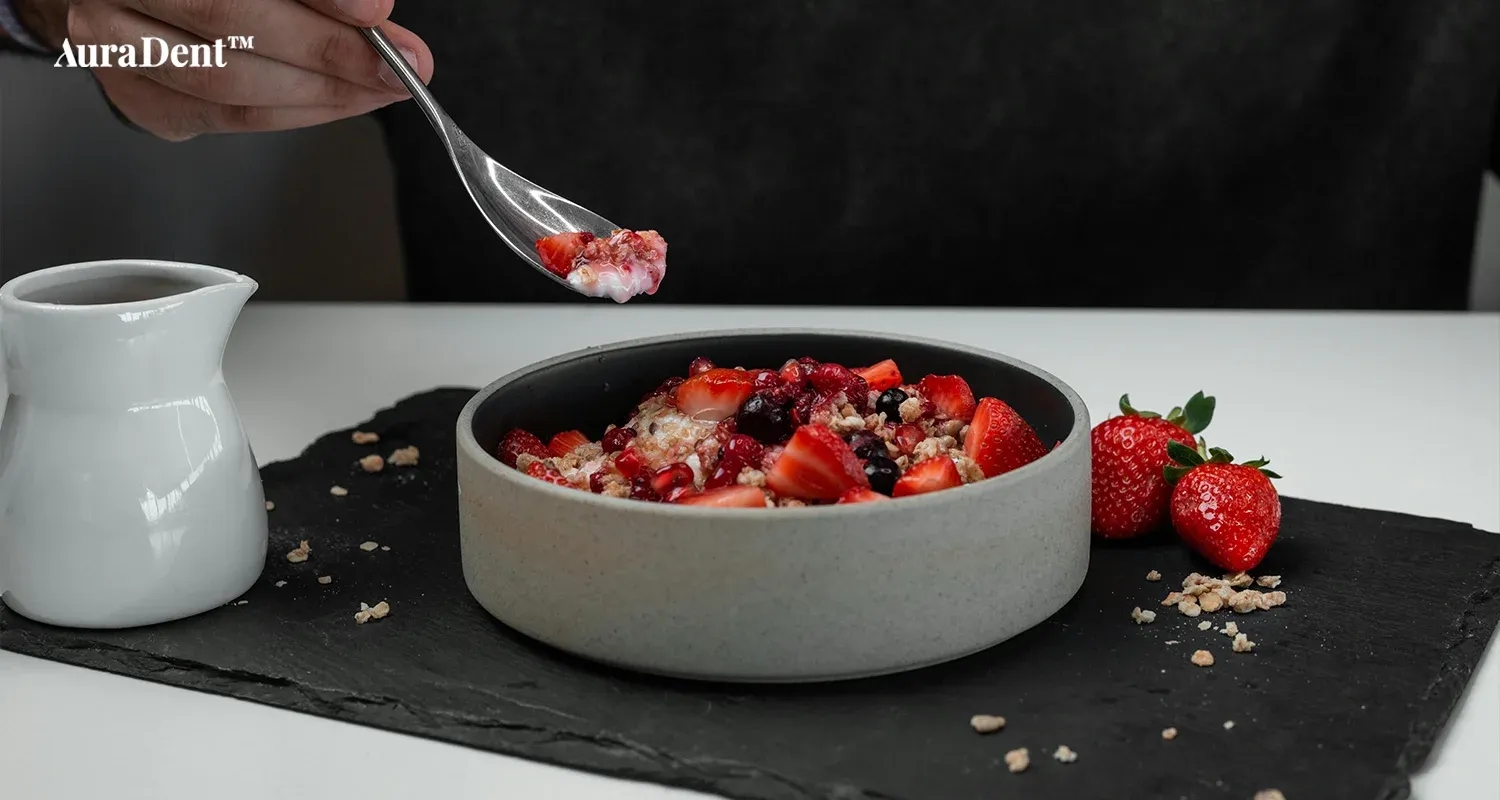
Important meal-time advice during orthodontic treatment with braces
To protect your braces and maintain good oral health throughout the entire treatment period, it is important to be mindful of how you eat. Here is some practical advice:
- Chew slowly and carefully: Use your back teeth as much as possible. This reduces stress on brackets and orthodontic wires.
- Cut food into smaller pieces: Cutting or dividing food into small portions makes chewing easier and reduces the risk of damaging your braces.
- Practice thorough oral hygiene after every meal: Brush your teeth with an orthodontic toothbrush and use floss designed for braces. This helps prevent plaque buildup, cavities, and gum inflammation.
- Avoid biting into hard foods with your front teeth: By reducing pressure on your front teeth, you lower the risk of brackets coming loose or wires bending.
With Invisalign, you avoid many of the dietary restrictions that come with traditional braces, since the aligners are easily removed before you eat. This means you can largely enjoy your food as usual, as long as you brush your teeth thoroughly before putting the aligners back in.
Many people wonder: What should you say to get braces? The best approach is to describe your needs and wishes to your dentist, whether they involve bite problems, aesthetic concerns, or functional issues. Based on that, the dentist will make a professional assessment and help you find the right treatment option.
If you would like to know whether Invisalign is right for you, you are always welcome to book a free consultation for an individual evaluation and more information.
Summary and Next Steps
When you have braces, it is important to know which foods to avoid in order to keep brackets and orthodontic wires intact and functioning properly. Hard, sticky, and very high-sugar products can quickly cause problems. By being careful with your diet, you reduce the risk of damage, promote good oral hygiene, and increase the chances of an optimal treatment outcome.
With Invisalign, you gain a significant advantage. Since the aligners are removable, you almost completely avoid food restrictions. This provides greater freedom in daily life and makes meals easier to manage.
If you would like to learn more about how to best care for your braces, or if you are considering Invisalign as a treatment option, you are warmly welcome to book a free consultation. We would be happy to help you find the solution that best suits your needs and lifestyle.
FAQs