
- General Dentistry
A Soft Diet During Orthodontic Treatment: What to Eat and Why It’s Important

During orthodontic treatment, even everyday meals can feel uncomfortable. It is therefore very important to adjust your diet and choose foods that are particularly gentle on your mouth. A soft diet reduces stress on the teeth and gums, prevents irritation, and protects both the braces and oral tissue. Whether you’re being treated with fixed braces or removable aligners like Invisalign®, your diet plays a crucial role in both your comfort and treatment results.
Why is a soft diet important during orthodontic treatment?
As the teeth are gradually moved, soreness, tension, or increased sensitivity in the teeth often occurs. Eating hard or chewy foods at this time can create additional pressure, lead to tissue inflammation, or, in some cases, cause damage to the braces’ attachments. Choosing soft, easy-to-chew foods promotes healing and patient comfort, while reducing the risk of treatment interruptions or delays.
Especially during the first few days after braces are fitted, or when a new Invisalign aligner is first used, your teeth may feel sore and sensitive. In such cases, soft foods are often the best choice. Many people wonder what they shouldn’t eat with braces, and generally speaking, hard, chewy, or sugary foods should be avoided. If you’d like to know more in detail what’s on that list and why certain foods are particularly risky, we recommend reading on in this article.

What should you eat when you have braces? Examples of soft, tooth-friendly foods
The following foods are gentle on both teeth and gums and are well-suited for consumption throughout the entire treatment period:
- Mashed potatoes: An easy-to-chew, energy-rich staple that provides a feeling of fullness without straining the teeth
- Yogurt and quark: Calcium-rich options that contribute to strong teeth and good oral health
- Vegetable soup: A warm and smooth meal that is easy to swallow and rich in nutrients
- Smoothies: Customizable to taste and nutritional needs, especially useful when experiencing soreness
- Boiled eggs: A soft source of protein that requires minimal chewing
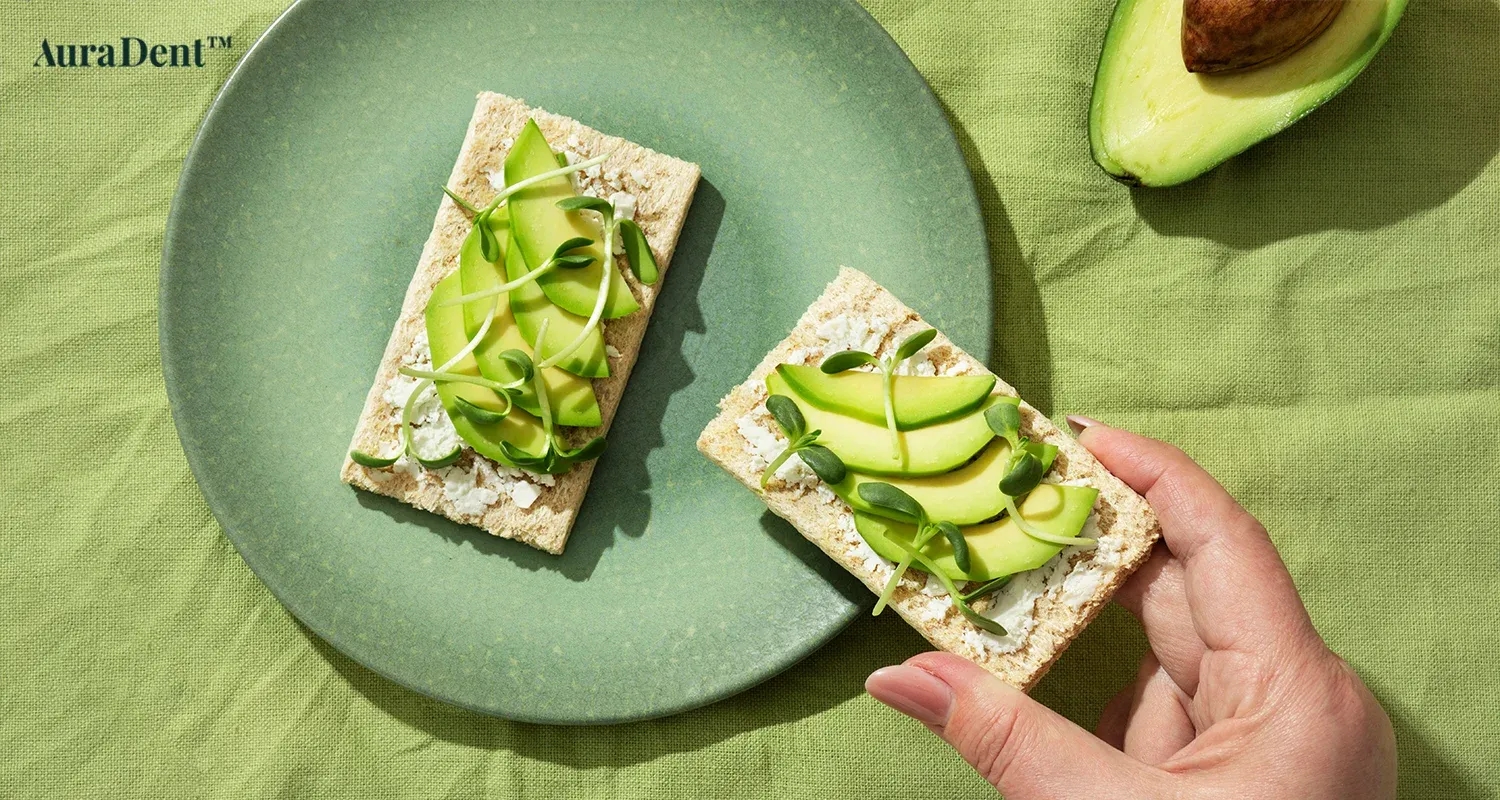
- Avocado and banana: Soft, vitamin-rich foods with a naturally mild texture
To make food easier to chew, cut it into small pieces and cook it until it’s very soft. Avoid hard-crusted bread, crispbread, and foods with crispy surfaces. The question of whether you can eat potato chips while wearing braces comes up often. You should avoid them, as potato chips are often sharp and can easily get stuck.
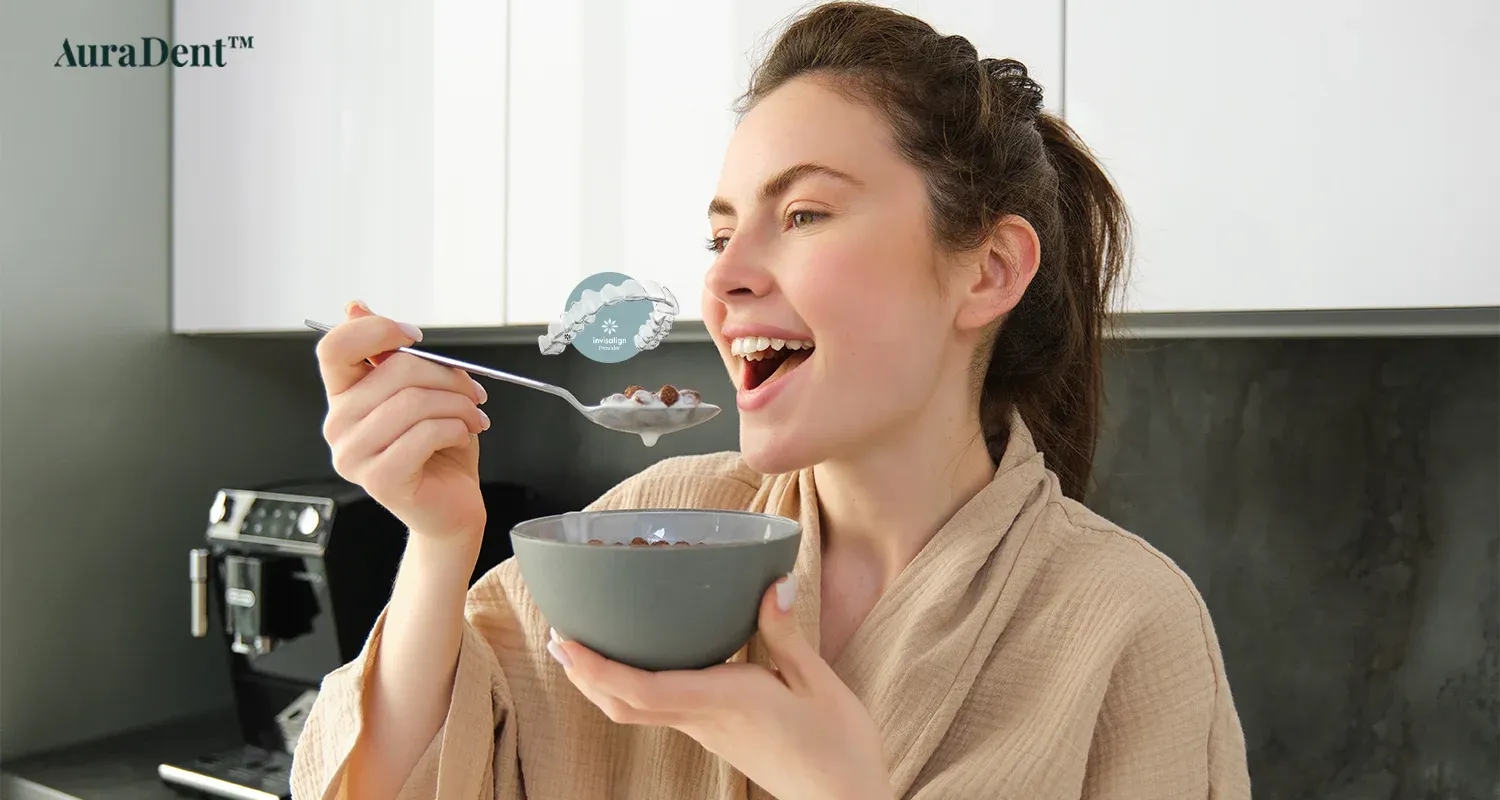
How Invisalign Makes Dietary Habits Easier
One of the biggest advantages of Invisalign is that the aligners can be easily removed during meals. This offers greater freedom compared to traditional fixed braces. But that doesn’t mean you can completely ignore the importance of your diet.
You still need to remember to rinse your mouth and brush your teeth after every meal before putting the aligner back in. Even soft foods can leave stains on the aligner if you don’t clean it properly. Avoid colorful drinks, such as coffee and berry smoothies, while the aligner is in your mouth, as they can discolor the plastic material.
A common question for many is: can you eat right after getting braces? Yes, you can, but it requires choosing the right kinds of food and maintaining good oral hygiene. Since your teeth are often sore at first, it’s important to avoid hard or chewy foods. If you want to know which options are best right after starting treatment, you’ll find practical tips in the blog post.
The Importance of Nutrition for Oral Health and the Success of Orthodontic Treatment
During orthodontic treatment, it is crucial that the body receives the right nutrients to support both oral health and the healing process. Nutrients such as vitamin C, calcium, and magnesium play a key role, they help strengthen the gums, reduce the risk of inflammation, and promote tissue repair. The most beneficial diet combines high nutritional density with a soft texture, which minimizes stress on the teeth and orthodontic appliances.
Sample Daily Menu for Orthodontic Treatment
- Breakfast: Smoothie with banana, oat milk, and peanut butter, rich in energy, magnesium, and healthy fats
- Lunch: Creamy carrot soup with lentils, rich in fiber and iron, while being gentle on the teeth
- Snack: Greek yogurt with mashed avocado, a calcium- and vitamin E-rich combination that’s easy to eat
- Dinner: Steamed salmon with mashed potatoes and tender-fried zucchini, omega-3, protein, and vitamins in an easy-to-chew form
It’s important to remember that even soft foods aren’t always a good choice if they’re high in sugar. Candy in particular, even soft varieties, can easily get stuck between your teeth and braces, increasing the risk of cavities. Therefore, the answer to “Can you eat candy with braces?” is, in most cases, no. In this article, we explain why certain types of candy are particularly harmful during treatment and what you should avoid.
Are you wondering how braces work in combination with diet? In short: better eating habits lead to more effective treatment and a healthier end result.
Invisalign at AuraDent™: Gentle treatment with fewer restrictions
At AuraDent™, we offer Invisalign®, a modern orthodontic treatment that combines clinical effectiveness with greater flexibility in your daily life. Since the aligners can be easily removed during meals, you avoid many of the dietary restrictions associated with traditional braces.
As part of the treatment, we help you design a personalized dietary plan that supports both oral health and treatment results. Our clinic is here to answer questions such as what to avoid while wearing braces, as well as to offer practical recommendations to optimize the treatment process.
Book a free consultation today and take the first step toward a more flexible and patient-centered orthodontic treatment with Invisalign®.
Summary: A soft diet to support orthodontic treatment
Adjusting your diet is an important part of orthodontic treatment. A soft, nutrient-rich diet reduces the risk of discomfort, protects your gums and oral mucosa, and facilitates the controlled movement of your teeth. By combining gentle foods with good oral hygiene, you can improve both the comfort and the long-term results of your treatment.
FAQs