
- General Dentistry
- Cosmetic Tips
Are you missing teeth? Causes, consequences, and the best solutions

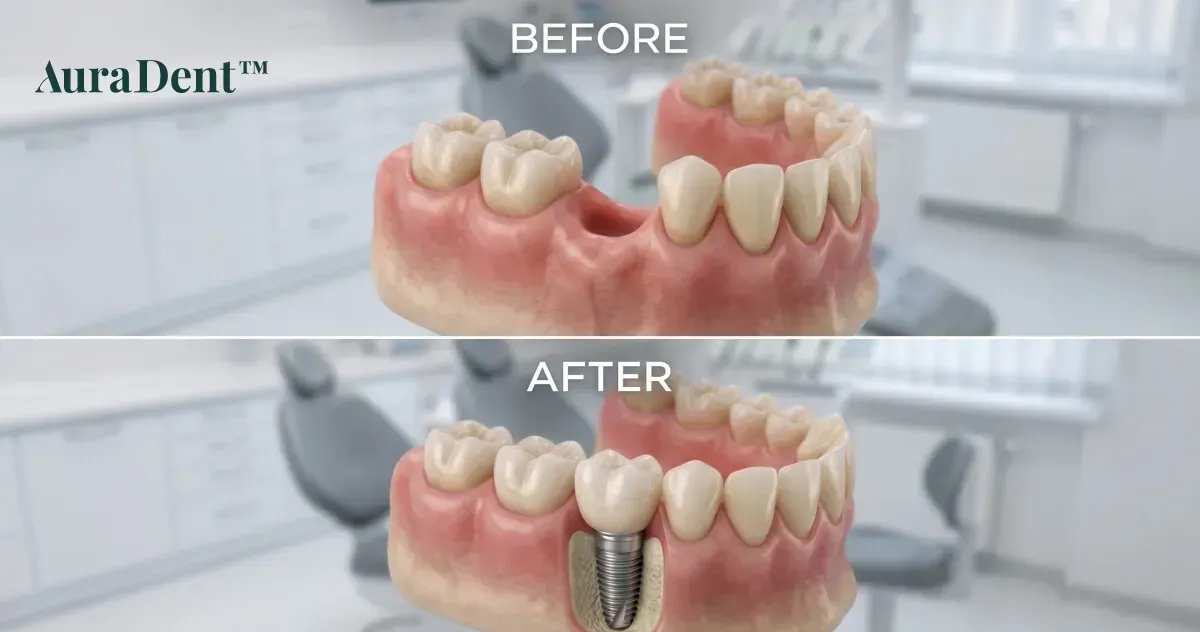
Missing teeth is a common situation that can affect anyone, regardless of age or background. The loss can be due to tooth decay, gum disease, accidents, or other medical conditions, and often affects both appearance and function. An incomplete bite can lead to difficulty chewing, speaking, and smiling naturally, while also impacting self-confidence. The good news is that today's dentistry offers safe and advanced solutions that make it possible to restore both your smile and quality of life in a sustainable way.
Key Points in Brief
- Missing teeth affects not only your smile but also your oral health, chewing ability, and quality of life.
- Common causes include tooth decay, gum disease, injuries, and certain diseases that affect bone tissue.
- Replacing missing teeth early prevents bone loss and misalignment of adjacent teeth.
- There are several treatment options, including dentures, bridges, and modern dental implants.
- Dental implants are today the most durable and natural solution for replacing lost teeth, restoring both function and aesthetics.
- A consultation at AuraDent helps you find the best solution based on your individual needs.
Common Causes of Tooth Loss
Tooth loss can be caused by several factors. Understanding the cause is crucial to prevent further tooth loss and choose the right treatment.
1. Tooth decay (cavities)
Tooth decay is the most common cause of tooth loss. When bacteria break down sugars in food, acids form that erode the enamel and dentin. Without treatment, the infection can reach the tooth's root, making extraction necessary.
2. Gum disease (periodontitis)
Periodontitis is a long-term inflammation of the gums that damages the supporting bone around the teeth. When the bone breaks down, the tooth loses its anchorage and can become loose. Regular dental visits and thorough oral hygiene are essential to prevent this.
Do you want to learn more about how to protect your gums from inflammation? Read our article "Is Flossing Important? The Big Guide to Healthy Gums."
3. Injuries and accidents
Traumatic injuries from sports, falls, or accidents can lead to teeth being knocked out completely or damaged beyond repair. Quick action by a dentist increases the chance that the tooth can be saved.
4. Systemic diseases
More Than Just a Smile: What Happens If You Don't Replace a Tooth
Losing a tooth is not just an aesthetic issue. When the space is left untreated, several problems can arise that affect both function and health.
Bone loss in the jaw
When a tooth is lost, the bone underneath is no longer stimulated and gradually begins to break down. This leads to the jaw losing volume, which can change the shape of the face and give an aged appearance.
Also read our article about "Protect Your Teeth with Water" to understand how fluid balance and saliva affect bone and enamel health.
Shifting of teeth
When a gap is left untreated, the adjacent teeth may begin to tilt or shift. This can create bite problems and make it more difficult to clean between the teeth.
Difficulty chewing and speaking
Tooth loss affects chewing efficiency and can create problems with pronunciation and speech. It can also affect digestion when food is not chewed properly.
Increased risk of infections
Gaps act as traps for food debris and bacteria, increasing the risk of inflammation and gum disease.
Psychological effects
Many who are missing teeth experience reduced self-confidence and avoid smiling or speaking in public. Restoring a complete smile can therefore improve both mental health and social well-being.
What Solutions Are There for Missing Teeth?
Dentistry offers several options for replacing missing teeth. The choice depends on how many teeth are missing, the quality of the bone, and your personal preferences.
Removable Dentures
Dentures are removable replacements used to replace several or all teeth in one jaw.
- Advantages: Cheaper than fixed solutions and can quickly restore function and appearance.
- Disadvantages: Can feel unstable and cause irritation. They do not prevent bone loss and require regular adjustments.
Dental Bridges
A dental bridge consists of artificial teeth that are attached to the adjacent natural teeth.
- Advantages: Provides good stability and effectively restores function.
- Disadvantages: Requires grinding down healthy teeth and does not prevent bone loss.
Dental Implants: The Most Modern Solution
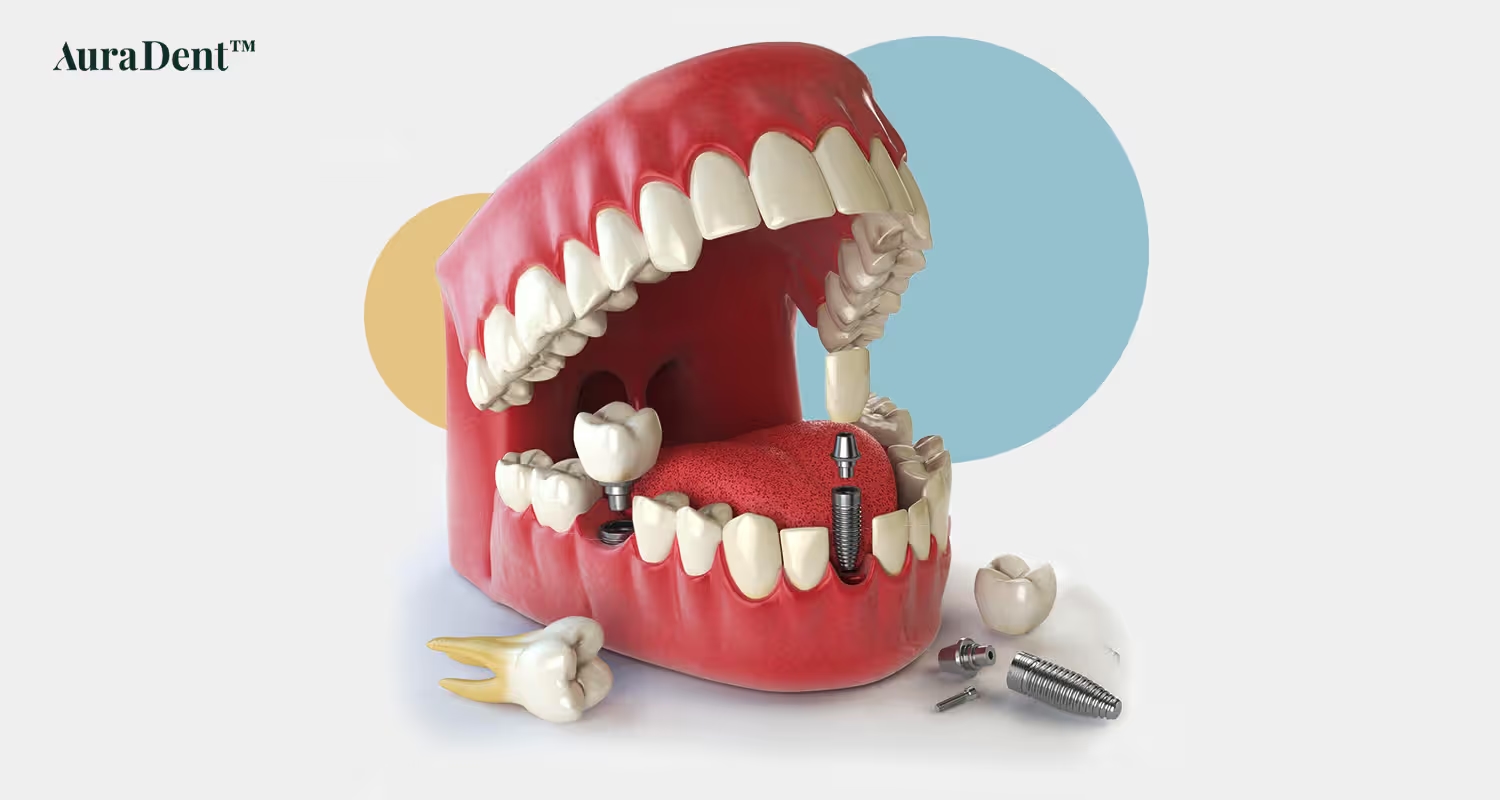
Dental implants are today the most advanced and durable method for replacing missing teeth. An implant consists of a titanium screw placed in the jawbone, functioning as an artificial tooth root. A crown that looks and feels like a natural tooth is attached to it.
Advantages:
- Prevents bone loss by stimulating the jawbone.
- Does not require support from other teeth.
- Provides a natural feel and full function when chewing and speaking.
- Often lasts a lifetime with good oral hygiene.
Do you want to learn more about how to avoid complications and ensure the best possible results? Read our article "Dental Implant Risks and Complications: Symptoms and Solutions" to understand how to prevent and manage potential risks safely.
Comparison: Which solution is best for you?
| Feature | Denture | Bridge | Implant |
|---|---|---|---|
| Preserves jawbone | No | No | Yes |
| Affects adjacent teeth | No | Yes | No |
| Comfort and function | Medium | Good | Excellent |
| Lifespan | Short to medium | Medium to long | Very long |
| Maintenance | High | Medium | Low |
Why Dental Implants Are an Investment in Your Future Health
Dental implants are not merely an aesthetic improvement but a medically sustainable investment in your health. By replacing the tooth roots, the natural pressure on the jawbone is restored, preserving the structure and stability of your face. Furthermore, implants do not affect the surrounding healthy teeth.
Dental implants offer long-lasting function, a natural feel, and high comfort without the need for compromises. For many patients, this is the solution that restores their ability to eat, speak, and smile without worry.
Do you want to learn how to prevent complications and keep your implants healthy in the long term? Read our article "Dental Implant Infection: Prevent and Treat for Healthy Oral Health" to discover the dentist's advice on how to protect both implants and gums.
Conclusion
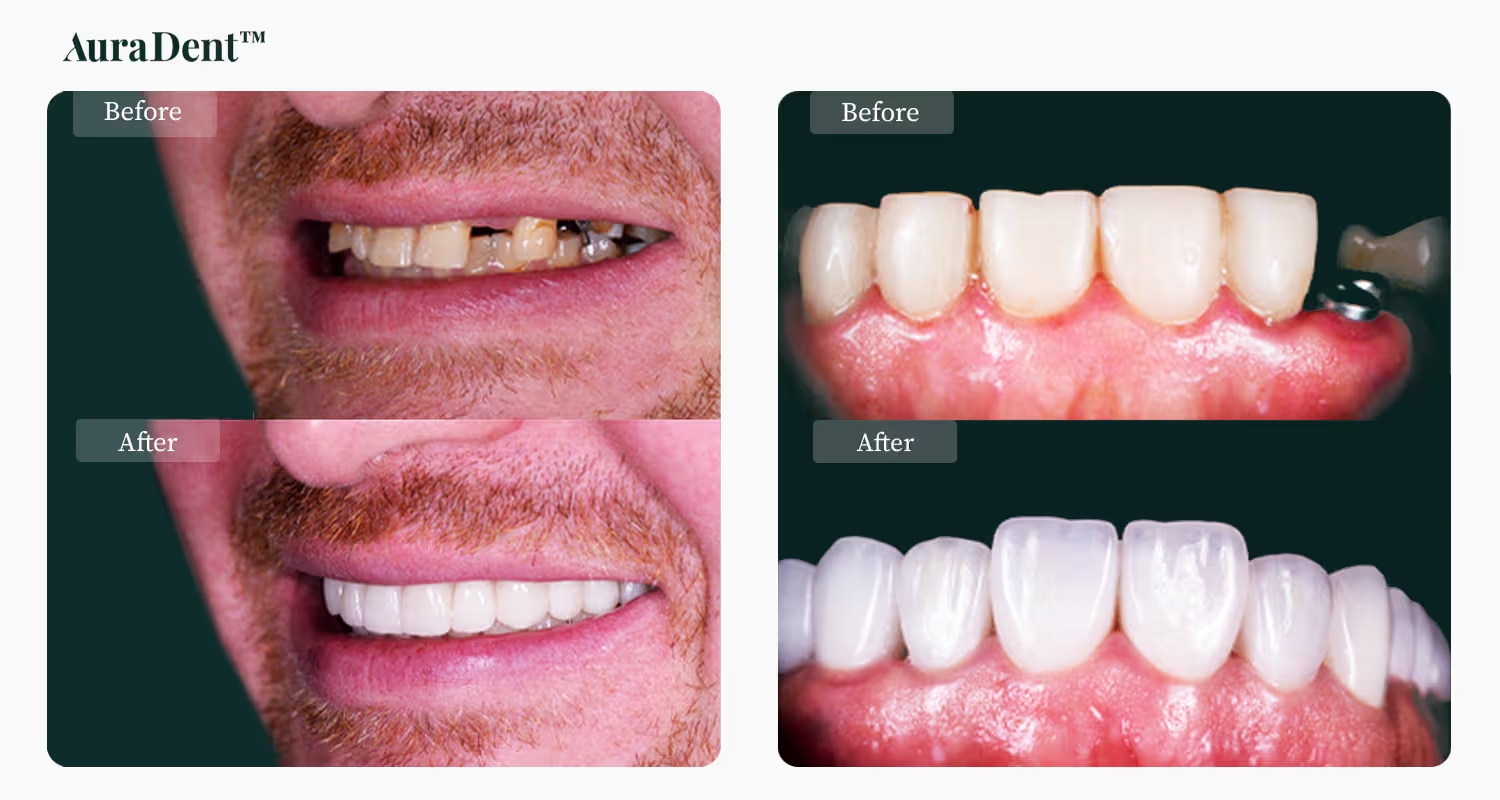
Missing teeth affects not only your smile but also your entire oral health, speech, and quality of life. Gaps in the dental arch can lead to bone loss, an altered bite, and difficulty chewing, which in turn can affect digestion and nutrient absorption. By understanding the causes behind tooth loss and knowing the modern alternatives, such as dental implants, you can make an informed decision that strengthens both your health and self-confidence in the long term.
Replacing lost teeth is not just about aesthetics, but also about preserving the jaw structure and preventing future problems. With the right treatment, you can restore both function and balance in your mouth and enjoy a natural, confident smile that lasts a lifetime.
If you are considering replacing missing teeth and want to learn more about dental implants, a professional consultation is recommended. Our dentists at AuraDent offer an individual assessment of your bite, jawbone, and needs to create a tailored treatment plan focused on durability and aesthetics.
Book a free consultation at AuraDent and discover how you can regain your smile with modern, safe, and natural dental implants; an investment in both your well-being and your future oral health.
FAQs