- General Dentistry
Braces for Overbite in Children: How Treatment Works Step by Step

Key Points at a Glance
• Orthodontic treatment for overbites in children is the most effective method for correcting bite irregularities during childhood.
• Treatment typically takes place in two phases: first, correction of jaw growth, followed by alignment of the teeth.
• Functional appliances and fixed braces are used depending on the child’s stage of development.
• Invisalign is a modern, discreet option that offers high comfort.
• Early orthodontic evaluation provides the best conditions for a stable and aesthetically pleasing result.
Why Braces Are the Best Solution for Overbites in Children
Braces for overbites in children are the most reliable method for correcting a malocclusion because they allow for adjustments as the child grows naturally. During childhood, the jaws are more receptive to change, making treatment both faster and more effective.
Correcting Jaw Growth
Orthodontic treatment during childhood harnesses the growth potential of the jaws to create balance between the upper and lower jaws. This improves chewing function and reduces the risk of future problems.
Protection of the front teeth
A severe overbite means that the front teeth are more exposed and at greater risk of injury. Orthodontic treatment moves the teeth into a more stable position and reduces the risk of fractures.
Improved function and aesthetics
By correcting the alignment of the teeth, chewing ability, speech, and facial profile are all improved. Straight teeth also boost a child’s self-esteem and make oral hygiene easier.

Two-phase treatment: the key to successful orthodontic treatment for children with an overbite
The most effective treatment strategy for overbite in children is what is known as two-phase treatment. It is divided into two stages that are tailored to the child’s biological growth.
Phase 1: Functional Jaw Correction
In this phase, functional appliances are used to guide jaw growth. These can be removable or fixed and are typically used between the ages of 9 and 12. The goal is to stimulate forward movement of the lower jaw and create balance between the jaws.
This phase is particularly important for children with crooked teeth, as adjusting the jaw relationship creates space for proper tooth alignment in the next step.
Phase 2: Orthodontic Treatment with Fixed Braces
Once the jaws have been balanced, the next phase begins with fixed braces. The braces move each tooth into the correct position to create a harmonious and functional bite.
For children who prefer a more discreet solution, Invisalign may be a suitable alternative. The clear aligners are comfortable, removable, and easy to keep clean.
Types of Appliances Used to Treat Overbites in Children
When treating overbites in children with braces, different types of orthodontic appliances are used depending on the complexity of the bite and the child’s age.
Functional Appliances
These appliances are used in the first phase of treatment to correct jaw growth. Common examples include the Activator and Twin Block, which promote forward movement of the lower jaw.
Fixed braces
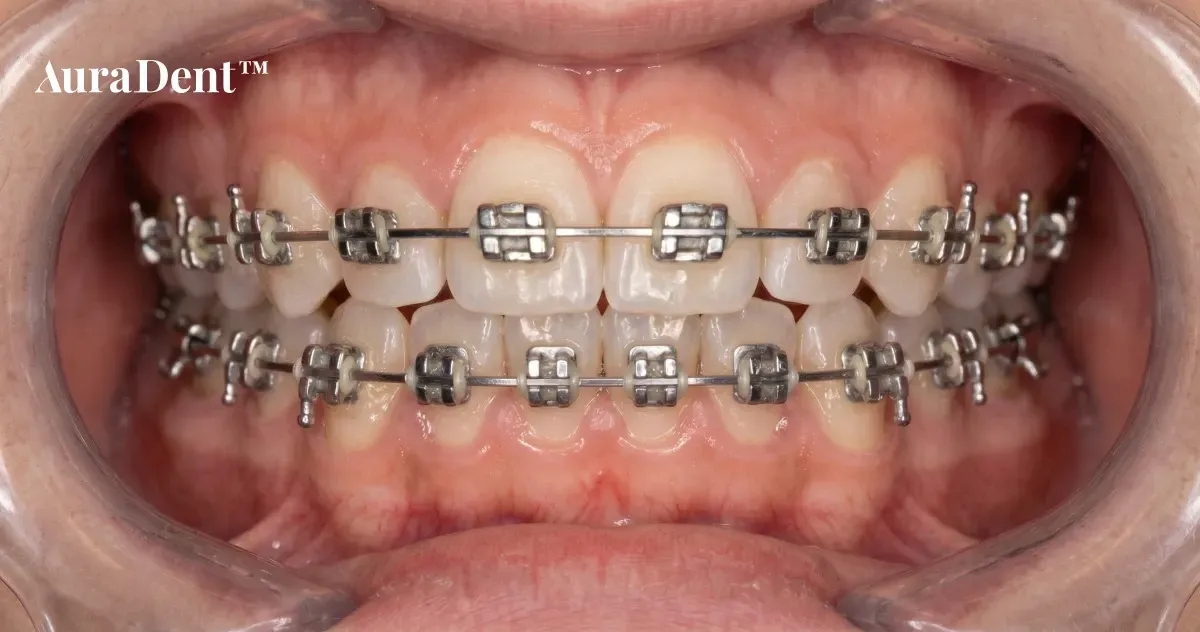
During phase two, fixed appliances, known as braces, are used to precisely adjust tooth positions. They come in two main types:
• Metal brackets: the traditional and most durable option.
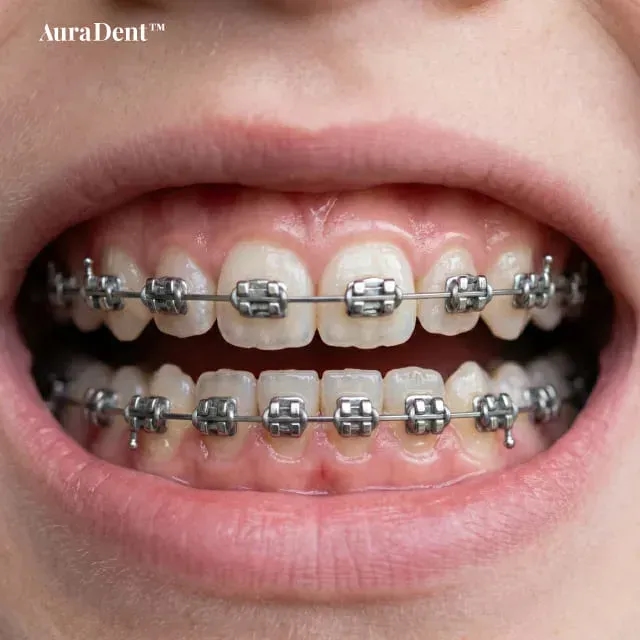
• Ceramic brackets: more aesthetically discreet but with the same clinical effectiveness.
Retainers
After completed treatment, a stabilization phase follows with retainers to maintain the result. This phase is crucial for long-term stability.

The Orthodontic Treatment Journey for Children with Overbites at AuraDent
Starting orthodontic treatment for children with overbites at AuraDent involves a carefully planned process in which every step is supervised by experienced orthodontists.
Step 1: Consultation and Planning
During the first visit, a thorough examination is conducted using digital impressions and X-rays. The dentist assesses the structure of the bite and recommends the most suitable treatment strategy.
Step 2: Start of Phase 1
During the growth phase, treatment begins with functional appliances that correct jaw development and improve bite balance.
Step 3: Phase 2 – Fixed Braces
Once the jaws have stabilized, phase two begins with fixed braces for precise alignment of the teeth. In some cases, Invisalign is chosen as an aesthetic alternative.
Step 4: Completion and Retention
Once the desired result is achieved, the retention phase begins, during which retainers are used to maintain the teeth’s position.
For parents who are wondering, braces are free for children; orthodontic treatment in Sweden is often covered by public dental care up to age 23, depending on regional guidelines and the severity of the case.
Conclusion
Orthodontic treatment for overbites in children is a safe and evidence-based method for correcting malocclusions during a child’s growth. Through the two-phase treatment model, first jaw correction and then tooth alignment, a functional, stable, and aesthetically pleasing smile is created that lasts a lifetime.
If your child has crooked teeth or signs of an overbite, book a consultation at AuraDent. Our orthodontic specialists offer customized treatments based on scientific evidence and clinical experience to create a harmonious and healthy smile.
FAQs
Dr. Mustafa Al Waedh
Related Posts