
- General Dentistry
How long do you have to wear braces for a gap? Everything you need to know

-1.avif&w=3840&q=100)
A small gap between the teeth may be charming to some, but for others, it’s something they’d prefer to correct. Many seek treatment for aesthetic reasons, while others find that the gap affects their speech, chewing ability, or even gum health. Regardless of the reason, the question often arises: How long do you wear braces for a gap?
The answer isn’t entirely straightforward, as the treatment time depends on several factors. In this article, we’ll go over what a gap actually is, why it’s treated, what methods are available, and how long it usually takes to achieve a straight smile.
What Is a Diastema (Tooth Gap) and Why Is It Treated?
A diastema is a gap between two teeth, most commonly between the upper front teeth. It can be small and barely noticeable, or large enough to affect appearance and function.
Reasons for wanting to close tooth gaps may include:
- Aesthetics: many people want a more even and harmonious smile
- Improved speech function: large gaps can affect pronunciation
- Preventive dental care: gaps can lead to misalignment or excessive strain on other teeth
- Avoiding gum problems: food debris gets trapped more easily in large gaps
Prepare yourself by thinking through what to say when asking for braces; this will make it easier to discuss your options with the dentist.
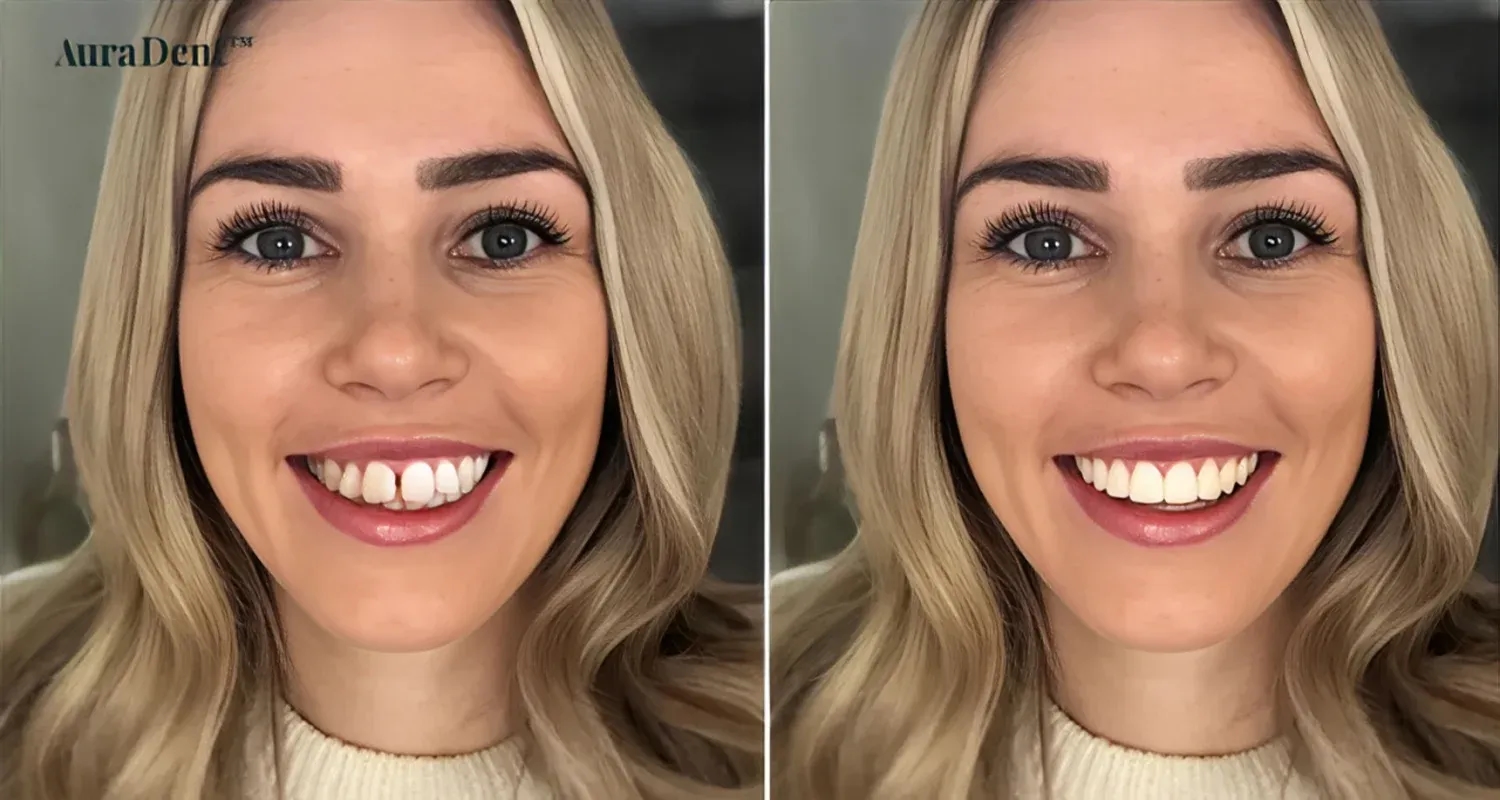
What factors affect how long it takes to close a window?
The treatment time depends on several factors:
- The size of the gap: Small gaps can be closed in just a few months, while larger ones require a longer treatment period
- Choice of treatment method: Traditional braces (metal) provide faster results, especially for larger gaps
- Invisalign, our recommended method, is discreet and effective, especially for small to medium-sized gaps
- Age: The younger the patient, the faster the teeth move
- Any malocclusions: If the gap occurs alongside an overbite, crossbite, or crowding, treatment may take longer
How long do you generally have to wear braces for an overbite?
Here is a rough estimate based on the size of the gap:
- Minor cases: 4 to 6 months
- Moderate cases: 6 to 12 months
- Major or more complex cases: 12 to 18 months or more
It is important to remember that every patient is unique. A thorough examination is necessary to provide a more accurate assessment. Your dentist or orthodontist can give you a realistic prognosis after analyzing your bite.
What treatment options are available?
There are different ways to treat gaps depending on their size and your personal preference as a patient.
Traditional braces (metal):
- Work well for larger gaps
- Often produce faster results
- Are clearly visible, which some people may find bothersome
Invisalign (invisible braces):
- Discreet, with no metal brackets or wires
- Effective for mild to moderate misalignments
- Can be removed during meals and when brushing, which improves oral hygiene
- Requires good compliance (worn 20–22 hours a day)
Cosmetic options (e.g., bonding or veneers):
- Used for very small gaps
- Quick results without braces
- Less durable than orthodontic treatment and not suitable for larger gaps

Is there a way to speed up the treatment?
Yes, to some extent. Learning about how braces work beforehand will give you a clearer picture of why each step is important and how you can influence the length of your treatment. Here are a few tips to speed up the process:
- Follow your orthodontist’s instructions carefully (e.g., wear your Invisalign aligners according to the schedule)
- Don’t miss any scheduled appointments or adjustments
- Maintain good oral hygiene; healthy teeth respond better to treatment
- Use accessories such as elastics or retainers exactly as prescribed
Also keep in mind what you eat. When the question “Can you eat chips with braces?” comes up, the rule of thumb is to be careful with hard or very crunchy snacks that can put strain on or damage the brackets; choose thinner varieties, chew gently, and clean your teeth thoroughly afterward.
Summary and Next Steps
The length of time you’ll need braces to close a gap depends on several factors, such as the size of the gap, the treatment method, your age, and your individual circumstances. Small gaps can be closed in a few months, while larger gaps require more time. Treatment time may also be extended if bite issues need to be corrected at the same time; read more about how long braces are needed for an overbite to understand the differences.
Invisalign is a discreet, comfortable, and effective option for many patients who want to close their gaps without using metal brackets.
Want to know how long your treatment will take? Book a free consultation with us and get a personalized assessment of your teeth, we’ll help you get closer to a gap-free smile!
FAQs