
- General Dentistry
How Severe Does an Overbite Need to Be to Require Braces: A Professional Guide

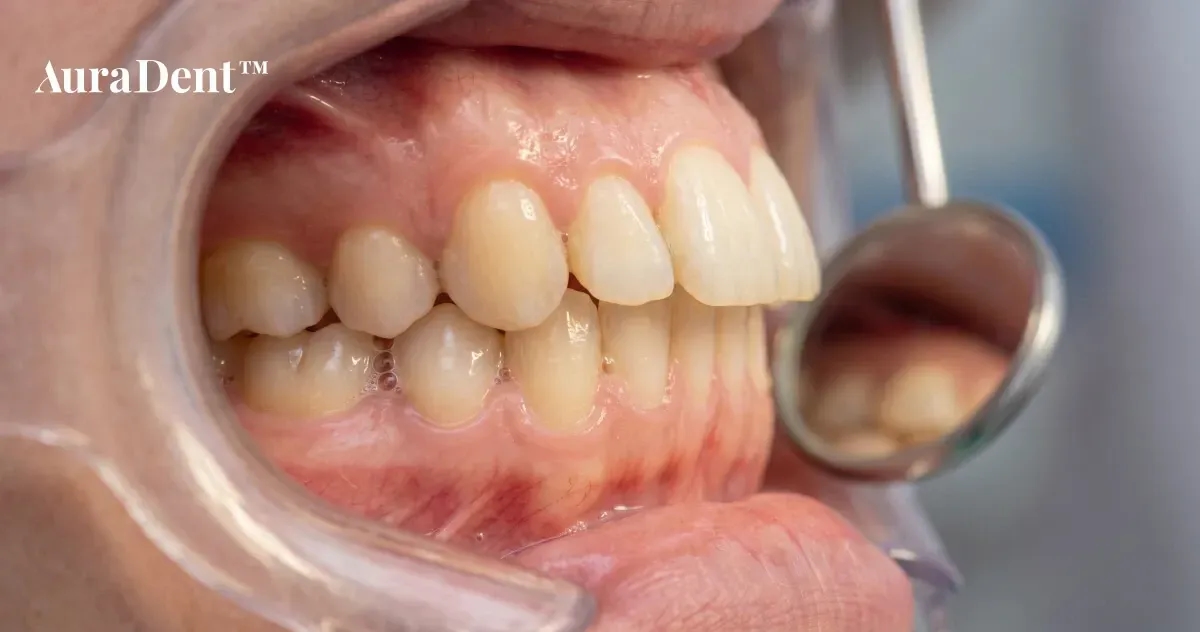
An overbite occurs when the upper front teeth are clearly positioned in front of the lower front teeth. It is one of the most common malocclusions and can vary in severity, ranging from mild to more severe cases. But when is an overbite considered to require treatment?
The answer depends on several factors: the degree of overbite in millimeters, the impact on bite function and aesthetics, as well as individual factors such as age, growth stage, and dental health.
What is an overbite?
An overbite is defined as the horizontal distance between the front teeth of the upper and lower jaws. A certain degree of overbite is normal, typically around 2 to 3 millimeters. When the overbite exceeds this range, it is classified as a malocclusion.
Three main categories of overbite:
- Mild overbite (up to 3 mm): Often does not require treatment unless it causes functional problems.
- Moderate overbite (3–5 mm): May affect chewing ability, speech, or perceived aesthetics.
- Severe overbite (over 5 mm): Increases the risk of trauma to the front teeth, difficulty chewing, and strain on the temporomandibular joints.
The more severe the overbite, the more likely it is that orthodontic treatment will be recommended.

When is orthodontic treatment considered appropriate?
If the overbite exceeds 3 millimeters and affects function (such as chewing, speech, or jaw discomfort) or aesthetics (for example, a noticeable change in profile), treatment may be indicated. The assessment is based not only on the distance between the teeth but also on how the malocclusion affects the individual’s quality of life.
An overbite exceeding 5 millimeters is often considered to require treatment, especially if there is a risk of trauma to the front teeth or other symptoms. Treatment can be provided at any age, but in children, it is often beneficial to begin treatment during the growth period.
How does the dentist determine whether treatment is necessary?
In addition to measuring the overbite, a comprehensive assessment is conducted that includes:
- Difficulty closing the mouth or chewing
- Aesthetic concerns, such as tooth alignment and facial profile
- Speech issues, such as whistling or lisping
- Increased risk of damage to the front teeth
If one or more of these factors are present, treatment is often recommended. An individual assessment by a dentist or orthodontist is always necessary.
Treatment Options for an Overbite
When orthodontic treatment is deemed necessary, there are several methods to choose from, depending on the severity of the overbite and the patient’s preferences:
- Traditional fixed braces: Metal or ceramic braces that are adjusted regularly to move the teeth gradually.
- Invisalign®: A modern and discreet method that uses clear plastic aligners and has become a popular choice among both adults and teenagers.
The choice of treatment method is made in consultation with the treating dentist or orthodontist following a thorough evaluation.
Invisalign: A Modern Solution for Overbites
Invisalign is an invisible orthodontic treatment consisting of a series of clear aligners that are replaced every two weeks. It is particularly well-suited for mild to moderate overbites and is popular among adults due to its discreet design.
Benefits of Invisalign for overbites:
- Almost invisible
- Removable during meals (you can eat whatever you want)
- More comfortable than metal brackets
- Digital planning with 3D scanning
Learn more about how long it takes to correct an overbite with braces to get a better sense of the timeframe.

Do treatment times vary depending on the severity of the overbite?
Yes. The treatment time varies depending on the extent of the overbite and the method used. In general, the following applies:
- Mild overbite: 6–12 months
- Moderate overbite: 12–18 months
- Severe overbite: 18–30 months
Learn more about how long braces are typically worn in different situations, or specifically about how long braces are worn for an overbite in cases of combined malocclusions.
Keep in mind that lifestyle factors also play a role. For example, some people wonder: Can you eat potato chips while wearing braces? With traditional braces, you should avoid hard foods, while with Invisalign, you can remove the aligners before eating.
Do you need treatment for your overbite?
Here are some common signs to look out for:
- You feel self-conscious about your smile or its appearance
- You have trouble biting into or chewing certain types of food
- You experience pain or tension in your jaws or teeth
- You have a visible overbite of more than 3 millimeters
If you are unsure, we always recommend a professional evaluation by an orthodontist.
At our clinic, we use advanced digital 3D scanning to carefully analyze your bite and determine whether treatment is necessary.
Our specialization in Invisalign and overbites
At our clinic, we have helped hundreds of patients correct their overbites with Invisalign. We use iTero scanning and customized treatment plans to give you the best possible results, without it being noticeable in your daily life.
Want to know if you’re a suitable candidate? Book a free consultation today and get a professional assessment of your bite. Whether you have a minor cosmetic issue or a functional problem, we’ll help you find the right path forward.
Want a professional assessment of your overbite using modern technology and discreet treatment? Book your free consultation with us today.
FAQs