
- General Dentistry
Tooth Infections and Antibiotics: Uses, Types, and Why You Should Never Self-Medicate
.webp&w=3840&q=100)
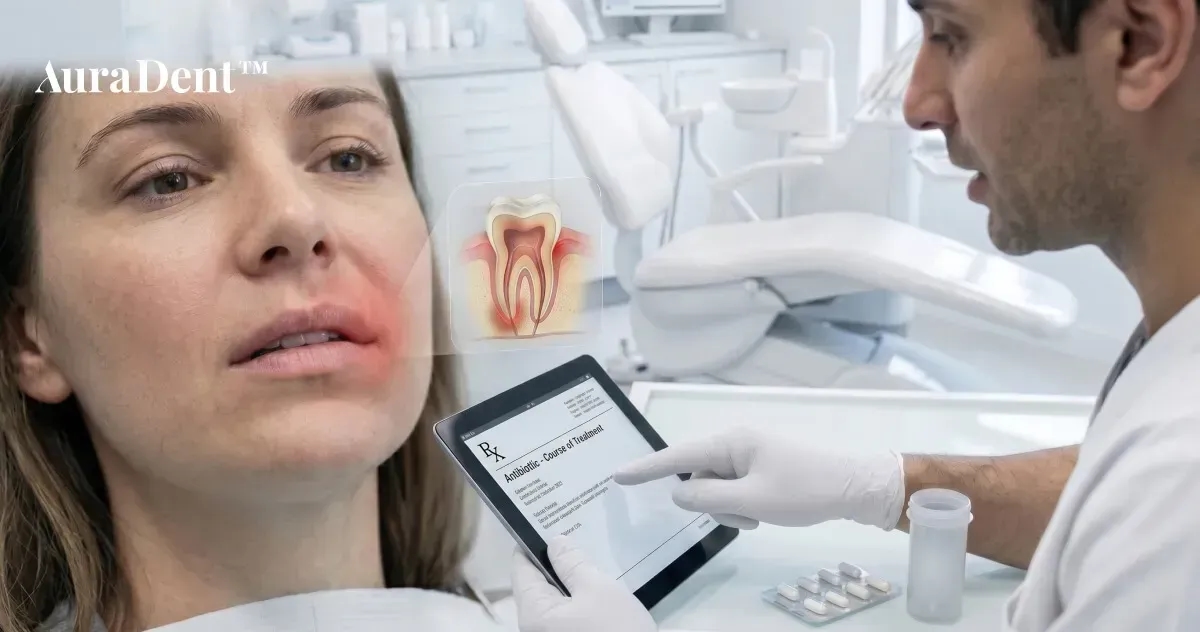
A dental infection can start as a mild ache but quickly develop into a serious condition. In some cases, antibiotics are required, but not always. Whether you’re in the middle of orthodontic treatment or seeking emergency care for pain, it’s crucial to understand when antibiotics are necessary and when other treatments are more effective. This article provides an in-depth overview of causes, symptoms, common types of antibiotics, and how dental infections are affected by orthodontics.
What is a dental infection, and are antibiotics always necessary?
A dental infection occurs when bacteria penetrate the tooth’s pulp, gums, or jawbone. This usually happens as a result of untreated tooth decay, trauma, or gum inflammation. Once bacteria take hold, they can cause an abscess, pus formation, and, in some cases, spread to other parts of the body.
Common symptoms:
- Persistent toothache, often throbbing
- Swelling in the cheek, jaw, or lymph nodes
- Fever and feeling unwell
- Pus in the gums or around the tooth
- Bad breath
When are antibiotics used?
Antibiotics are primarily used in the following situations:
- When the infection shows signs of spreading (fever, swelling, trismus)
- As supportive care before or after surgical procedures
- In patients with compromised immune systems or a high risk of infection
However, antibiotics are not effective if the infected tissue is not treated. A tooth with an infected pulp requires root canal treatment or extraction, not just a course of antibiotics.

What should you say to get braces, especially if you’ve had recurring infections?
For many adults who experience dental infections or gum inflammation, the question arises as to whether their bite or misaligned teeth might be an underlying cause. It is common for patients who suffer from recurring infections to start considering orthodontic treatment, not only for aesthetic reasons but also to improve their oral health. This often raises the question: What should you say to get braces?
The most important thing is to describe the functional or health-related issues you are experiencing, especially those that may affect your risk of infection. For example:
- You have trouble brushing between your teeth due to crowding
- You have experienced recurring gum inflammation despite good oral hygiene
- You have difficulty chewing due to an improper bite
- You feel self-conscious in everyday life or social situations because of your smile
During a clinical examination, the dentist assesses not only the position of the teeth, but also how the current alignment may have contributed to, for example, plaque buildup or hard-to-reach areas where infections can easily develop.
In many cases, a modern and hygiene-friendly solution such as clear aligners, for example Invisalign®, may be the most suitable option. Since aligners can be removed during brushing and meals, the risk of bacterial buildup, and thus infections, is reduced compared to fixed braces.
Orthodontic treatment is therefore not just about appearance; it is often part of a long-term strategy to reduce the risk of infection and improve oral health over time.
Why do dental infections occur, and how do antibiotics help?
A dental infection usually begins with untreated tooth decay. Bacteria then reach the tooth’s pulp, causing internal inflammation. In other cases, the infection occurs following trauma, a tooth fracture, or even as a complication of orthodontic treatment.
Causes:
- Deep cavities
- Cracks in the tooth
- Treatment complications
- Poor oral hygiene, especially during orthodontic treatment
- Untreated gum infection
Antibiotics work by reducing bacterial growth, but they are no substitute for mechanical cleaning or root canal treatment. Self-medication often leads to antibiotic resistance, a global public health problem.
Example:
A patient wearing Invisalign who experienced increased swelling around a wisdom tooth was found to have a deep gum pocket. The infection was brought under control through cleaning and antibiotics, but only after a thorough diagnosis.
Common Antibiotics for Dental Infections and Their Relationship to Orthodontics
Dentists prescribe different antibiotics depending on the type of infection, its spread, the patient’s allergies, and ongoing treatments.
Common antibiotics:
- Amoxicillin: broad-spectrum, first-line treatment for acute infections
- Phenoxymethylpenicillin (PcV): milder infections
- Metronidazole: anaerobic infections, often used in combination
- Clindamycin: for patients with penicillin allergy
- Erythromycin: as needed for pregnant women or patients with allergies
Oral hygiene challenges are common in orthodontics. Fixed braces can create hard-to-reach areas where plaque accumulates. Invisalign is a better option for some patients, as the aligners are removed during brushing, allowing for better access. The difference in infection risk is clear in practice.

How long do you wear braces if you get an infection?
Orthodontic treatment typically lasts between 6 and 24 months. But what happens if you get an infection? How long do you wear braces if you have to pause treatment?
In some cases, an infection may require that treatment be temporarily suspended:
- In cases of severe dental infection, the inflammation and pain must be treated first
- The orthodontic appliance may need to be adjusted to reduce pressure on the infected area
- The aligners used in Invisalign treatment can be temporarily removed during antibiotic treatment
This does not necessarily prolong treatment, but it does require careful planning and regular contact with your dentist.
How can you prevent dental infections during orthodontic treatment?
Preventive measures are crucial, especially for patients undergoing orthodontic treatment. Both fixed braces and removable aligners like Invisalign require thorough oral hygiene to prevent plaque buildup, which can lead to gum inflammation and infections.
Understanding how braces work is an important part of preventing complications. Braces, whether fixed or removable, create small spaces where food particles and bacteria can get trapped. This increases the risk of dental infection if oral hygiene is not optimal. Invisalign has the advantage that the aligners can be removed, making it easier to brush your teeth and clean between them, an important factor in reducing bacterial buildup in the mouth.
Practical recommendations:
- Use an electric toothbrush with a soft brush head
- Brush for at least two minutes, twice a day
- Clean your braces and wires thoroughly with special brushes
- Rinse your mouth after every meal
- Use an antibacterial mouthwash as needed
- Visit the clinic every 6 to 8 weeks for a follow-up
Questions about what you can eat right after getting braces often come up at the beginning. The answer is that you should start off gently with soft foods, especially after adjustments. Invisalign offers greater flexibility since the aligners can be removed during meals, which reduces the risk of infection.
What happens if you ignore an infection?
An untreated dental infection can lead to:
- Tooth loss
- Jawbone infection
- Spread to the sinuses, throat, or chest
- Sepsis in extreme cases
A patient who ignored repeated abscesses while wearing fixed braces suffered extensive bone loss and required surgical treatment, a situation that could have been avoided with earlier follow-up.
Summary: Treat correctly, treat early
Antibiotics for dental infections are an area where misinformation can have serious consequences. Antibiotics save lives, but only when used properly. To prevent the infection from worsening, prompt diagnosis, appropriate treatment, and, if necessary, medication under a dentist’s supervision are required.
AuraDent™ offers:
- Antibiotic assessment as needed
- Orthodontic expertise with a focus on oral hygiene
- Personalized counseling for patients at increased risk of infection
- Invisalign treatment plans tailored for patients with sensitive teeth
Book your appointment today to avoid unnecessary risks in the future.
FAQs