
- General Dentistry
Underbite in Children: When and How Should It Be Treated?

-1.webp&w=3840&q=100)
Key points in brief
• Underbite in children occurs when the lower front teeth sit in front of the upper front teeth when biting down.
• Early treatment, usually between the ages of seven and ten, is crucial to guide jaw growth in the right direction.
• An untreated underbite can lead to tooth wear, jaw joint problems, and in some cases, the need for future surgical correction.
• Treatment may include palatal expanders, face masks, or braces, depending on the child’s age and the severity of the condition.
• An early assessment by an orthodontist increases the chances of simple, effective, non-surgical treatment.
What is an underbite and what causes it?
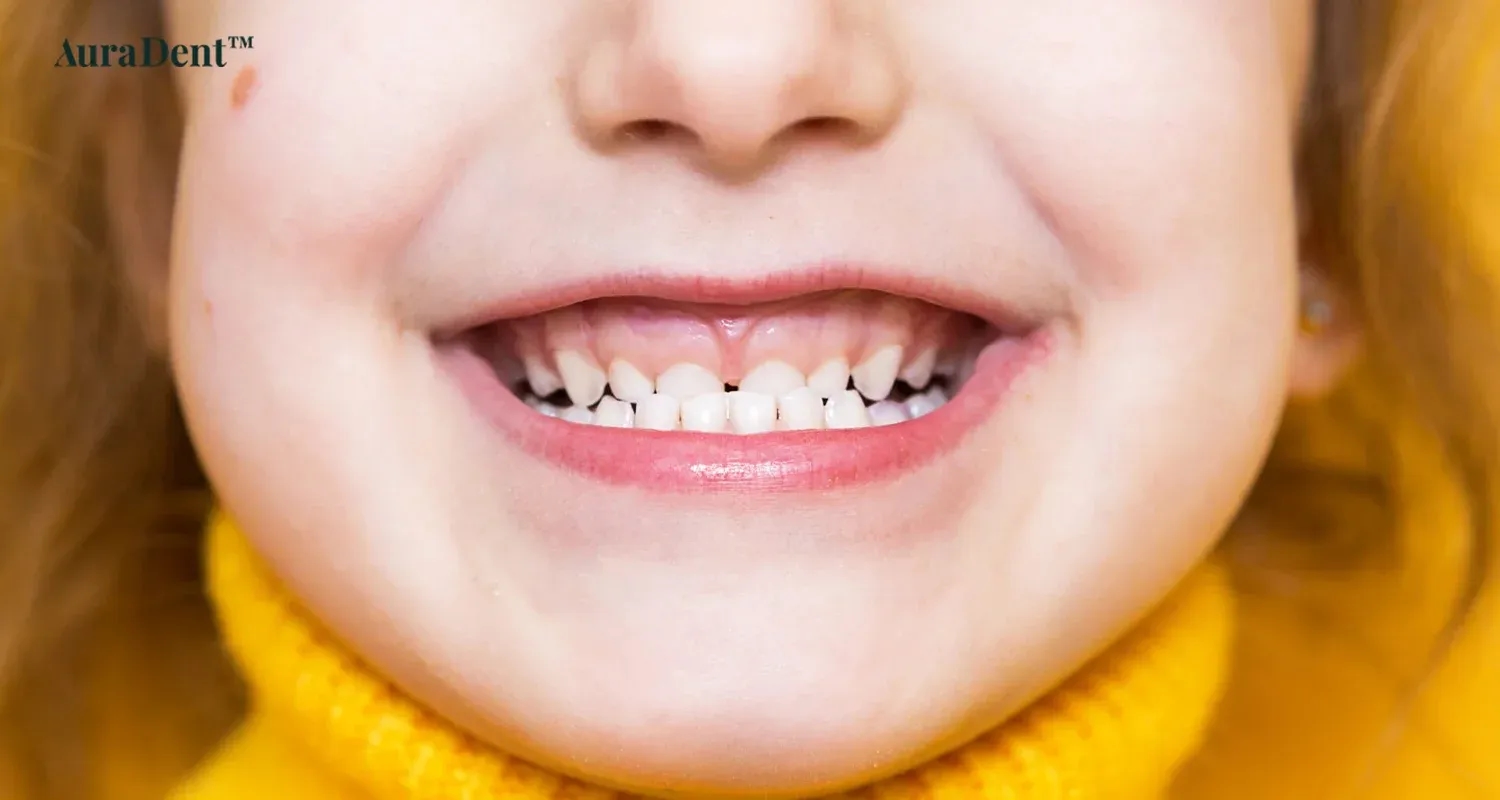
An underbite means that the lower jaw or the lower front teeth sit in front of the upper jaw when the child bites down. It is sometimes called a reverse bite because the position of the teeth is the opposite of a normal bite. An underbite can affect both function and appearance, and if not treated early, it can lead to uneven tooth wear due to improper pressure on the dental arches.
Skeletal underbite
This form of underbite is caused by differences in the growth of the jaws. The lower jaw may grow too far forward, or the upper jaw may be underdeveloped. Since skeletal discrepancies affect the entire facial structure, early orthodontic treatment is important to guide growth during the child's developmental years.
Dental underbite
In a dental underbite, the shape and size of the jaws are normal, but the position of the teeth is incorrect. This can occur when one or more teeth tilt inward or outward, causing them not to meet properly when biting down. This type of underbite can often be corrected with braces or aligners without needing to influence jaw growth.
Main Causes of Underbite in Children
- Genetics: Heredity is the most common cause of underbite in children. If one parent has had the condition, the likelihood of the child developing it is increased.
- Incorrect Oral Habits: Prolonged pacifier use, tongue thrusting, or frequently pushing the lower jaw forward can contribute to the development of an underbite.
- Early Tooth Loss or Irregular Tooth Eruption: When baby teeth are lost prematurely or permanent teeth erupt unevenly, it can affect how the teeth and jaws develop in relation to one another.
Why is early treatment of underbite so important?
Treating underbite in children at an early stage is crucial for achieving both functional and aesthetic results, as well as for reducing the risk of future complications. Early intervention makes it possible to influence jaw growth during the years when the skeleton is still malleable, which in many cases eliminates the need for surgical procedures in adulthood.
Guiding jaw growth
Between the ages of seven and ten, the jaws are still developing and can be guided using orthodontic appliances. By stimulating forward growth of the upper jaw and controlling the movement of the lower jaw, the dentist can create a balanced bite relationship. This type of growth guidance is only possible during childhood, which makes the timing of treatment initiation crucial.
Avoiding future jaw surgery
If a skeletal underbite is left untreated, it may require extensive jaw surgery in adulthood to restore a proper bite structure. Early orthodontic treatment, on the other hand, can often correct the problem completely without surgery. This is one of the primary reasons why children should be examined early by an orthodontist.
Preventing complications
An untreated underbite in children can lead to several problems, including:
• Abnormal wear on the front teeth
• Overloading of the jaw joint (TMJ)
• Difficulties with chewing and speech
• Aesthetic concerns that may affect the child's self-esteem
Therefore, early diagnosis and treatment are not merely a recommendation, but a necessity to ensure a harmonious and healthy bite development.
Treatment methods for underbite in children
Treatment for underbite in children is tailored to the child's age and the specific type of bite discrepancy. The goal is always to restore a natural and harmonious balance between the upper and lower jaws. At AuraDent™, we use modern, scientifically proven methods that are individually designed based on each child's needs. We also offer professional guidance regarding different types of braces to ensure that every child receives the most effective and gentle treatment.
1. Palatal expander
When the upper jaw is narrow, a palatal expander is often used as a first step. By gradually widening the palate, more space is created for the teeth, and the growth of the upper jaw can be guided forward.
2. Face mask (Delaire mask or reverse-pull headgear)
This appliance is used to gently pull the upper jaw forward and stimulate proper development of the jaw relationship. The child wears the mask primarily in the evening or at night. The treatment yields the best results before puberty, when growth is still active.
3. Fixed braces
Once the position of the jaws has been corrected, fixed braces are often used to fine-tune the position of the teeth. This step stabilizes the result and improves both function and appearance. If needed, modern technology such as Invisalign in Sweden can also offer a discreet alternative to traditional braces.
4. Clear aligners (Invisalign First or Teen)
For mild to moderate cases of underbite in children, clear aligners can be used to gradually move the teeth into the correct position. These transparent aligners are comfortable and can be combined with other appliances to achieve an optimal and long-lasting result, as well as to prevent uneven tooth wear.

Treatment process at AuraDent™
At AuraDent™, we always emphasize early diagnosis and individualized planning. The treatment process consists of four main steps:
Step 1: Early consultation
An initial orthodontic assessment is recommended at seven to eight years of age. During this period, jaw growth can still be influenced and guided in the desired direction.
Step 2: Diagnosis and treatment planning
Using X-rays, digital scanning, and clinical analysis, the jaw relationship and growth potential are assessed. Based on this evaluation, a personalized treatment plan is created.
Step 3: Active treatment phase
In this phase, palatal expanders, face masks, braces, or aligners are used depending on the child's individual needs. The treatment is closely monitored by AuraDent's orthodontic specialists to ensure the best possible result.
Step 4: Retention phase
After the bite has been corrected, the result is stabilized using a retention splint worn at night. This phase is crucial for preserving the new bite balance and preventing the teeth from shifting back to their previous positions.
Conclusion
Underbite in children is a condition that can be treated successfully in most cases, especially if detected early. By influencing jaw growth during the growing years, the need for future surgery can be prevented while ensuring both good function and aesthetic results. In some cases, early signs of underbite in infants can be monitored by a dentist to ensure that bite development proceeds normally. When needed, modern orthodontic methods can be used to create a stable, harmonious, and beautiful smile. Early diagnosis combined with the right treatment gives the child the best possible foundation for a healthy and balanced bite for life.
If you suspect that your child has an underbite, you should not wait. Book an appointment for a professional assessment at AuraDent™ today. Early intervention leads to simpler treatment, better results, and a smile that lasts a lifetime.
FAQs