
- Cosmetic Tips
- Dental Hygiene
Whiter Teeth Naturally: An Evidence-Based Guide to a Brighter Smile

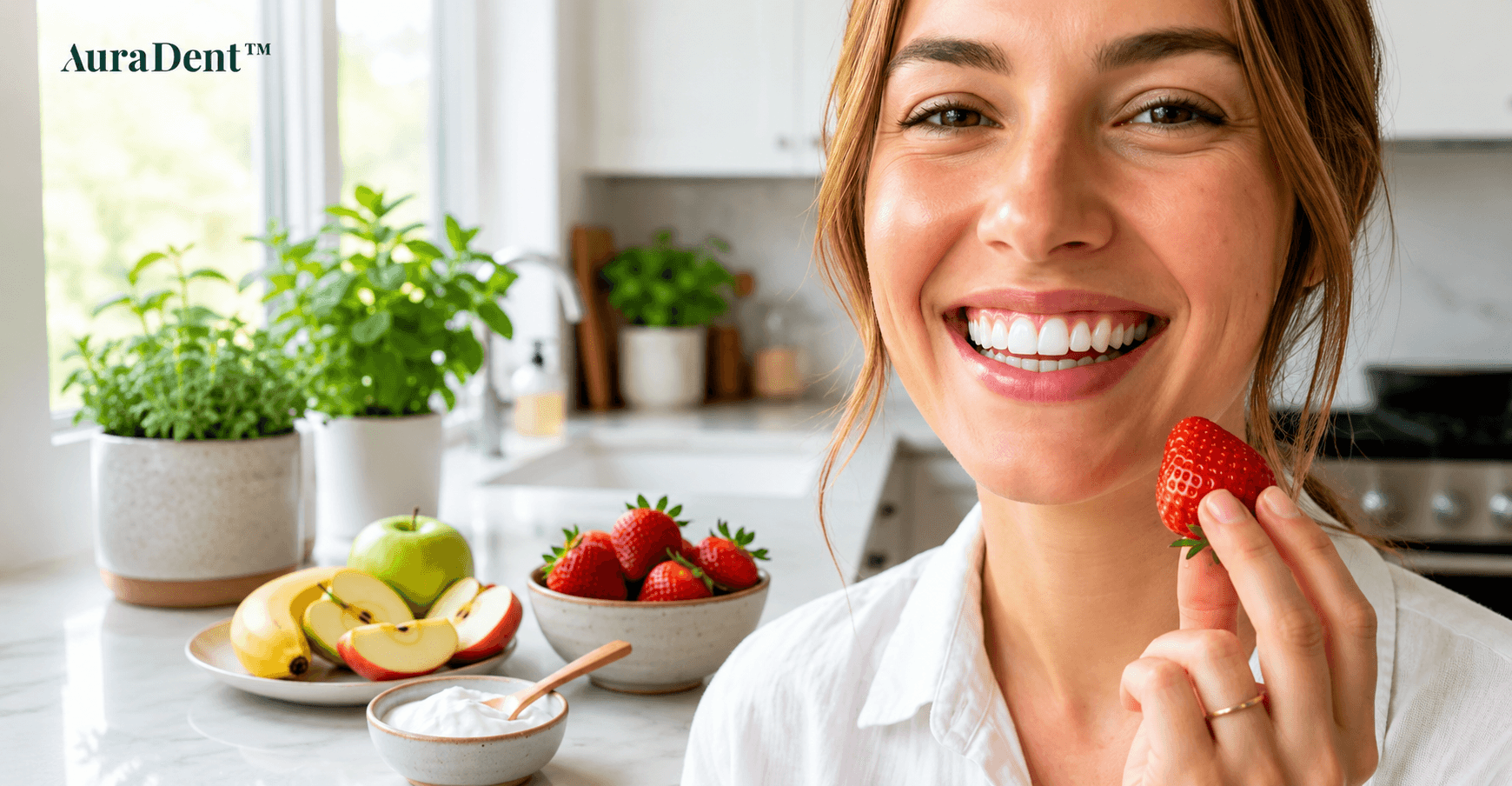
A white and healthy smile is often associated with good health, well-being, and confidence. Many people desire whiter teeth naturally without using chemical products or clinical treatments. The good news is that there are evidence-based methods to achieve a brighter smile through daily routines, nutritious choices, and gentle oral care. This guide describes how you can strengthen enamel, reduce discoloration, and maintain your dental health in a sustainable way for a naturally beautiful smile.
Key Points at a Glance
- This article shows how you can achieve whiter teeth naturally through safe and sustainable daily habits.
- Regular brushing, flossing, and tongue scraping are the foundation of a brighter smile.
- A healthy diet with crunchy fruits and vegetables helps clean teeth naturally.
- Water and sugar-free gum help rinse away bacteria and protect enamel.
- Avoiding smoking, coffee, and other staining drinks reduces the risk of discoloration.
- Natural methods should always be used with caution to avoid damaging tooth enamel.
Why Teeth Become Discolored
Tooth color is naturally affected by factors such as diet, age, genetics, and lifestyle. Beverages like coffee, tea, wine, and soda can over time penetrate the enamel and create darker shades. Smoking is another common cause that leads to stubborn stains.
When enamel becomes thinner, the dentin underneath—which is naturally more yellow—becomes exposed. Therefore, one of the most effective ways to achieve whiter teeth naturally is to protect and strengthen the enamel.
Strengthening Enamel for Naturally Whiter Teeth
Enamel acts as the teeth's protective shield. Strong, intact enamel reflects light better and thus appears whiter. To naturally strengthen your teeth, you should eat foods rich in calcium, phosphorus, and vitamin D, such as dairy products, leafy greens, fish, and eggs.
Water is also crucial. Drinking water throughout the day helps rinse away bacteria and neutralize acids that could otherwise attack enamel. If you want to read more about how water affects your oral health, you can visit the article Protect Your Teeth with Water, where the dentist explains how hydration benefits both gums and enamel.
Seven Proven Ways to Get Whiter Teeth Naturally
Simple daily routines can make a big difference in tooth color. By combining good oral hygiene, proper diet, and healthy lifestyle habits, you can achieve whiter teeth naturally and keep your smile healthy for longer.
1. Brush and floss regularly
The foundation of whiter teeth begins with thorough oral hygiene. Brush twice a day with fluoride toothpaste and floss every evening to remove plaque between teeth. Plaque easily binds pigments and can cause discoloration. For younger family members, you can read more in the article Flossing for Children, which explains the importance of early dental care routines.
2. Wait to brush after acidic meals
After acidic foods or drinks, enamel becomes temporarily softer. If you brush immediately, you risk wearing down the tooth surface. Therefore, wait at least thirty minutes so that saliva has time to restore the mouth's pH balance.
3. Eat foods that naturally clean teeth
Fruits and vegetables with a crunchy texture and high water content, such as apples, cucumbers, and carrots, act as natural cleaners. They remove plaque, stimulate saliva flow, and contribute to whiter teeth naturally.
4. Avoid staining beverages
Coffee, tea, and red wine are common causes of surface stains. A simple way to reduce contact between the drink and your teeth is to use a straw. For those who use aligners, you can read the article What Can You Drink with Invisalign, which explains how different beverages affect aligners and enamel.
5. Chew sugar-free gum with xylitol
Sugar-free gum stimulates saliva production and neutralizes acids. Xylitol inhibits bacterial growth and contributes to fresh breath and whiter teeth.
6. Choose toothpaste with gentle whitening ingredients
Toothpaste with baking soda or mild polishing agents can remove surface stains without damaging enamel. However, avoid highly abrasive products and always choose toothpaste recommended by a dentist.
7. Avoid smoking and nicotine products
Nicotine and tar cause yellow and brown stains that often require professional cleaning. To understand more about how tobacco use affects dental health, you can read the article How Does Smoking Affect Your Teeth?

Natural Home Remedies: Effectiveness and Risks
Home remedies such as baking soda, hydrogen peroxide, coconut oil, or apple cider vinegar are often used to whiten teeth at home. Although some of these may have a mild cleaning effect, they can be too abrasive or acidic and cause sensitivity or damage to the enamel.
If you are considering trying a home remedy, you should first consult with a dentist. In the article Teeth Whitening Guide, you can read more about the difference between natural and professional methods for teeth whitening and how to choose a safe treatment.
Lifestyle Habits for Whiter Teeth Naturally
In addition to good oral hygiene, lifestyle also affects the appearance of your teeth. A balanced diet, adequate hydration, and regular sleep help ensure that saliva production functions optimally. Avoid snacking between meals and choose water instead of sugary drinks.
Regular dental visits are crucial for maintaining the whiteness of your teeth. Professional cleaning removes tartar and deposits that your toothbrush cannot reach. At AuraDent, you can book a consultation for individually tailored advice on safe methods to naturally strengthen and brighten your teeth.
Conclusion
Achieving whiter teeth naturally is about consistent and healthy habits, not quick fixes. By protecting your enamel, choosing the right diet, and following your dentist's advice, you can maintain a healthy, radiant smile throughout your life.
For personalized recommendations and professional treatments, you are welcome to book a free consultation at AuraDent. Our dentists offer customized solutions to help you achieve a naturally white smile with long-lasting results.
Would you like to delve deeper into more topics on oral health? Read What Can You Drink with Invisalign for more dentist recommendations and practical advice.
FAQs